Puerto Vallarta Weather In Whale Season: January And February
The whale season in Banderas Bay runs through the driest, coolest stretch of the Puerto Vallarta year. Here is what the weather actually does in December, January and February, and how it shapes the boat trip.
Short answer
Puerto Vallarta in January averages about 22 C air temperature with only 2 rain days in the month, and February is drier still with about 1 rain day. Sea temperature runs 24.5 C in January and 23.9 C in February. The official whale window last season ran 8 December to 23 March, with operators advertising the same 8 December opening this year.
Puerto Vallarta sits inside one of the driest winter microclimates on the Mexican Pacific coast, and the whale season lands exactly on top of it. While the summer months dump hundreds of millimeters of rain on the bay, the stretch from December through March that the humpbacks spend in Banderas Bay is the part of the year when the sky is reliably clear, the air is the coolest it gets all year, and the sea settles down. That overlap is not a coincidence for travelers: the weather you are planning around in January is the same weather that makes this the most dependable window of the year for a boat trip. This guide lays out the verified monthly numbers, what they mean on the water, and how they interact with the tours on the roster, from the small-group Whale Encounter run by Eco Explorer Vallarta to the catamaran with breakfast and buffet that departs Puerto Magico. Once you are out on that calm winter water, the visual cues that reveal a whale before anyone shouts it out will help you spot the next blow on your own.
The official record matters here, because the whale season is a federal window, not a marketing one. The SEMARNAT aviso published in the Diario Oficial on 10 October 2025 set the 2025-26 season for Banderas Bay at 8 December 2025 to 23 March 2026, with the same notice banning whale watching inside a 1.5 km radius of the Islas Marietas and inside the 2 km coastal strip from Punta Mita to the Rio Ameca mouth, zones closed because mother-and-calf pairs concentrate there. For the coming season, operators advertise the same 8 December opening, but the federal notice for 2026-27 had not appeared on record as this guide was written, so treat any new-season date as operator advertising until the aviso is published. The full background on those dates and rules is in the humpback season dates guide.
What Is The Puerto Vallarta Weather In January?
January is the coolest and one of the driest months of the Puerto Vallarta year, with a mean air temperature of 21.8 C, sea temperature around 24.5 C, and roughly 2 rain days delivering about 37 mm across the whole month. It sits squarely inside the official whale window and inside the peak stretch that operators and guides name for the bay. For a boat trip it is long-sleeves-in-the-shade weather, not summer beach weather.
Those numbers deserve context, because "21.8 C" is a monthly mean that blends warm afternoons with genuinely cool nights. The rain figures come from the long-term CONAGUA climate normals for Puerto Vallarta, and they show a hard seasonal break: January's 37 mm across 2 rain days sits next to September's 429 mm across 20 rain days. The dryness is the single most useful planning fact for a whale tour in January. A morning departure from Marina Vallarta or the Puerto Magico terminal is very unlikely to be rained out, and the more common discomfort is the opposite one, a cool wind on the way out.
January also lands in the peak of the humpback presence. Operators and guides consistently name January and February as the months with the most whale activity in the bay, and the local research group EOBAC's standing estimate is that about 500 individual humpbacks visit Banderas Bay over a season. January is when the mother-and-calf pairs and competing males described in the humpback behavior guide are most consistently reported by the boats.
For travelers matching a tour to the month, January suits the roster's core small-group options. The Whale Encounter run by Eco Explorer Vallarta is a 3 hour small-group trip from Marina Vallarta, rated 4.9 from 530 reviews, from $99 per person, with snacks, a hydrophone and the whale conservancy wrist band included. It is one of the two most reviewed shared boats on the roster, which is worth knowing when you are booking months ahead on a weather bet. Check availability beside the Whale Encounter tour page.
What About The Puerto Vallarta Weather In February?
February is the driest month of the whale season, averaging about 12 mm of rain over roughly 1 rain day, with a mean air temperature of 21.9 C and sea temperature of 23.9 C. It is statistically the safest weather bet on the calendar for a boat trip, and operators name it alongside January as the peak of humpback activity in the bay. The sea is at its coolest annual point before the spring climb begins. For a fuller picture of the season and how reliable sightings actually are, our guide to seeing whales in Puerto Vallarta explains whether you need a boat or can simply watch from shore.
February and January are close to interchangeable on paper, but the differences point the same way. February is marginally drier, marginally cooler in the water and marginally warmer in the air, and all three differences favor a boat tour. The practical choice between the two months usually comes down to crowds and price rather than weather, a comparison worked through in the best month guide. February trips also carry the same federal protections as any other month: NOM-131-SEMARNAT-2010 caps boats at 4 around a single whale or group and 30 minutes of observation time, rules detailed in the whale watching rules and distance guide.
The full weather picture across the whale months, from the verified monthly records, looks like this:
| Month | Mean air temp | Sea temp | Rain mm | Rain days | In the whale window |
|---|---|---|---|---|---|
| December | not published in this dataset | 25.2 C | 21 mm | 2 | Last season opened 8 December |
| January | 21.8 C | 24.5 C | 37 mm | 2 | Peak, per operators and guides |
| February | 21.9 C | 23.9 C | 12 mm | 1 | Peak, per operators and guides |
| March | 22.2 C | 23.9 C | 4 mm | 1 | Season closes 23 March last year |
| April | 23.3 C | 24.9 C | 4 mm | 1 | Outside the official window |
Air temperature means cover January to April only, from the 1991 to 2020 climate record; sea temperature and rain figures are the long-term monthly values for Puerto Vallarta. The March closure date shown is the 2025-26 season's; until the new federal notice appears, treat this season's end date the same way, as operator-advertised rather than official.
February is a strong month for the format-heavy trips on the roster. The catamaran whale cruise run by Mike's Fishing and Tours, from $99 per person and rated 4.8 from 413 reviews, includes a continental breakfast, buffet lunch and open bar across its 4 hours, which is a comfortable package when the morning air is cool and you want the wind break of a larger vessel.
What Are The Sea Conditions Like In Banderas Bay In Winter?
The verified record shows winter sea temperatures of 24.5 C in January and 23.9 C in February, but no sourced monthly figures exist for swell, wave height or visibility on the bay, so any month-by-month sea-state ranking would be invented. What can be said is that the whale months sit fully outside the Eastern Pacific hurricane season of 15 May to 30 November, and the bay's geography damps open-ocean swell.
Honesty about the limits of the data matters on this question, because plenty of pages print confident swell tables for Banderas Bay that trace back to nothing. The verified facts file records the bay's maximum depth at 1,436 m in the trench off Quimixto and Yelapa, its area at 987 km2 and roughly 100 km of coastline, all secondary figures. None of that translates into a wave forecast. What the record does establish is the seasonal rhythm: the tropical-cyclone season that can close small-vessel navigation runs to 30 November, and the whale season begins after it, meaning the winter months carry none of the named-storm risk that summer does.
Qualitatively, and only qualitatively, winter mornings on the bay are commonly the calmest of the day, with the wind building toward the afternoon. That pattern is why many departures cluster in the morning, and it feeds directly into the best time of day question. If a settled sea state is your priority, a morning small-group departure is the format most boats run early, and the sea-sickness question is covered honestly in the seasickness post, including the plain fact that no tour can promise conditions.
The biologist-led boats are the format most tied to calm water, since they use hydrophones, underwater microphones lowered when a boat sits at idle near singing whales. The featured biologist-led whale and dolphin trip, from $105 per person and rated 4.9 from 702 reviews, the largest review pool on the roster, lists a biologist guide, bottled water, soda and a lunch baguette among its inclusions. Engine-off listening sessions work best in quiet water, which is one more argument for a morning slot.
How Much Does It Rain During Whale Season?
December through March is the driest stretch of the Puerto Vallarta year, with 1 to 2 rain days per month and monthly totals between 4 and 37 mm, against 15 rain days in June and 20 to 21 in July, August and September. A whale trip in the official window is about as rain-proof as an outdoor activity gets in this climate, though the tropical-cyclone season technically runs to 30 November.
The contrast with summer is stark enough to be worth a table of its own, because it is the single fact that makes winter the default answer to "when should I go":
| Period | Monthly rain total | Rain days | What it means for a boat trip |
|---|---|---|---|
| December (from the 8th) | 21 mm | 2 | Season opens; rain is rare |
| January | 37 mm | 2 | Cool, mostly dry, peak whale month |
| February | 12 mm | 1 | Driest month of the season |
| March (to the 23rd) | 4 mm | 1 | Bone dry; season closes late month |
| June | 227 mm | 15 | Outside the whale window entirely |
| July to September | 362 to 429 mm | 20 to 21 | Hurricane season peak; no whale tours run |
That last row is the one that answers the trip-timing question behind this whole guide. The hurricane season of 15 May to 30 November, per the NOAA Eastern Pacific record, overlaps the tail of autumn but ends before the whale season begins, and the July-to-September rain numbers are the verified basis for naming those as the worst weather months, a case made in full in the worst month post. If you are choosing between a January trip and an August one, the weather record alone settles it, never mind the whales.
November sits in an interesting middle position, and readers ask about it often. Hotel and operator guides report the first humpbacks typically entering the bay in late November, before the official window opens, and November's own rain record, 24 mm over about 2 rain days, is already close to winter-dry. But no licensed whale-watching trips run before the federal opening date, so a late-November visitor planning around weather will find calm seas and no whale boats; the practical answer is the first week of December, covered in the season dates guide.
Does Wind Or Departure Point Change The Experience?
No verified wind-speed data by month exists for Puerto Vallarta, so the honest answer is qualitative: winter mornings are commonly the calmest period on the bay, and departure point matters mainly for travel time to the dock, not for the sea you ride. Verified transfer times run 15 to 22 minutes from the airport to Marina Vallarta and 55 to 65 minutes to Sayulita, per operator transfer sites.
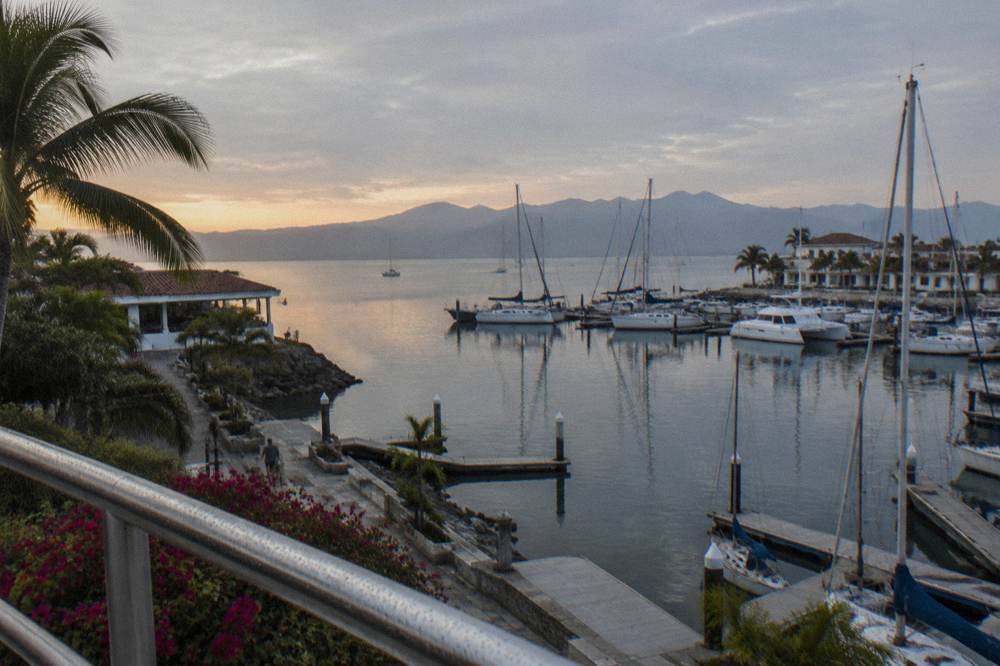
Every tour on the roster departs from a named point, and the choice shapes your morning more than any weather variable will. The comparison between the two biggest bases is worked through in the Marina Vallarta vs Nuevo Vallarta guide; the short version for weather planners is that both sit inside the sheltered north shore of the bay, and boats from either reach the same open water.
| Departure point | Roster tours based there | Airport transfer time (operator sites) |
|---|---|---|
| Marina Vallarta | Whale Encounter, biologist-led adventure, private charters | 15 to 22 minutes |
| Puerto Magico terminal | Catamaran cruise, all-inclusive cruise, biologist trips | 15 to 22 minutes to Marina Vallarta area |
| Nuevo Vallarta marina | Catamaran cruise alternate dock, sunset mega yacht | 20 to 30 minutes |
| Los Peines pier (Isla Iguana) | Vallarta Whales experience | 22 to 30 minutes to Zona Romantica area |
| Sayulita | Sayulita-based small-group boats | 55 to 65 minutes |
One logistics note from the verified record: rideshare pickup is not permitted at the airport arrivals curb, per secondary transfer-site reporting, so budget a taxi or a pedestrian bridge crossing when you time a departure morning. And for readers staying north, the Sayulita options have their own guide, since the boats there run smaller and the town itself is a different lodging proposition, as the Sayulita vs Puerto Vallarta comparison lays out.
What Should You Wear And Pack For A Winter Whale Trip?
Plan for 22 C mornings on the water, which in practice means a light layer, sun protection and a wind shell: the sun at tropical latitude is the real hazard, the cool wind is the surprise. Pack reef-safe sunscreen, a hat that stays on, motion-sickness remedy if you are prone, and something dry for the ride back, since spray is part of the ride. The full checklist is in the what-to-bring guide.
The layering advice surprises visitors who picture Puerto Vallarta as endless summer. The monthly means of 21.8 C in January and 21.9 C in February are measured on land; on a boat doing 20 knots into a breeze with the evaporative chill of spray, the felt temperature drops well below that. Crews on the small-group boats regularly see guests in beachwear shivering by the midpoint. A fleece or windbreaker solves it, and it doubles as cushioning on the harder RIB-style rides.
| Item | Why it earns its place in January and February |
|---|---|
| Wind shell or fleece | 22 C mornings feel cold at speed on open water |
| Reef-safe sunscreen, applied before boarding | Tropical winter sun burns fast on reflective water |
| Strap hat and sunglasses | The glare off a flat sea is intense even under thin cloud |
| Motion-sickness remedy taken in advance | Calm mornings can build wind later; remedies work best early |
| Dry layer in a dry bag | Spray and Whale Encounter-style close approaches get you damp |
| Binoculars, optional | Boats keep 60 m distance from humpbacks under NOM-131 |
That last row is a nice bridge between weather and wildlife: the federal approach rules, 60 m for small boats and 80 m for larger ones with a 240 m waiting distance, mean the whales are seen at a respectful remove, and binoculars genuinely add to the show. Photography in winter light has its own page, the photographing humpbacks guide, where the clear-air point matters: February's near-zero rain days mean sharp, low-humidity light most mornings.
Which Tour Format Suits The Winter Weather Best?
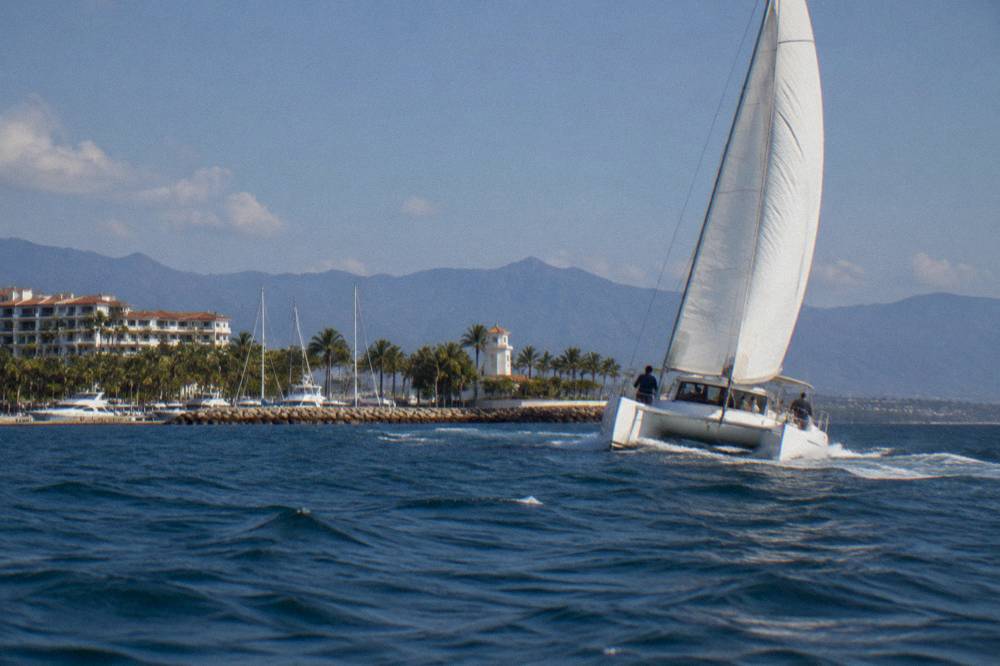
The winter weather favors every format on the roster, so the real filter is comfort preference: small-group boats deliver intimacy and speed but more spray and wind, catamarans and yachts deliver wind break, hot food and restrooms, and private charters let you set the pace. Prices across the shared formats run from $62 to $139 per person on this roster, all with the same dry winter sky overhead.
The comparison between those formats is its own guide, the tours compared page, but the weather lens adds a few specifics. On a cool January morning, the all-inclusive cruise run by Vallarta by Boat, from $78 per person over 4 and a half hours, pours an open bar, chips and fruit, and a croissant or sandwich lunch, with a hydrophone and a marine biologist aboard; the dock tax is extra. The small-group photo safari run by Vallarta Adventures, from $79 per person with hotel pickup and drop-off not included, is the leaner option, hydrophone and light snack aboard, best for photographers who would rather be cold and close than warm and enclosed. The full cost picture is in the tour cost guide.
For families weighing the weather question against the kid question, age policies are not on file for the roster, so check each listing for the operator's age and health rules, but the kids age post covers the planning side. And for readers who want the whale morning and a reef snorkel stop in one package, the Marietas combos do their whale watching outside the federally restricted zone and snorkel away from the whales entirely, since swimming with humpbacks is prohibited outright; that structure is explained in the Marietas combo guide and the swimming with whales post.
One genuinely fresh point from the current record: federal enforcement tracks the season, so the boats flying the numbered flag with the federal seal are the permitted ones, and PROFEPA ran boarding inspections through last season, checking 17 vessels in one Nayarit operation alone. Weather planning and regulation planning converge on the same advice, book a licensed operator from the Puerto Vallarta Whale Watching roster and read its cancellation terms before the morning of.

How Does Whale Season Weather Compare Across The Bay?
The verified climate record is measured at Puerto Vallarta, and no separate sourced datasets exist for Nuevo Vallarta, Punta Mita or Sayulita, so honest comparisons are qualitative: the north shore around the marinas is more developed and sheltered, the south shore is wilder, and the whole bay shares the same dry winter. Distances are the real difference, with Punta de Mita 9 km from the Islas Marietas and La Cruz 11.84 nautical miles.
Readers staying in Sayulita or Punta Mita sometimes assume "their" weather differs from the city's. In winter it mostly does not, the whole bay sits under the same dry air mass, and the practical difference is the drive to the dock plus the smaller boats operating from the northern towns, a scene covered in the Sayulita whale tours guide and the Punta Mita guide. What does differ is where the restricted zones sit: no whale watching happens inside the 1.5 km radius around the Marietas or the 2 km strip from Punta Mita to the Rio Ameca, so boats from the northern piers head out and around those boundaries.
The winter calendar is also when the bay's non-whale pleasures are at their best, which matters for a week-long trip. The winter things-to-do guide and the free things-to-do guide cover the Malecon, Zona Romantica and the shoreline, all pleasant in 22 C air under a February sky with one rain day in the month.
Common Questions About Puerto Vallarta Weather In Whale Season
What is the puerto vallarta weather in january?
January averages a mean air temperature of 21.8 C, sea temperature of 24.5 C, and about 37 mm of rain across roughly 2 rain days. It is one of the coolest, driest months of the year and sits inside the peak of the humpback season that operators and guides name for the bay.
Is February better than January for whale watching weather?
February is slightly drier, about 12 mm of rain over 1 rain day versus January's 37 mm over 2, with nearly identical air temperature of 21.9 C. Both months are statistically excellent for a boat trip; the choice usually comes down to crowds and price rather than weather.
Is the sea cold in Puerto Vallarta in winter?
Sea temperature runs 23.9 to 25.2 C across December to March, the coolest annual stretch but still swimmable by most standards. There is no sourced swell or visibility data by month, so treat any sea-state table beyond temperature as unsourced.
Does it rain on whale tours in Puerto Vallarta?
Rarely in season. December through March carries 1 to 2 rain days per month. The tropical-cyclone season runs 15 May to 30 November, fully outside the whale window, and every listed tour on the roster carries free cancellation where stated, so a rained-out morning is refundable or movable.
What should I wear on a whale boat in January or February?
A light layer plus a wind shell, sun protection and a hat. The 22 C averages are land readings; on a moving boat with spray, the felt temperature is well below that, and crews regularly see underdressed guests. A dry layer in a dry bag is worth the space.
When does the whale season start and end?
The official window last season ran 8 December 2025 to 23 March 2026 under the SEMARNAT aviso in the Diario Oficial. Operators advertise the same 8 December opening for the new season, but the federal notice for 2026-27 had not appeared on record yet, so confirm dates on the operator's live listing.