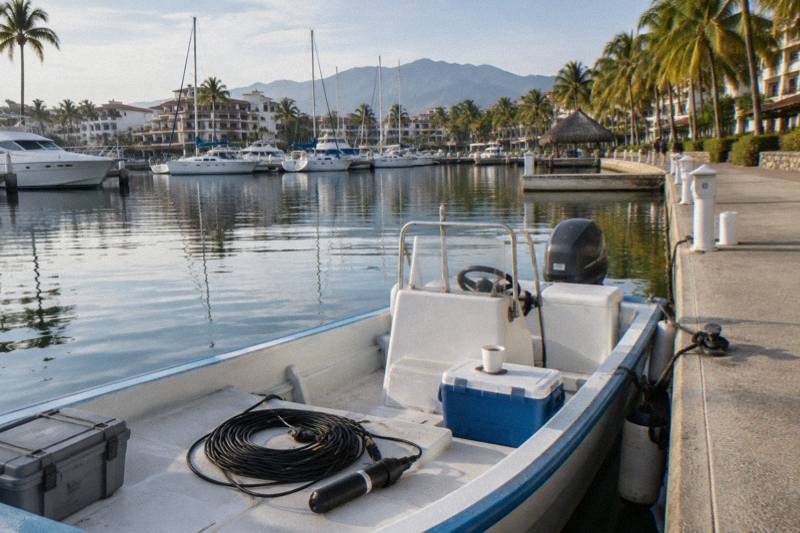
Humpback Whales In Banderas Bay: Calving, Breaching And What You See
Every winter, humpbacks travel from feeding grounds as far north as Alaska to the warm, deep shelf of Banderas Bay to breed and give birth, and the behaviors they show here, breaching, tail slapping, singing, escorting calves, are the reason a whale boat in Puerto Vallarta feels different from one almost anywhere else.
Short answer
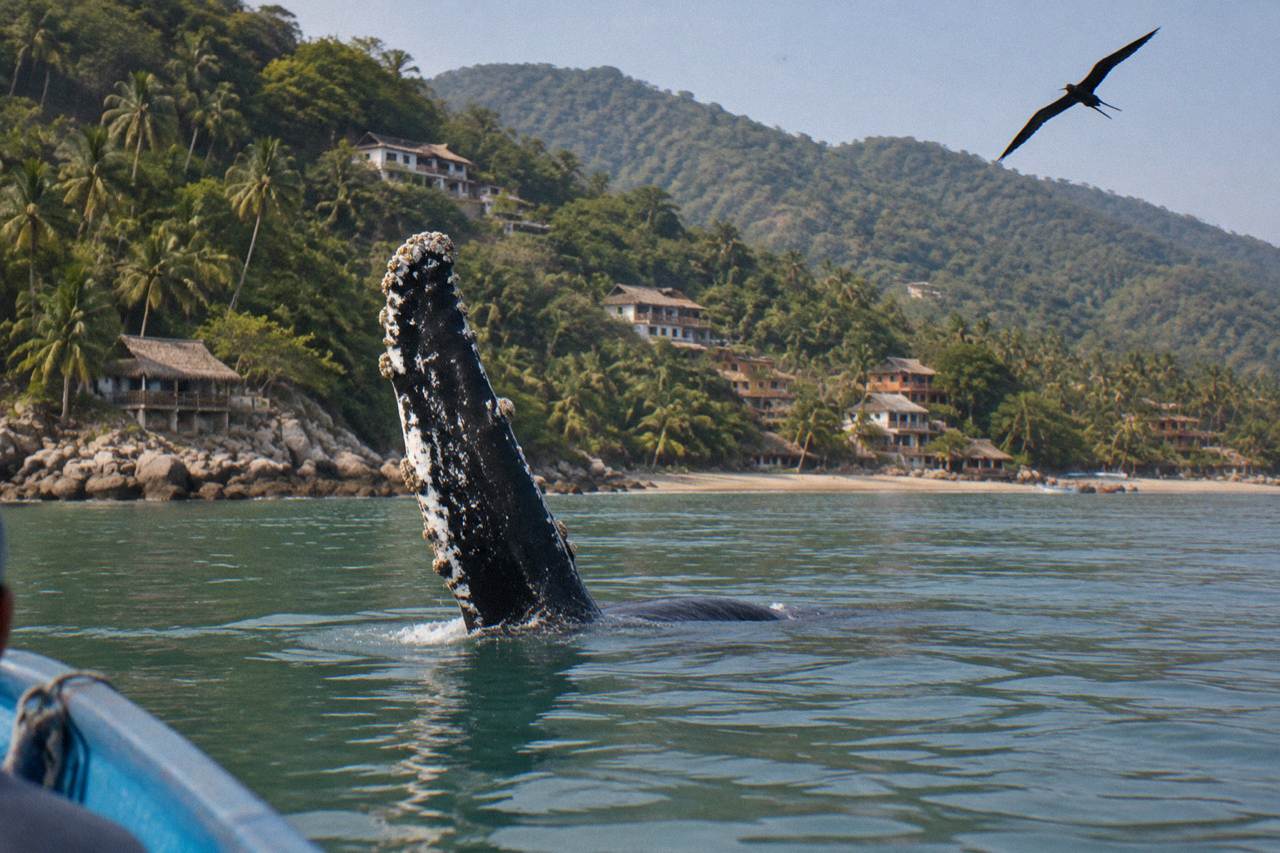
About 500 individual humpbacks visit Banderas Bay each season, drawn by warm water to breed and calve. The official watching window last season ran 8 December to 23 March, with peak activity named in January and February. Tours from $62 per person put you within the regulated approach zone, where breaching, tail slapping and mother-calf pairs are commonly reported.
Every winter the largest animals ever to appear in Banderas Bay arrive from a feeding migration that starts off California and runs to the Aleutians, and they come here for two purposes: mating and giving birth. The humpbacks that use this bay belong to the Mexico population, which NOAA lists as Threatened under the Endangered Species Act, breeds along the Pacific coast of Mexico, and feeds in cold northern waters the rest of the year. Local research group ECOBAC estimates about 500 individual humpbacks visit the bay per season, a number that turns a three-hour boat trip into something with real odds behind it rather than blind luck. This guide walks through what those animals are actually doing when you see them, from the first explosive breach to the quiet escort of a mother and calf, and how the tours in Puerto Vallarta, Nuevo Vallarta and Sayulita are built around the same calendar the whales keep. For the season window itself, see the humpback season dates guide, and for picking a boat, the Banderas Bay tours comparison.
Why Do Humpback Whales Come To Banderas Bay?
Humpback whales come to Banderas Bay because its warm tropical water is one of the best places for breeding and birthing. Mexico's humpbacks feed from California to the Aleutian Islands in summer, then travel thousands of miles south. The bay's deep, sheltered basin, with about 100 km of coastline and depths reaching 1,436 m, is a safe nursery for calves born without thick blubber.
Adults mostly fast here. A mother may lose a large share of her body mass across a breeding season while nursing a calf that gains weight fast on fat-rich milk, and that energy budget explains much of what you see from a boat. Lengthy resting periods near the surface, slow travel, and long dives all conserve energy; dramatic displays are concentrated in social contexts, competition groups and courtship, where the payoff justifies the cost. Guides on the biologist-led tours explain this budget on the way out, which is why a lecture on humpback biology is a listed inclusion on the featured marine biologist tour from Marina Vallarta, from $120 per person, rated 5.0 from 168 reviews.
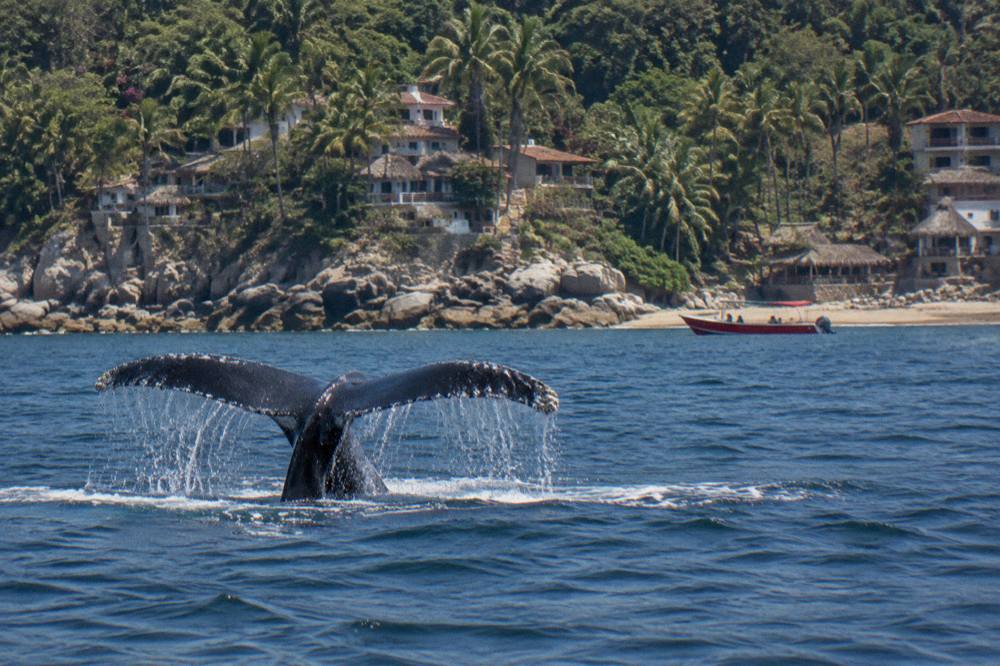
The bay itself does part of the work. Bounded by Punta Mita to the north and Cabo Corrientes to the south, it mixes deep water close to shore with shallow coastal shelves, so whales can rest in relative quiet within a short run of any marina. Sea temperature in the season months sits between roughly 24 and 25 degrees Celsius, verified monthly means from 23.9 in February and March to 25.2 in December, which is the band humpbacks use for calving across the eastern tropical Pacific. Whether you depart from Marina Vallarta, the Puerto Magico terminal, or the beach at Sayulita, you are fishing the same basin the whales chose, not commuting to it. If you're weighing whether Los Cabos delivers the same advantages, our Cabo vs Puerto Vallarta whale watching comparison lays out what the record actually supports for each coast.
What Humpback Behavior Can You See From A Boat In Puerto Vallarta?
From a boat in Puerto Vallarta, you can commonly see breaching, tail slapping, pectoral fin slapping, spy hopping, and the deep dive that ends with a raised fluke, and from December through March, competition groups of males chasing a female put on the loudest, most physical show on the water. Nothing is scheduled, and no honest tour promises any of it. For a realistic sense of how often sightings actually happen, the honest odds of spotting a whale on a Banderas Bay tour covers what season dates, tour type, and the local rules mean for your chances.
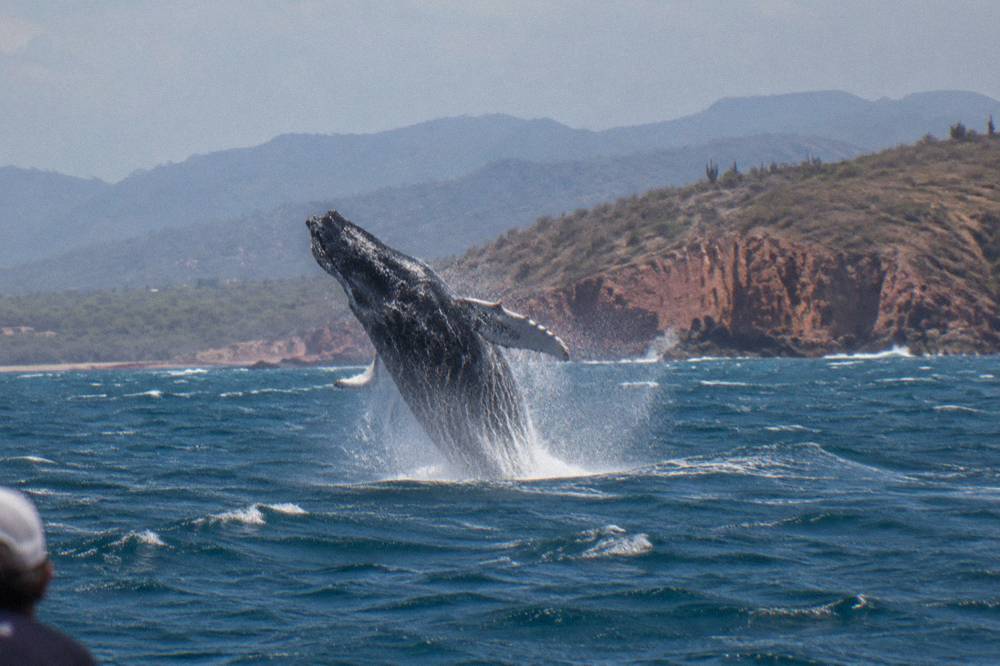
Reading the surface is a skill, and it is the part of the trip a good guide earns their fee on. A series of tail slaps carried over minutes is often social signaling; a whale that arches steeply and lifts its fluke is usually going deep for ten minutes or more; erratic direction changes and splashing in a group usually mean a competition pod, where males jostle, lob tails and sometimes breach in what looks like pure excess. Mothers with calves behave differently again: long surface intervals, gentle rolls, and a calf practicing the very breaches it will need as an adult, at a scale your brain can actually process.
| Behavior | What it looks like | What researchers and guides think it means | Likelihood of seeing from a tour |
|---|---|---|---|
| Breach | Whale launches upward, lands on side or back with a loud slap | Communication over distance, dislodging parasites, or display in competition | Reported through the season; not scheduled |
| Tail slap | Fluke hammered repeatedly on the surface | Signaling, excitement, or agitation within groups | One of the most commonly reported surface acts |
| Pectoral slap | Long white fin raised and dropped sideways | Display, often near mother-calf pairs | Commonly reported |
| Spy hop | Slow vertical rise, head above water | Visual survey of the surface | Occasionally reported |
| Fluke-up dive | Tail raised vertically before a deep dive | End of a surface interval, whale going deep | Regular sight on any tour |
| Competition group | Several males chasing one female, fast and splashy | Mating pursuit, the bay's most intense display | Seasonal; guides listen for reports on the radio |
Behavior is also why tour format matters more than boat size. Male humpbacks sing underwater, a part of the show the deck never hears, and a biologist guide is the one who puts that hidden layer into words. The listing for the whale and dolphin watching trip with a biologist, from $105 per person and rated 4.9 from 702 reviews, pairs the guide with bottled water, soft drinks, a baguette sandwich at lunch and granola-bar snacks, so the surface spectacle and the science travel on the same boat. If your interest is specifically photography of these behaviors, the photographing humpbacks from a boat guide covers positioning and timing.
The three tours above cover the three formats where behavior is easiest to read: a small-group biologist tour from Ecotours Vallarta with a humpback lecture and hydrophone, from $120 per person; the most reviewed biologist-led shared boat on the roster at 702 reviews; and a longer 4.5-hour hydrophone trip with drinks included, from $62 per person, rated 4.5 from 24 reviews. Whichever you choose, the whale encounters happen inside the same federal rulebook, which is worth understanding before you board.
When Are Humpback Mothers And Calves In Banderas Bay?
The official watching season last ran 8 December to 23 March, and mothers with newborn calves are the reason the window closes when it does. SEMARNAT sets the dates each season in the federal gazette, and the restricted zones protect the coastal strip where cows and calves concentrate. No federal notice for the coming season is on record yet; operators advertise the same 8 December opening. Peak density, named by operators and guides, falls in January and February.
The calendar works like this. Hotel and operator guides report the first humpbacks typically entering the bay in late November, ahead of the official opening, so early-December trips ride on fresh arrivals rather than settled numbers. By mid-January the bay holds the full mix: competing males, courting groups, and the season's first calves, born in warm water after an eleven to twelve month gestation. From February into March the balance shifts toward mothers and calves, which is why the late season is the classic window for the gentlest encounters, and why the season ends in late March, when the animals leave for the long trip north to feed.
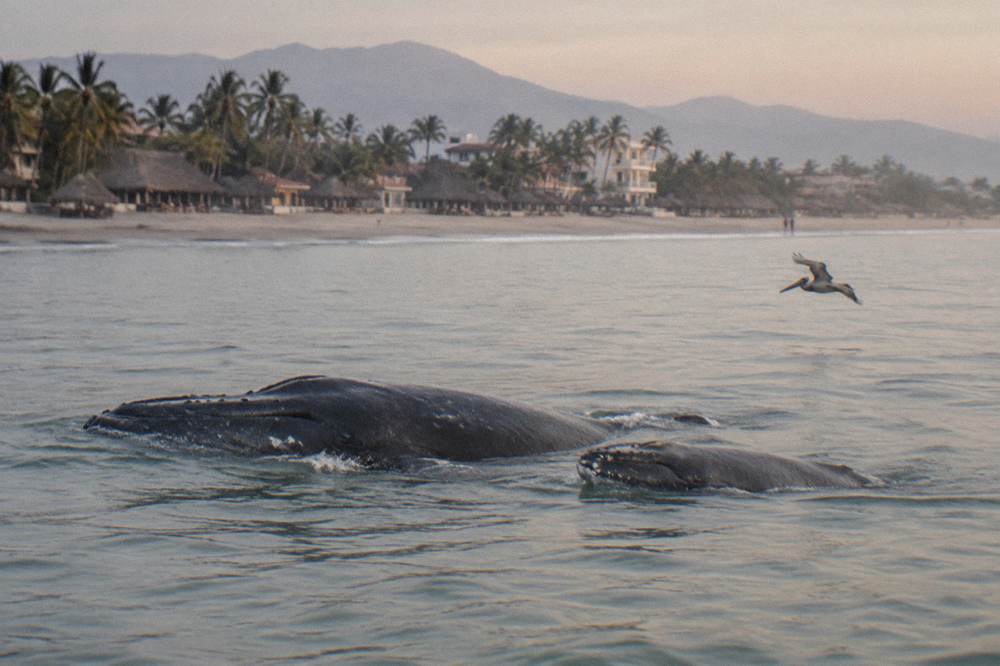
The protected status of that mother-calf bond is written directly into the watching rules. Boats may never position themselves between a mother and her calf, and the restricted zones, a 1.5 km radius around the Islas Marietas and a 2 km wide coastal strip running from Punta Mita to the Rio Ameca mouth, exist because those waters hold the densest mother-calf concentrations. The federal aviso that set last season's window and zones was published in the Diario Oficial de la Federacion, and it is the document every licensed operator works from. For month-by-month planning, the best month guide breaks down the trade-offs.
A marine biologist guide earns their keep most in exactly these weeks, because a calf behaving oddly is usually a calf behaving normally, and nervous guests relax when someone calmly explains what the pair is doing. The small-group half-day tour with a marine biologist and lunch, from $110 per person and rated 5.0 from 353 reviews, is a strong fit for families watching the water with kids, and the best time of day article adds the morning-versus-noon angle.
How Close Do Boats Get To Humpbacks In Banderas Bay?
Federal standard NOM-131-SEMARNAT-2010 sets the distances: authorized boats approach to 60 m for small vessels and 80 m for medium and large ones, wait at 240 m, keep at most 4 boats around any whale or group, and stay no longer than 30 minutes with the same animals. Speed drops below 5 knots in observation areas and below 2 knots on entering. Swimming, diving, kayaks and jet skis around whales are prohibited outright.
Those numbers are not suggestions. PROFEPA ran inspection operations through last season, boarding 17 vessels in one Nayarit operation alone to check permits and compliance, and authorized boats fly a numbered flag with the federal seal so you can verify from the dock that your operator is licensed. Unlicensed boats must stay 240 m away from any whale, which is why booking a permitted tour is not just ethics, it is the difference between 60 m and a quarter kilometer. The full rulebook is unpacked in the whale watching rules and distance guide. Bringing children along adds a few more rules of its own, and the age minimums and life jacket requirements for young whale watchers lays them out plainly.
| Rule in NOM-131 | The number | What it means on the water |
|---|---|---|
| Approach distance | 60 m small boats, 80 m medium and large | How near a licensed boat may come |
| Waiting distance | 240 m | Where boats hold while others take their turn |
| Boat cap | 4 maximum around one whale or group | Prevents crowding a resting animal |
| Time cap | 30 minutes maximum with the same whale or group | Every boat rotates off |
| Observation speed | below 5 knots (9 km/h) | Slow travel inside the zone |
| Entry speed | below 2 knots (4 km/h) | A crawl as the boat closes in |
| Engine near a resting whale | idle in neutral | Noise control; may be shut off for hydrophone use |
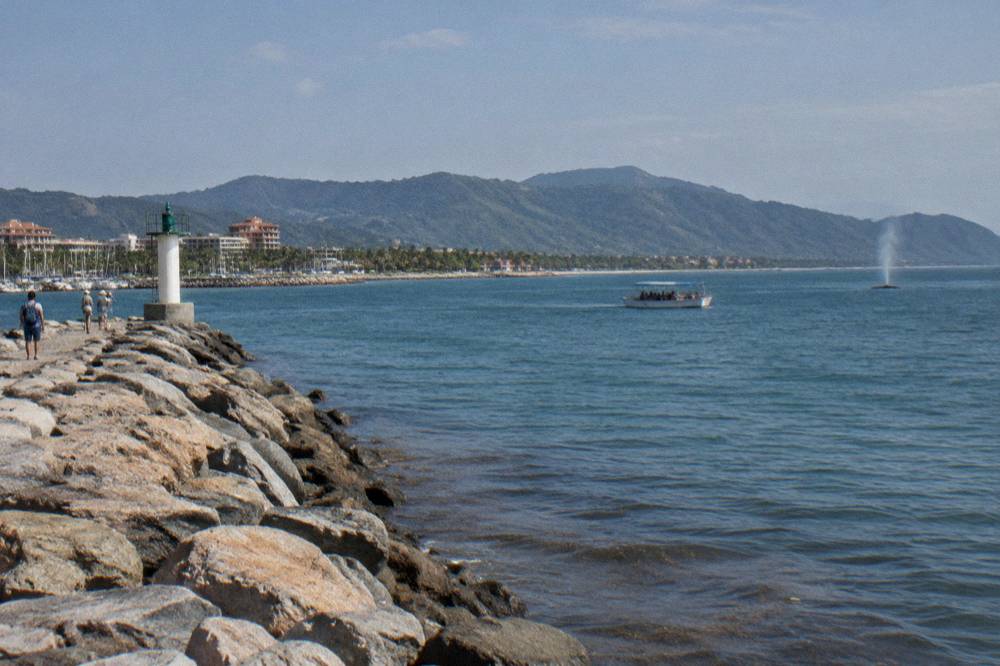
For behavior watching, the rules are actually in your favor. A boat that slows to 2 knots, idles, and shuts its engine to drop a hydrophone is a quiet boat, and quiet boats get longer, calmer surface intervals from the whales than ones that chase. The 30-minute cap also means a good captain leaves while the encounter is still good, which protects the animals and keeps the fleet rotating. Every tour on this site's roster is a licensed whale-watching product, from the catamaran cruise with breakfast and buffet, from $99 per person, rated 4.8 from 413 reviews, to the private charter from Vallarta Natours, from $760 per group for up to 8, rated 5.0 from 113 reviews. Everything else covered here is indexed on Puerto Vallarta Whale Watching.
The small-group encounter above, run by Eco Explorer Vallarta from Marina Vallarta at from $99 per person and rated 4.9 from 530 reviews, hands out conservation wrist bands as part of its listed inclusions, a small physical reminder that the trip sits inside a regulated system.
What Do Humpbacks Sound Like On A Hydrophone Tour?
Male humpbacks sing long, structured songs underwater, and in Banderas Bay the songs are part of the breeding season's social machinery. A hydrophone is an underwater microphone the crew drops when the engine is off, and it turns the bay's invisible layer into sound the whole boat hears through speakers. Several roster tours list a hydrophone as an inclusion, so it is a genuine differentiator when you compare boats.
The song itself is one of the better-studied behaviors in cetacean science: units arranged into phrases, phrases into themes, and all the males in a population singing a shared, slowly evolving version. In a breeding bay like this one, song is linked to courtship and competition, which is why a singing male and a breaching male are often doing related work. Guides on tours that carry hydrophones will typically idle the boat, kill the engine as the rules permit, and let the bay's soundscape play, and guests consistently describe it as the moment the trip stops being a sighting and becomes an understanding.

Not every boat carries the gear, so check the listed inclusions before booking if sound matters to you. The three listings above the fold in this guide all list a hydrophone, and others do too, including the photo-safari style small-group experience from Vallarta Adventures, from $79 per person, rated 4.7 from 190 reviews, which lists hydrophones, a light snack and purified water. Pairing this with the how to tell if a whale is near article gives you the full sensory toolkit, sight and sound, before you step aboard.
Where In Banderas Bay Do Humpbacks Gather?
There is no single feeding spot, because the whales are not feeding, but the season's aviso draws two lines that shape where tours go: no whale watching inside a 1.5 km radius of the Islas Marietas, and none in the 2 km coastal strip from Punta Mita to the Rio Ameca mouth, both zones chosen for mother-calf concentrations. Boats from Marina Vallarta, Puerto Magico, Nuevo Vallarta, La Cruz and Sayulita all work the open bay outside those lines. Since every boat works the same open water, what separates one trip from another is fit, and our guide to choosing a whale tour by traveler type matches the strongest options to families, first-timers, biology fans and groups.
In practice, captains read the day. Competition groups get called across the radio fleet and boats converge within the four-boat cap; a mother and calf resting mid-bay may get a slow, patient orbit from whichever boat holds the turn; and on flat mornings the fleet spreads out and works the visible spouts. Departure point matters less than people assume, which the Marina Vallarta versus Nuevo Vallarta departures guide demonstrates, though Sayulita-based trips, like the small-group run by Sebastian Briones, rated 4.9 from 56 reviews with the price on the listing, work the northern bay from a different angle. Marietas combo tours, such as the whale watching and snorkeling trip from Sayulita Entourage, from $85 per person, rated 4.9 from 56 reviews, do their whale watching outside the restricted radius and snorkel at a separate reef stop; swimming with whales is prohibited under NOM-131 numeral 4.19, full stop, and no combo on the roster offers or implies it. If you're weighing a combo over a whale-only trip, the Marietas crossing times guide explains how the ride differs from each departure point.
| Departure area | Where those boats typically work | Notes from the roster |
|---|---|---|
| Marina Vallarta | Central bay, short run to deep water | Biologist tours from Ecotours Vallarta and Eco Explorer depart here |
| Puerto Magico terminal | Central and southern bay | Catamaran cruise with buffet, from $99 per person, departs here |
| Nuevo Vallarta marina | Northern-central bay | Mega yacht sunset trip departs here, from $110 per person |
| La Cruz marina | Northern bay toward Punta Mita | Yacht adventure from Chica Locca Tours, from $319 per group up to 15 |
| Sayulita beach | Northern bay | Biologist-led 3-hour trips from La Orca de Sayulita, from $90 per person |
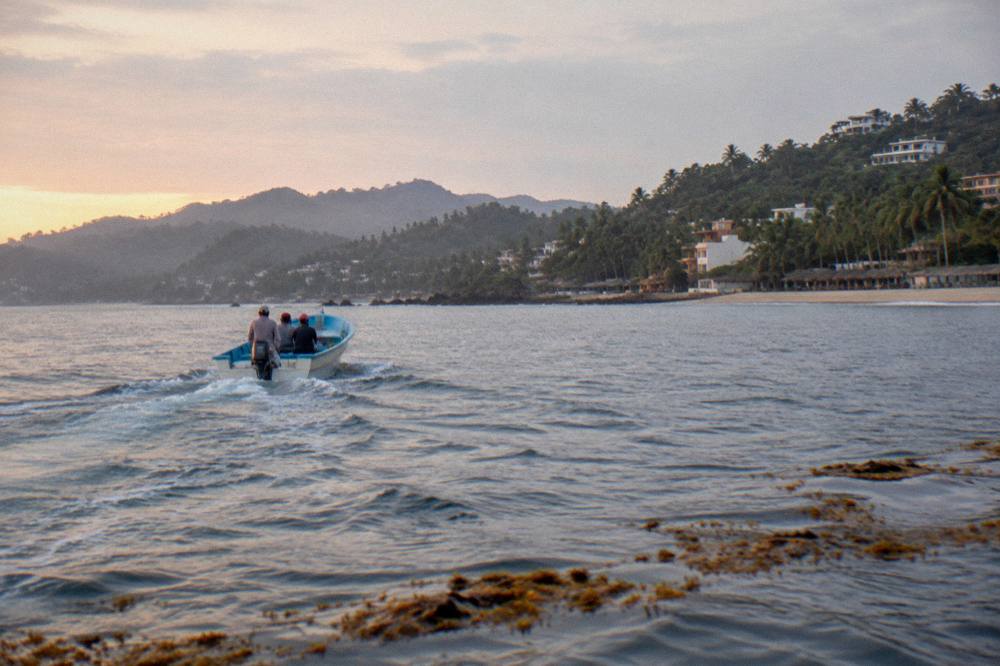
Geography explains the rest. The bay covers about 987 square km with its deepest point, 1,436 m, in the trench off Quimixto and Yelapa on the south shore, and that nearshore depth lets whales work close to the coastline your hotel sits on. On any given morning the choice of boat matters more than the choice of marina, and the private versus shared whale tours guide lays out that trade-off, including the private option from Vallarta Natours, which runs without hotel pickup.
The catamaran above, from $99 per person and rated 4.8 from 413 reviews, suits travelers who want the behavior watching wrapped in a longer day, with continental breakfast, buffet lunch and an open bar listed.
How Should You Watch Behavior Responsibly In Puerto Vallarta?
Watch from a licensed boat, keep your expectations on behavior rather than a specific act, and let the rules do the conservation work for you. Choose an operator whose listing names a biologist or hydrophone, verify the numbered federal flag on the vessel, never book anything that implies swimming with whales, and treat the 30-minute cap and the approach distances as features of a good trip, not limits on one. Calm, quiet, patient boats see more.
The practical layer is simple. Wear layers for wind and spray, as the what to bring guide details, keep your camera ready during surface intervals rather than only after a splash starts, and listen to the crew's read of the water, because an experienced guide often calls a deep dive or a turn before it happens. Guests on Puerto Vallarta Whale Watching tours frequently say the moment they understood what they were looking at, a competition group, a mother resting, a calf practicing, was the moment the trip became worth it, which is the honest case for the is whale watching worth it question this site answers separately. And if your interest runs deeper than a single trip, ECOBAC, the local group behind the bay's humpback estimate, publishes its research on the bay's winter population, and NOAA's species page covers the biology and Threatened status of the Mexico population.
For photographers and families alike, the private charter above, from $760 per group for up to 8 with lunch and soft beverages, rated 5.0 from 113 reviews, gives a captain flexibility on how long to hold position within the rules, which behavior watchers tend to value over open bars.
Common Questions About Humpback Whales In Banderas Bay
Humpback whales in puerto vallarta
Humpback whales visit Puerto Vallarta's Banderas Bay every winter to breed and calve, with about 500 individuals estimated per season by ECOBAC. The official watching season last ran 8 December to 23 March, operators advertise the same 8 December opening for the coming season, and January and February are named as peak months. Tours run from $62 per person upward, all inside federal approach rules.
When can you see humpback mothers and calves in Banderas Bay?
Calves are born in the bay during the winter season after an eleven to twelve month gestation. Late January through March is when mother-calf pairs are most consistently reported, and the restricted coastal zones from Punta Mita to the Rio Ameca exist specifically to protect them. Boats may never position between a mother and her calf.
Why do humpbacks breach in Puerto Vallarta?
Research and guides link breaching to communication over distance, parasite dislodging, and display within competition groups. It is commonly reported through the season but never scheduled; no honest tour promises a breach. Competition groups, where males chase a female, are the context where repeated breaching is most often seen.
Do humpback whales eat while in Banderas Bay?
Mostly no. Adults largely fast during the breeding season, living off blubber reserves while mothers nurse calves on fat-rich milk. This energy budget explains long surface rests and slow travel, and it is standard content in the biologist lectures several roster tours include.
Can you hear humpback whales singing on a Puerto Vallarta tour?
Yes, on tours that carry a hydrophone, an underwater microphone used when the engine is off. Several listings name a hydrophone in their inclusions, including the featured biologist-led small-group tour from $120 per person and the 4.5-hour trip from $62 per person. Male song is part of courtship and competition in the breeding season.
How close will the boat get to the whales?
Authorized boats approach to 60 m for small vessels and 80 m for medium and large ones, after waiting at 240 m, with at most 4 boats near any whale or group and 30 minutes maximum with the same animals. Unlicensed vessels must stay 240 m away, which is why booking a permitted tour matters.