How Likely Are You To See A Whale On A Banderas Bay Tour?
Honest odds for whale sightings in Puerto Vallarta: what the season dates, the rules and the tour type actually mean for your chances, with no guarantee claims.
How Likely Are You To See A Whale On A Banderas Bay Tour?
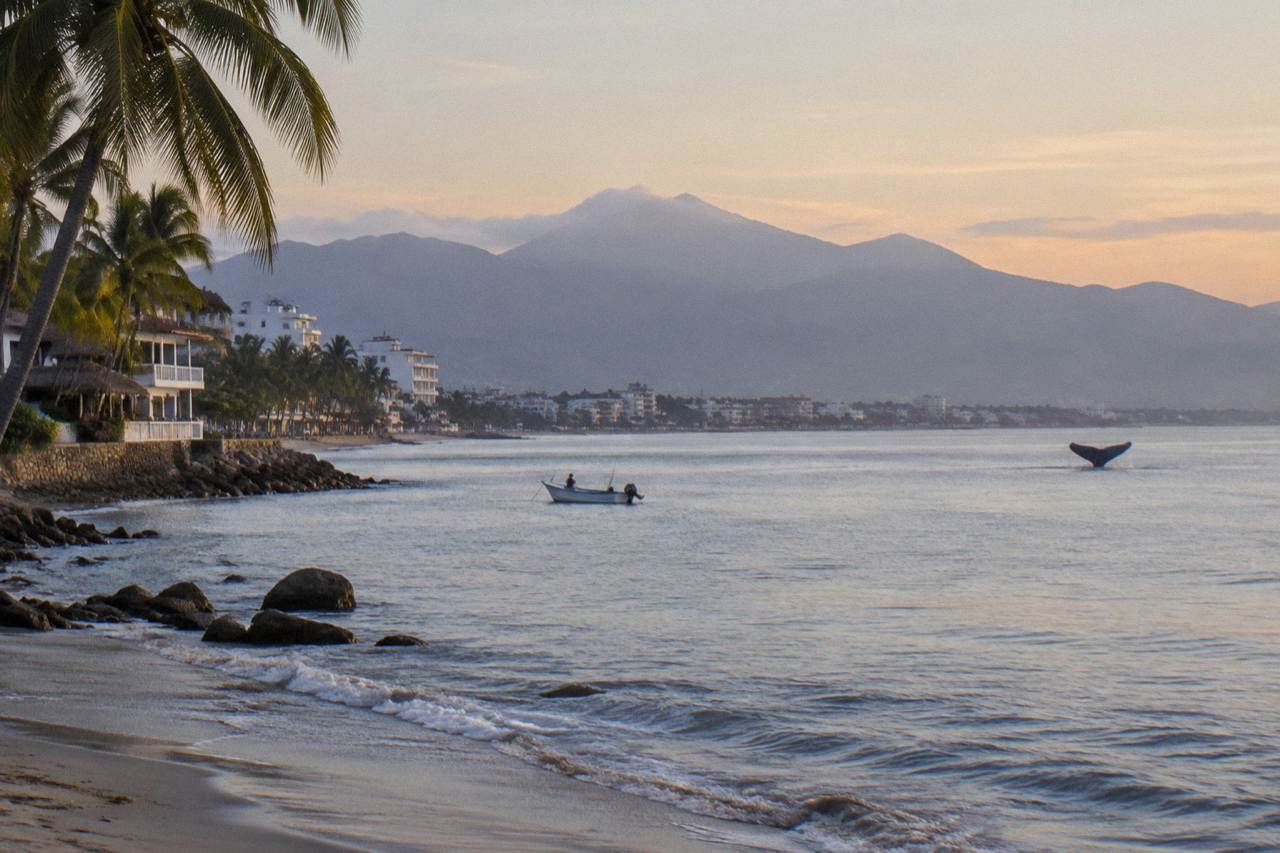
In season, roughly December through March, a sighting is a common outcome but never a certainty, and no honest operator or this site will quote you a percentage. The official window ran 8 December to 23 March last season, about 500 humpbacks visit the bay each season, and the federal rules that keep boats at a distance also describe sightings as possible, never assured.
That is the honest version of the answer, and it is more useful than the marketing one. Every winter, humpbacks travel from feeding grounds between California and the Aleutian Islands to breed along Mexico's Pacific coast, and Banderas Bay, with about 100 km of coastline and depths reaching 1,436 m, is one of the places they gather. ECOBAC, the local research group, puts the seasonal population at about 500 individuals. Those numbers describe presence, not a schedule. Whales move, weather moves, and a bay the size of 987 km2 gives even a 40 ton animal plenty of room to hide.
What you can control is timing and tour choice. Book inside the official season, pick a licensed boat with a trained guide, and you have stacked every factor that is stackable. Book in November or April, outside the permitted window, and no commercial whale watching is allowed at all, because the season closes by federal notice.
What The Season Window Means For Your Chances?
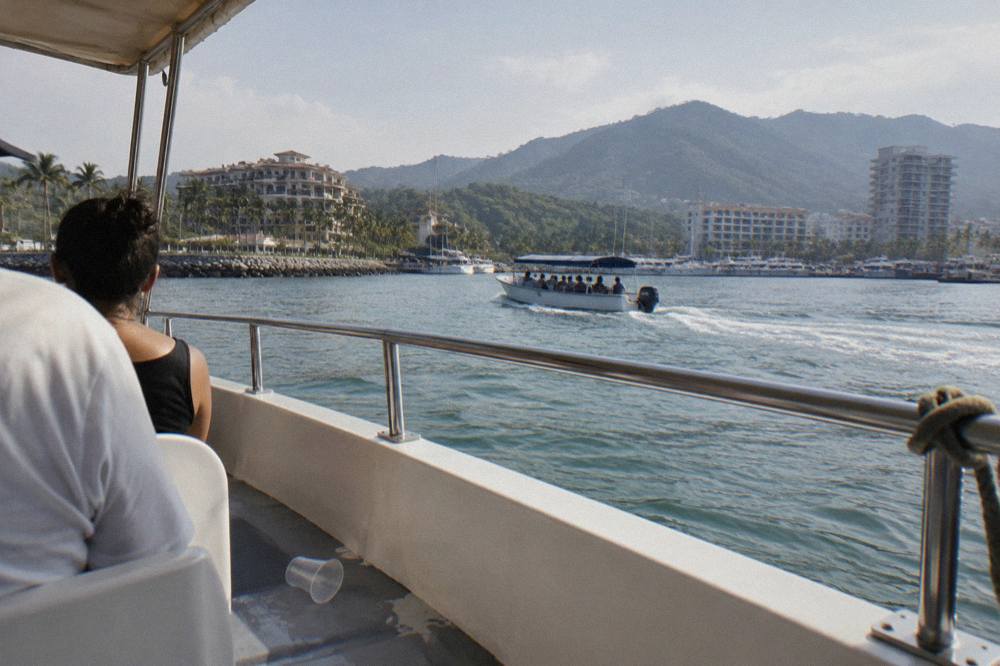
The official season is the single biggest factor in your odds, because outside it there are no legal whale watching tours at all. Last season's federal notice set the window at 8 December 2025 to 23 March 2026, and operators advertise the same 8 December opening for the coming season, though the new federal notice has not appeared yet.
The dates come from SEMARNAT, the environment ministry, published in the Diario Oficial de la Federación each autumn. The aviso for the 2025-26 season opens whale watching across Banderas Bay on 8 December and closes it on 23 March. Within that window, operators and guides name mid-January to mid-March, and especially January and February, as the peak, when mother and calf pairs are commonly reported in the bay.
Around the edges, the picture softens. Hotel and operator guides report that the first humpbacks typically enter the bay in late November, before the season legally opens, and by late March the animals are leaving for the long trip north. A mid-February trip and a mid-December trip are simply not the same product, even if both are legally running. If your travel dates are flexible, aim for the middle of the window.
Thinking about booking in the peak weeks?
Free cancellation is listed on nearly every boat in the roster, so you can lock a January or February date early and still adjust if your plans shift. The biologist-led whale watching adventure from Marina Vallarta is a strong in-season pick.
Here is what the verified record supports, month by month:
| Month | What the official record and operators say |
|---|---|
| November | First humpbacks typically enter the bay in late November, per hotel and operator guides; no commercial whale watching permitted yet |
| Early December | Season opens, 8 December last season; operators advertise the same start for the coming season; sightings possible but the bay is not yet full |
| January | Named as a peak month by operators; mothers and calves commonly reported |
| February | Named as a peak month by operators; often called the strongest stretch of the season |
| March | Season runs to the 23rd last season; numbers thin as whales begin migrating north |
| April onward | Season closed; no permitted commercial whale watching in the bay |
Why Nobody Can Honestly Promise You A Whale?
No operator in Mexico may promise a sighting, and any "guarantee" on a listing refers to a return-trip or refund policy, not to whales appearing on command. The federal standard governs how boats approach whales, not whether whales show up, and humpbacks are wild animals whose position no one controls.
It is worth reading guarantee language carefully. One listing on the roster carries the word in its title, but its page text on file states no guarantee, re-ride or refund policy at all, which is exactly why we describe it by its format rather than lean on its name. Other tours in other markets run "whale guarantees" that mean a free second trip if nobody sees a whale, and if a listing you are reading offers that, the terms are on the listing to check before you book.
The deeper point is that a guarantee cannot change whale behavior. NOAA, which manages the humpback population that breeds along Mexico's Pacific coast, describes these animals through their migration and life history, not through sighting rates, and no reliable per-trip sighting statistic for Banderas Bay exists in any source we would print. When a blog quotes a "95 percent success rate," ask where the number came from. Usually nobody knows.
What you can verify is different: whether the boat is licensed, whether the guide knows humpback behavior, and whether the operator works within the rules that keep the whales coming back to this bay year after year. That is a better predictor of a good trip than any promise.
Which Factors Actually Move Your Odds?
Four controllable factors matter: the date inside the season, the time of day, the guide's knowledge, and the boat's freedom to move around the bay. None of them guarantees a sighting, but together they separate a well-run trip from a lottery ticket, and most of them are visible on the listing before you pay.
Timing first. Operators run morning and midday departures across the roster, and we lay out what is known about the question in best time of day to see whales. The honest summary is that whales surface on their own schedule, calm morning seas make sightings easier to spot from a distance, and no source we trust prints an hour-by-hour success rate.
Guides second. A biologist or naturalist on board is not decoration. Humpbacks signal, and a trained guide reads fluke prints, breathing intervals and bird activity to work out where a whale will surface next. The NOAA species page for humpback whales outlines how these animals feed, breathe and migrate, and a guide who knows that material changes how a boat hunts. The biologist-led whale and dolphin tour, the most reviewed listing on the roster at 4.9 from 702 reviews, and the marine biologist adventure from Ecotours Vallarta, 5.0 from 168 reviews, both build the trip around that expertise. The can you see whales in Puerto Vallarta post covers the baseline question in more depth.
Boat type third. A small boat covers less water but moves faster between sightings; a catamaran covers more sea in comfort. The whale watching cruise from Mike's Fishing & Tours, 4.8 from 413 reviews with breakfast, buffet lunch and open bar, and the small-group half day from Marina Vallarta, 5.0 from 353 reviews with lunch and soft drinks, represent the two ends of that trade-off, and we compare them properly in the Banderas Bay tours compared guide.
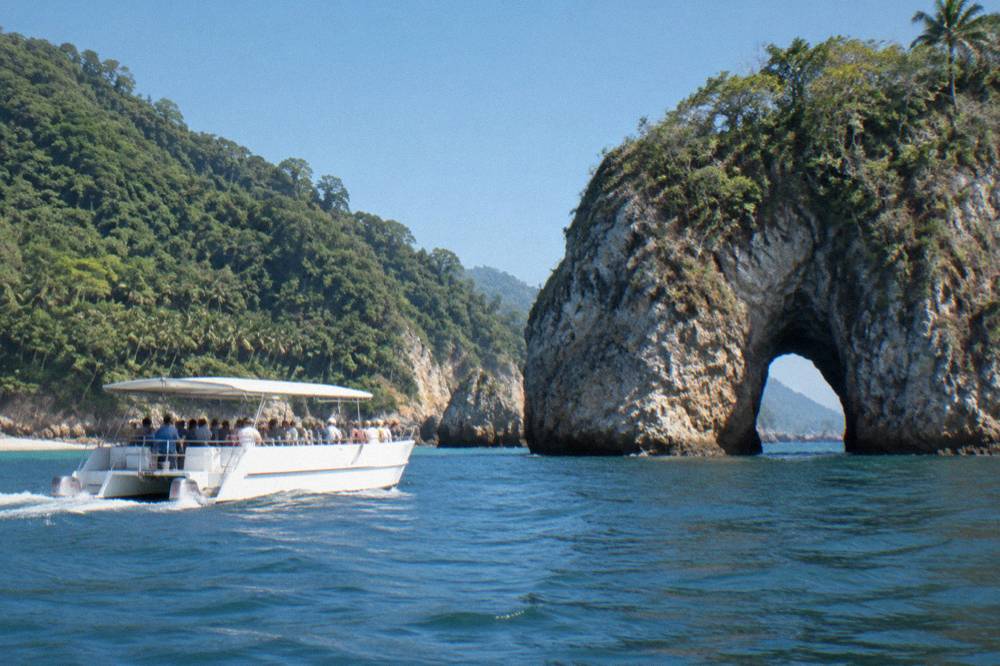
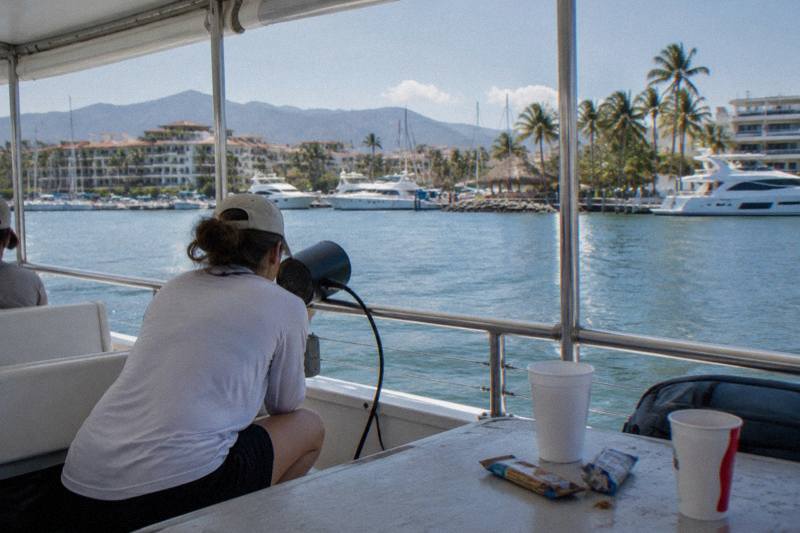
The Eco Explorer Vallarta whale encounter is another strong option in this middle band: small-group from Marina Vallarta, 3 hours, from $99 per person, rated 4.9 from 530 reviews, with a hydrophone on board so the boat can listen for whale song as well as look for flukes.
Weather and sea state sit outside your control but inside the operator's judgment. Skippers call off departures in rough conditions, and free cancellation is listed on almost every roster boat, so a weather call rarely costs you the fare. Hurricane season in the Eastern Pacific runs 15 May to 30 November, ending just before whale season opens, which is one more reason the December start date exists at all.
What The Federal Rules Mean For How Close You Get?
Licensed boats may approach to 60 m for small vessels and 80 m for larger ones, wait at 240 m, and spend at most 30 minutes with the same whale, under NOM-131-SEMARNAT-2010. The rules shape every sighting you will have, and they exist because this bay is a nursery area where mothers and calves rest.
The numbers are fixed in the federal standard published in 2011: at most 4 boats around any whale or group, speeds below 5 knots in observation areas and below 2 knots on entering, no swimming, diving, kayaks or jet skis anywhere near whales, and never positioning a boat between a mother and her calf. Authorized boats fly a numbered flag with the federal seal. If your skipper does that, you are on a legal boat. We walk through the full rulebook in the Mexico whale watching rules guide.
Enforcement is real. PROFEPA ran an inspection operation in the Nayarit portion of the bay this past season, boarding 17 vessels to check permits and compliance, and the agency states inspections continue throughout the season. The restricted zones matter too: no whale watching within 1.5 km of the Islas Marietas or in the 2 km coastal strip from Punta Mita to the Rio Ameca, precisely because those are where mothers and calves concentrate.
For a visitor, the rules read as good news. A regulated bay is a bay where whales are not harassed, and whales that are not harassed come back, bring their calves close to the fleet's observation distance, and surface alongside boats that idle politely rather than chase. Your sighting, when it comes, will look like a whale deciding to be where you are, which is the only version of the encounter worth having. If you're curious which animals might make that decision, the guide to the whale and dolphin species of Banderas Bay covers who actually lives in these waters.
Does The Tour You Book Change The Answer?
Yes, modestly. Every licensed boat on the water the same morning faces the same whales, but trip length, group size and guide expertise change how long you stay with a sighting and how much you understand of what you are watching. Price, on this roster, tracks inclusions and boat type more than it tracks sighting odds.
The cheapest pure whale boat on file is from $62 per person for a 4.5-hour shared trip, and the whale and snorkel combo from $42 is the lowest firm price on the roster, rated 3.9 from 65 reviews. At the other end, the featured biologist-led adventure runs from $120 per person, and private charters start from $600 per group. Roster prices span $42 to $2088, and none of that range buys a higher chance of a whale. It buys food, drink, boat comfort and guide quality. The full price picture is in what a whale tour costs in Puerto Vallarta. Whether any of that spend actually pays off is the question our honest verdict on Puerto Vallarta whale watching takes on directly.
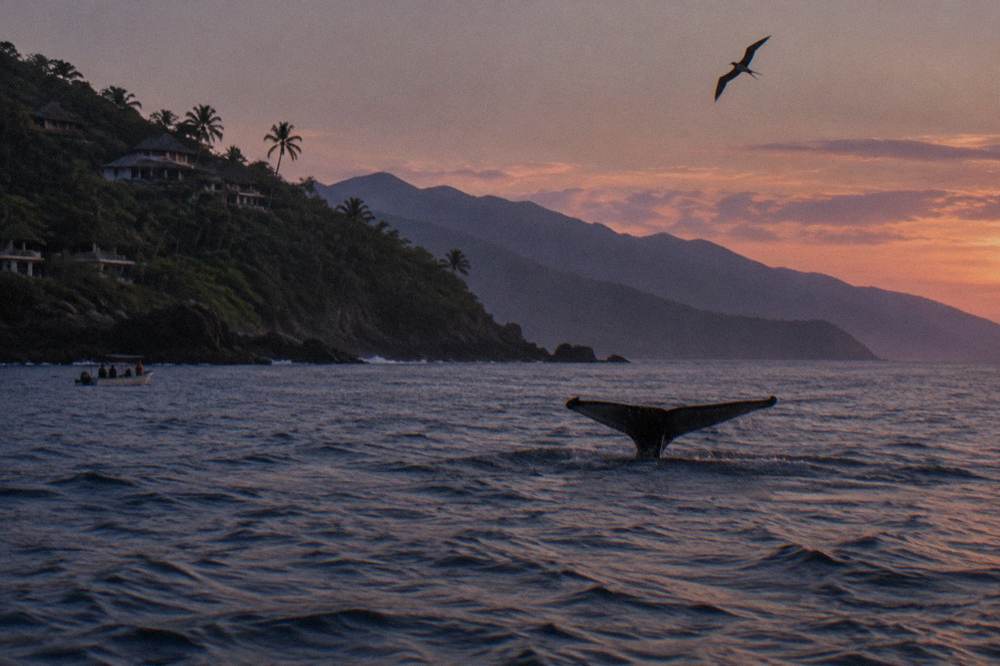
Here is how the format choices compare on the things that touch your odds:
| Format | What it offers for sightings | Representative roster listing |
|---|---|---|
| Biologist-led small group | Guide reads behavior, hydrophone listens for whale song, 3 to 4 hours on the water | Whale Watching Adventure Led by a Marine Biologist, from $120, 5.0 from 168 reviews |
| Most-reviewed shared boat | Four hours with a biologist, lunch sandwich and snacks included | Whale and Dolphin Watching with a Biologist, from $105, 4.9 from 702 reviews |
| Photo safari | Small group focused on positioning for photographs | Small-Group Whale Photo Safari, from $79, 4.7 from 190 reviews |
| Catamaran cruise | Comfort, food and open bar, wide viewing decks | Whale Watching Cruise, from $99, 4.8 from 413 reviews |
| Private charter | Set your own pace and stay with a sighting the full permitted 30 minutes | Private Whale Watching Tour, from $760 per group (up to 8), 5.0 from 113 reviews |
The catamaran cruise from Mike's Fishing & Tours, departing Puerto Magico or Nuevo Vallarta marina with continental breakfast, buffet lunch and open bar, suits travelers who want the sighting wrapped in a full morning on the water.
One caution that ties back to the odds question: listing counts and ratings describe the whole experience, not the probability of a whale. A 5.0 from 3 reviews is three people's good mornings. A 4.9 from 702 reviews tells you the operator runs a consistent product across an entire season, which is the closest thing to an odds signal the data honestly supports.
To stack the deck in your favor: travel between mid-January and mid-March if you can, book a licensed boat with a biologist or naturalist guide, choose a format whose duration and comfort match your group, and read the cancellation terms on the listing. That is the whole playbook, and it is the same one this site's Puerto Vallarta Whale Watching comparison uses when sorting the roster. The whales will do the rest, or they will not, and either way you will have spent a winter morning on one of Mexico's great bays.
Common Questions About Whale Sighting Odds In Banderas Bay
How Likely Are You To See A Whale On A Banderas Bay Tour?
In season, sightings are a common and widely reported outcome, but no honest figure exists as a probability and no operator may promise one. Book between mid-January and mid-March, when operators name the peak, and go with a licensed boat for the best of what you can control.
Is there a best month for whale sightings in Puerto Vallarta?
Operators and guides name January and February, and more broadly mid-January to mid-March, as the peak of the season, when mothers and calves are commonly reported. Last season's official window ran 8 Dec to 23 Mar 2026; the next notice isn't out yet.
Do any tours guarantee a whale sighting?
No tour can guarantee whales will appear, and the listing whose title uses the word states no guarantee policy in its page text on file. Where an operator offers a "guarantee," it means a return trip or refund if no whale is seen, and the terms are on the listing to check before booking.
Does a more expensive tour improve your odds?
Not directly. Roster prices run from $42 to $2088, and the higher figures buy food, open bars, private boats and biologist guides rather than better odds. A knowledgeable guide and a licensed boat matter more than the price tag.
Can you see whales outside the official season?
No commercial whale watching is permitted outside the federal window. Guides report the first humpbacks typically arriving in late November, but boats may not run whale watching trips until the season opens, around 8 December, and it closes in late March.