Can You See Whales In Puerto Vallarta?
Yes, humpback whales visit Banderas Bay every winter, and this guide covers when the season runs, how reliable sightings are, and whether you can spot whales from shore or need a boat.
Can You See Whales In Puerto Vallarta?
Yes. Humpback whales migrate to Banderas Bay every winter, and Puerto Vallarta sits directly on that bay, which makes it one of the most accessible whale-watching destinations on Mexico's Pacific coast. The official season window last ran 8 December 2025 to 23 March 2026 under the federal SEMARNAT notice, and operators advertise the same 8 December opening for the season ahead. If you want to see how this bay stacks up against other humpback hotspots, our guide to the best place in Mexico to see whales compares the top contenders.
The bay itself is the draw. It covers about 987 square kilometers with roughly 100 kilometers of coastline between Punta Mita in the north and Cabo Corrientes in the south, and it reaches a maximum depth of 1,436 meters in the trench off Quimixto and Yelapa. That combination of deep water close to shore and sheltered surface conditions is what brings the whales back each year. ECOBAC, a local research group, estimates about 500 individual humpbacks visit the bay per season.
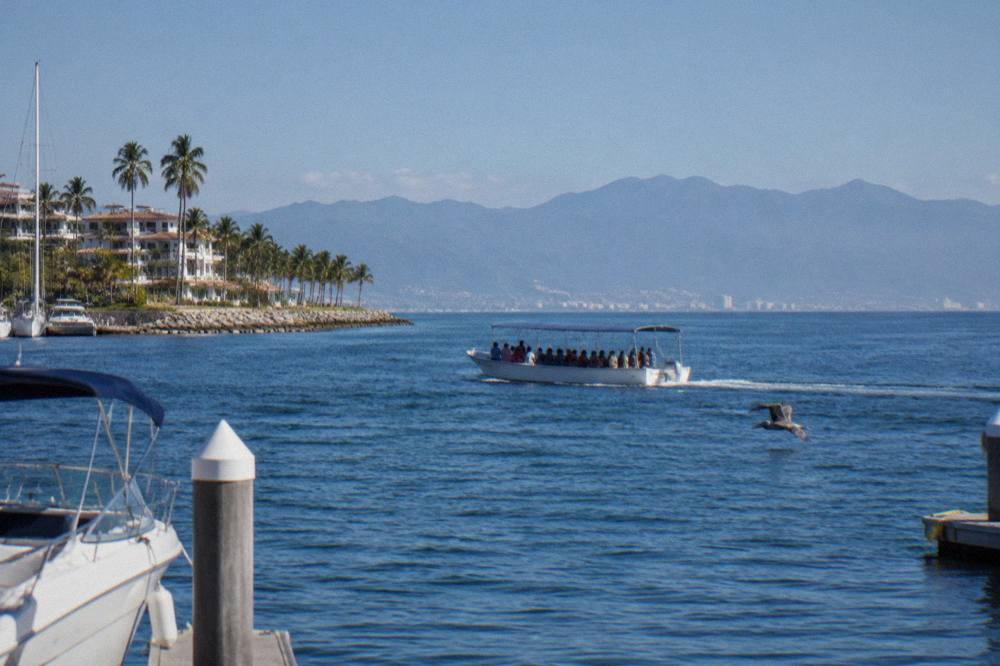
Seeing them, though, is a question of timing rather than luck. Humpbacks are here for a defined winter window, they come to breed and calve, and they leave again in spring. Arrive inside that window and the bay is one of the most productive whale habitats in Mexico. Arrive in summer and the honest answer is that the humpbacks are gone, because they feed for those months off the coast of California and as far north as the Aleutian Islands, as NOAA's humpback species page describes.
That is why this article exists and why Puerto Vallarta Whale Watching is built around the winter decision. If you are already here reading about feasibility, you are minutes away from choosing a tour, and the choice matters more than the destination does, because the bay is full of boats ranging from $62 shared cruisers to private charters from $760 per group.
When Is The Whale Season In Banderas Bay?
The official federal window ran 8 December 2025 to 23 March 2026 last season, set by a SEMARNAT notice published in the Diario Oficial on 10 October 2025. No federal notice for the 2026 to 2027 season has appeared yet, and operators advertise the same 8 December opening this year. Peak months, operators and guides name, are January and February.
The season dates are not a marketing convention, they are regulation. The SEMARNAT aviso that sets the season also sets two zones where whale watching is not allowed at all: a 1.5 kilometer radius around the Islas Marietas and a 2 kilometer wide coastal strip running from Punta Mita to the mouth of the Rio Ameca. Those closures exist because mother and calf pairs concentrate there, and the federal notice is the reason every authorized tour in the bay starts and stops on the same calendar. You can read the notice itself on the Diario Oficial de la Federación.
Around the edges of the official window, hotel and operator guides report that the first humpbacks typically enter the bay in late November, before commercial tours are permitted. Those early animals are a bonus for sharp-eyed shore watchers rather than something you can book. On the far end, by late March the animals are leaving for the north Pacific feeding grounds, and after the window closes no commercial whale-watching tours run at all.
For trip planning, the practical read is simple. December works, especially late December. January and February are the months operators themselves name as peak, with the most whales and the highest chance of seeing mothers with calves. Early March is still inside the season, and by mid to late March you are planning against the clock. If your dates are fixed outside the window, no tour in the bay will legally take you whale watching, and the honest plan is a different activity or a different month. The full month-by-month breakdown lives in the guide to the best month for whale watching in Banderas Bay.
How Reliable Are Whale Sightings In Puerto Vallarta?
With roughly 500 humpbacks spread across the bay through the peak months, sightings on winter boat tours are commonly reported and operators describe them as routine, but no honest source will promise a whale on any given trip. Humpbacks are wild animals, weather moves them, and Mexican rules forbid the kind of close pursuit that would make sightings certain.
Start with what nobody should write: a guarantee. Sightings depend on where the animals are that day, sea state, and how long a boat can legally stay near them. Under NOM-131-SEMARNAT-2010, the federal whale-watching standard, boats must wait at 240 meters, approach no closer than 60 meters for small boats and 80 meters for larger ones, spend at most 30 minutes with the same whale or group, and keep at most 4 boats around any one animal. Those rules protect the whales and they also mean a boat cannot force an encounter. If you're wondering which species those rules actually protect, this guide to the whales of Banderas Bay covers who lives in these waters and who you're most likely to meet from a boat.
What the rules do not prevent is listening. Several listings on this site carry hydrophones, the underwater microphones that pick up humpback song during the breeding season, and for many visitors that turns a sighting into a much richer experience. The most reviewed boat on this site's roster, the biologist-led whale and dolphin tour with 702 reviews and a 4.9 rating, serves a baguette sandwich, snacks, bottled water and soda on board, with a biologist guide throughout. Guest reviews on that listing repeatedly describe close, unhurried encounters.
The pattern across the roster's review pools tells its own story about reliability. The Whale Encounter listing from Eco Explorer Vallarta, from $99 per person, carries a 4.9 rating from 530 reviews. The small-group half day with lunch holds a 5.0 from 353 reviews. The catamaran cruise from Mike's Fishing & Tours sits at 4.8 from 413 reviews. Review pools that large, sustained across full seasons, do not form around tours that routinely come back empty. Treat any single trip as uncertain, and treat the season as a whole as reliably good.
| Listing | Format | Price | Rating and reviews | Duration |
|---|---|---|---|---|
| Whale and Dolphin Watching with a Biologist | Shared, biologist led | from $105 per person | 4.9 from 702 reviews | 4 hours |
| Small-Group Half-Day Whale-Watching Tour | Small group, lunch included | from $110 per person | 5.0 from 353 reviews | 3 hours 30 minutes |
| Whale Encounter Puerto Vallarta | Small group, snacks and hydrophone | from $99 per person | 4.9 from 530 reviews | 3 hours |
| Whale Watching Cruise (Puerto Vallarta and Nuevo Vallarta) | Catamaran, breakfast and buffet | from $99 per person | 4.8 from 413 reviews | 4 hours |
| Whale & Dolphin Watching with Hydrophone | Shared, drinks included | from $62 per person | 4.5 from 24 reviews | 4.5 hours |
Can You See Whales From Shore In Puerto Vallarta?
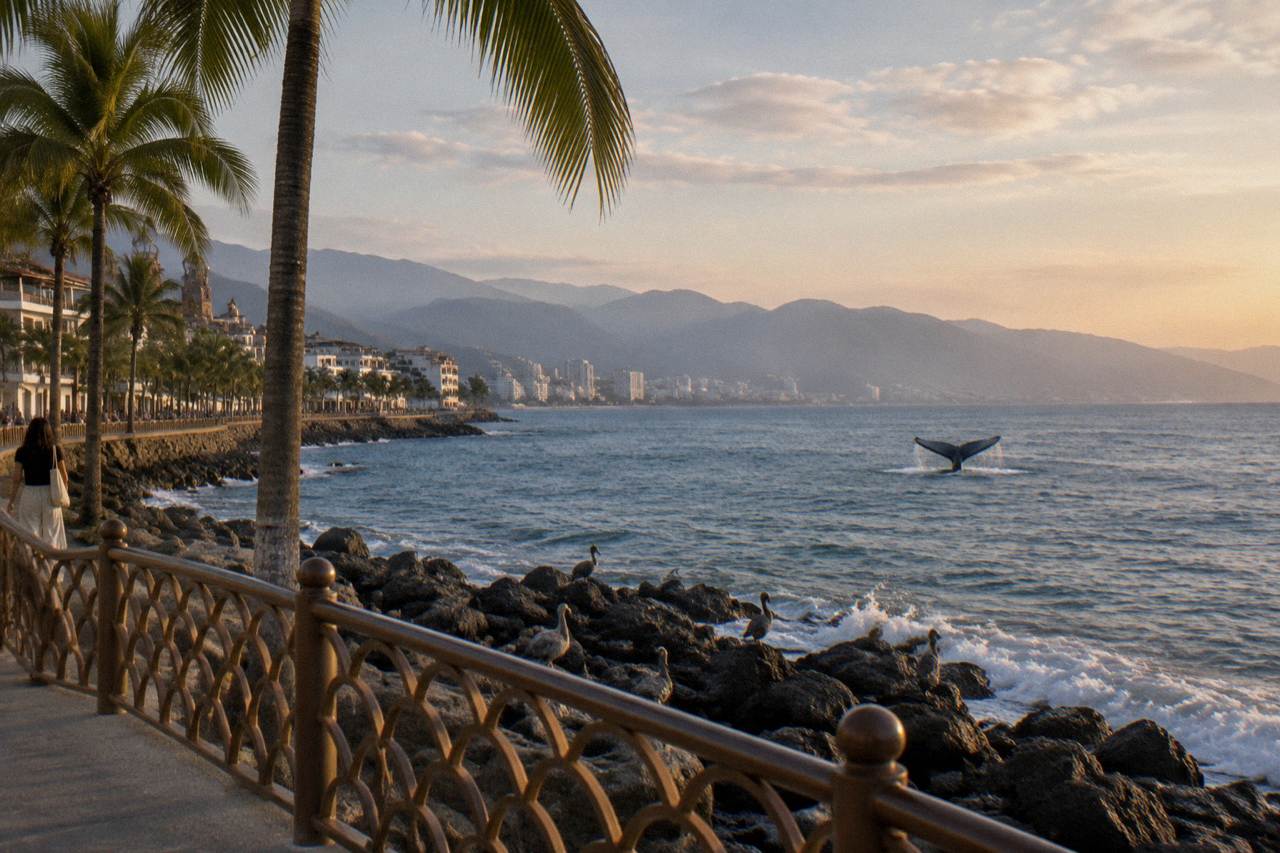
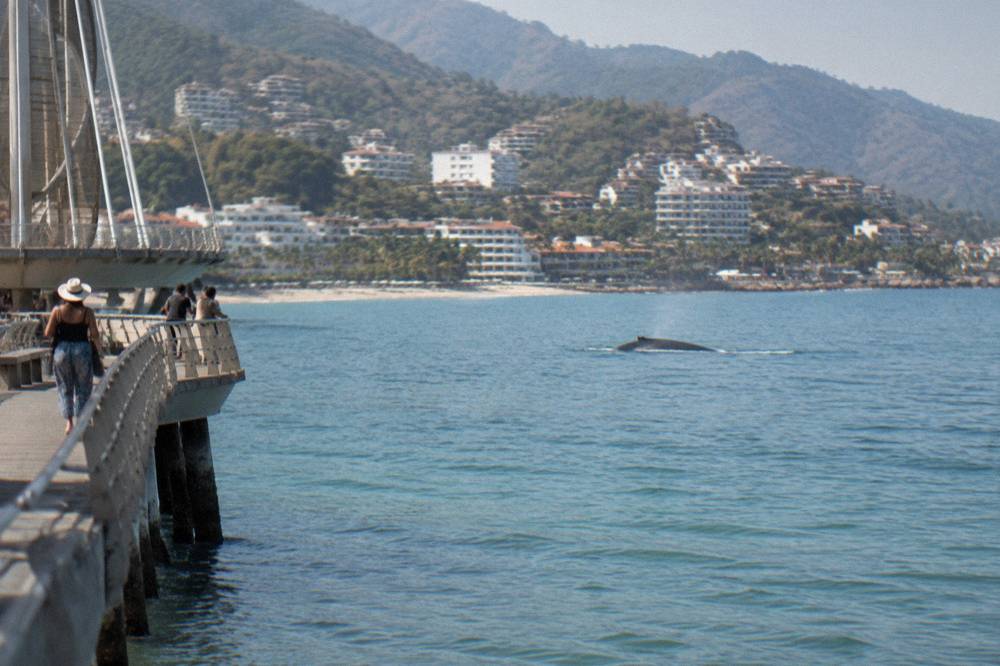
Yes, and it costs nothing. During peak months humpbacks surface close enough to be visible from Puerto Vallarta's shoreline, and the public pier areas, the Malecon boardwalk and the beaches south of Zona Romantica are all legitimate places to watch from. What shore watching cannot give you is proximity, song, or the mothers and calves that stay farther out.
Shore watching rewards patience and the right stretch of coast. The bay's shape funnels whale traffic relatively close to land in places, and on active days blows, flukes and full breaches are visible with the naked eye from the sand. The Malecon, the public marina and pier areas and the shoreline views of the bay are the dependable free vantage points, and they are covered in more detail in the guide to free things to do in Puerto Vallarta. Bring binoculars if you have them and scan the horizon for the tall, bushy blow of a humpback, which can reach several meters and is often the first sign of an animal.
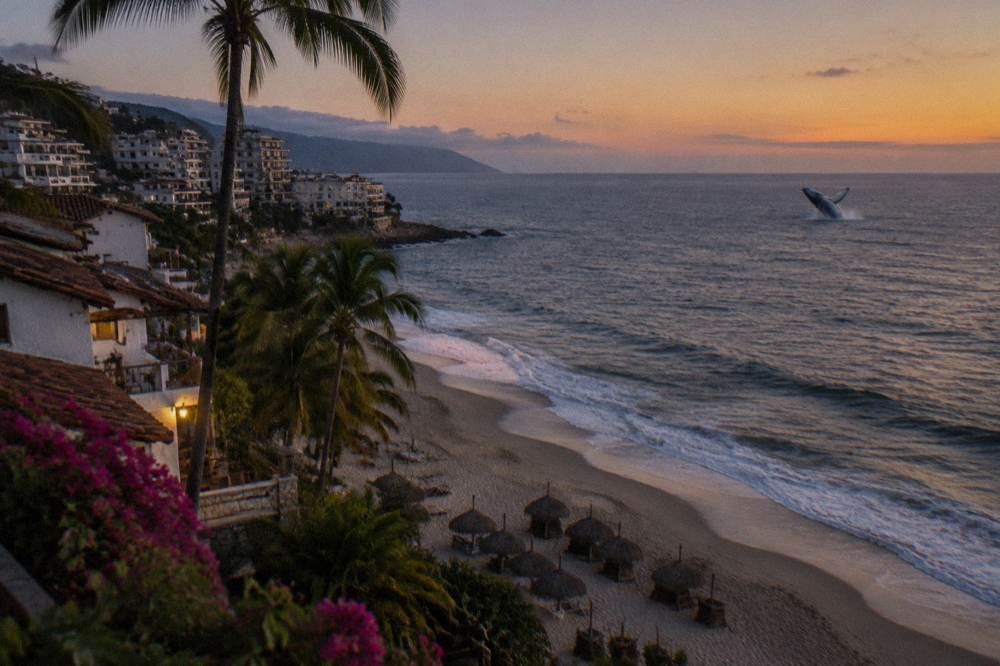
The trade-off is real, though. A whale far offshore looks like a dark dot with an occasional splash, while a boat operating legally at 60 to 80 meters puts you close enough to hear the blow and see the detail of the animal. Boats also carry hydrophones, and the biologist-led options explain what you are watching. For most visitors the answer is both: scan from shore on your beach days, and put one morning on a boat. If you are weighing the two formats seriously, the guide to private versus shared whale tours breaks down the cost logic, and the roster's private options run from $266 per group at the small end to $760 per group for a fully catered trip.
Which Whales Will You Actually See?
Almost certainly humpback whales. The winter season in Banderas Bay is built around them, they are the species the federal rules and the tours are written for, and humpbacks reach about 60 feet and about 40 tons according to NOAA. Dolphins are a common companion sighting on the same trips, and several listings explicitly include them.
The humpbacks that breed here belong to the Mexico population, which NOAA lists as Threatened under the US Endangered Species Act. They feed from California to the Aleutians and return to the Mexican Pacific coast each winter to mate and calve, which is why the bay fills with singing males, competing suitors and, by January and February, mothers with newborn calves. The behavior you are most likely to witness, breaching, tail lobbing and fluke-up dives, is cataloged in the guide to humpback whale behavior in Banderas Bay, and the broader cast of species in the bay is covered in what whales live in Banderas Bay.
Bottlenose and spinner dolphins are resident in the bay year round, and several roster listings name dolphin watching in their titles, including the biologist-led whale and dolphin tour and the shared hydrophone cruise. A whale tour in peak season is therefore usually a two-species trip. What you will not see here is orcas as a dependable draw, and swimming with humpbacks is prohibited outright under NOM-131, so any snorkeling on a combo tour happens at a reef or beach stop well away from the whales.
What Does A Tour Add Over Watching From The Beach?
A legal close approach, an expert who can read the bay, and a hydrophone that turns a distant splash into an animal you can hear. Boats may approach to 60 or 80 meters while shore viewing leaves you far out, and the small-group and biologist-led formats add interpretation that shore watching simply cannot match.
The regulatory piece matters more than most visitors realize. Only SEMARNAT-authorized boats may conduct whale watching in the bay, and authorized vessels fly a numbered flag with the federal seal; unlicensed boats must stay 240 meters away. PROFEPA runs inspection operations through the season, boarding vessels to verify permits and compliance, so the licensed tour you book is operating inside a real enforcement system, as the official PROFEPA inspection report documents. Practical advice from the same enforcement reporting is blunt: minimize impact, be patient during sightings, and use only authorized operators.
The experience differences are just as concrete. The small-group half day, from $110 per person, includes a marine biologist guide, lunch and soft drinks across 3 hours 30 minutes on the water. The catamaran cruise pairs whale watching with a continental breakfast, buffet lunch and open bar from $99 per person. At the budget end, the shared hydrophone tour from $62 per person includes drinks and a marine biologist across 4.5 hours, and it is the cheapest pure whale boat on the roster. Whichever format fits, check the listing for the operator's age and health rules before you book.
One planning note worth having early: hurricane season in the Eastern Pacific runs 15 May to 30 November, which barely overlaps the whale season but does overlap late-season trip planning and early December arrivals. Sea temperatures in the bay peak above 30 degrees in August and September and fall to the low 20s by February, when the whales are present. If you are sensitive to conditions on the water, the post on getting seasick while whale watching is the honest companion read.
Common Questions About Seeing Whales In Puerto Vallarta
Can You See Whales In Puerto Vallarta?
Yes. Humpback whales visit Banderas Bay every winter, with the official season last running 8 December 2025 to 23 March 2026 and operators advertising the same 8 December opening for the season ahead. Shore watching from the Malecon and beaches works in peak months, and authorized boat tours bring you to the legal 60 to 80 meter approach distance.
Can you see whales in Puerto Vallarta?
Yes, in winter. Humpbacks breed and calve in Banderas Bay from December through March, with January and February named by operators as peak months. Roughly 500 individual humpbacks visit the bay per season according to the local research group ECOBAC.
Is there whale watching available in Puerto Vallarta?
Yes, boat tours run throughout the official season, from a shared hydrophone cruise at from $62 per person to private charters from $760 per group. All tours must operate under SEMARNAT authorization, and only licensed boats may approach the whales.
What is the best month to see whales in Puerto Vallarta?
Operators and guides name January and February as peak, with mid-January to mid-March cited as the strongest stretch. The season as a whole runs from early December to late March under the federal notice.
Can you see whales from the beach in Puerto Vallarta?
Yes, in peak months humpbacks surface visibly from the shoreline, and the Malecon, the public pier areas and the beaches of Zona Romantica are good free vantage points. The view is distant compared with a boat, but it costs nothing and requires no booking.
Are whale sightings guaranteed on a tour?
No honest tour or source guarantees a sighting. Humpbacks are wild animals and federal rules limit how close and how long boats may stay near them. The large, sustained review pools on the bay's most-booked tours indicate that winter encounters are commonly reported, but every trip carries some uncertainty.