Best Month To See Humpbacks In Banderas Bay: January Vs February
The official season runs early December to late March, but the two months inside it are not equal. Here is how January and February compare, and what the shoulder weeks in December and March actually deliver.
Short answer
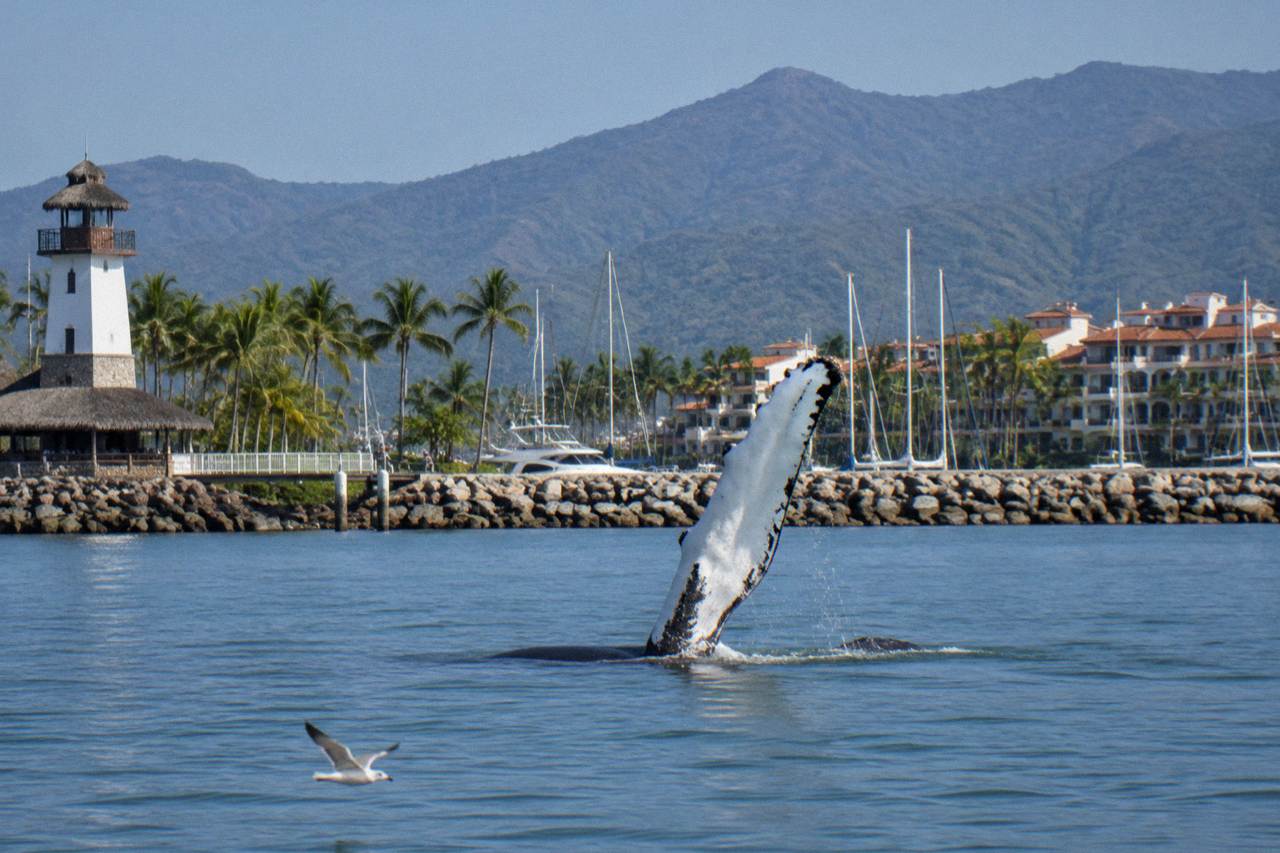
Operators and guides name January and February as the peak of the humpback season in Banderas Bay. The official window ran 8 December to 23 March last season, and operators advertise the same 8 December opening this year. Mid-January to mid-March carries the densest whale activity, including mothers with calves.
Humpback whales reach about 60 ft and about 40 tons, and the Mexico population that breeds along the Pacific coast each winter feeds the rest of the year from California to the Aleutians. Banderas Bay is one of the places they come back to, season after season, and the local research group ECOBAC estimates about 500 individual humpbacks visit the bay per season. Those whales are not spread evenly across the winter. The federal season notice opens the water to whale boats for roughly sixteen weeks, and inside that window some weeks carry far more whales, more calves and more boats than others. Picking the right month is the single most consequential decision in planning a trip, more than the boat, the departure marina or the operator. Once you have picked your month, knowing how crews spot humpbacks from distant blows to fluke-up dives turns a long hour of scanning the horizon into a search with direction.
That choice deserves real data rather than folklore, and most of what circulates online is folklore. This guide compares the months the way a planner needs them compared: how many whales the guides report, when calves typically appear, what the verified weather numbers say about rain and sea temperature, and how the crowds shift. The tours that run in each month are part of the answer too, from the biologist-led whale and dolphin boat out of Opequimar to
What Is The Best Month For Whale Watching In Puerto Vallarta?
The best month for whale watching in Puerto Vallarta is either January or February, with the peak running roughly mid-January to mid-March. Operators and guides consistently name those two months for whale density, surface activity and the presence of mothers with calves. Last season's official window ran 8 December 2025 to 23 March 2026 and covered both peak months; the next notice is not yet published.
The reason is migration timing. Humpbacks begin arriving from the north in waves, and hotel and operator guides report the first humpbacks typically enter the bay in late November, before the official season even opens. Numbers then build through December. By mid-January the bay holds the densest concentration of the winter, and it stays that way through February before tapering in March as animals begin the journey back to their feeding grounds.

One caution on wording: the official record for last season, the SEMARNAT notice published in the Diario Oficial on 10 October 2025, set the 2025-26 window at 8 December 2025 to 23 March 2026. No federal notice for the new season has appeared yet. Operators advertise the same 8 December opening for the coming season, which is a strong signal but not yet an official date, so treat early December plans as provisional until the federal notice lands. Nothing about January and February changes in any scenario: both sit months inside the window in every version of the calendar.
| Month | Official status | What to expect |
|---|---|---|
| November | Season closed | First humpbacks reported in late November, but no licensed whale watching |
| Early December | Last season opened 8 December | Whales present and building, thinner crowds, occasional rougher early-season seas |
| Mid to late December | Open | Good activity, holiday-week crowds on the water |
| January | Open, peak | Operators and guides name it a peak month for density, breaches and calves |
| February | Open, peak | Named alongside January as the best month for sightings and mother-calf pairs |
| March | Open until late in the month | Strong activity early, thinning as whales leave, mothers with calves still reported |
| April onward | Closed | No licensed whale watching until the following December |
For readers who want the fuller background on the season's dates and the rules that govern them, the humpback season dates guide breaks down the federal notice, and the weather in whale season guide carries the full monthly numbers.
January Or February: Which Month Has More Whales In Banderas Bay?
Both months deliver peak activity, and no verified count separates them. Operators and guides name January and February together as the best months for whale watching in Banderas Bay, with the broader peak described as mid-January to mid-March. February carries a slight edge for mother-calf pairs simply because more calves have been born by then, while January often brings more adult surface activity.
No source publishes a per-month whale census for the bay, so any claim that one month beats the other by a specific number is invention. What is documented is consistent: January and February are named peak months across operator guides and independent reporting alike, and the population behind it, about 500 individuals per season, is spread across the whole sixteen-week window with its densest stretch in that middle period.
The practical differences between the two months are on the human side. January sits outside the peak holiday travel weeks for most of the month, which usually means slightly more availability on the small-group boats. February overlaps with high season in Puerto Vallarta generally, so the most-reviewed listings, like the small-group half day rated 5.0 from 353 reviews from $110 per person, and the biologist-led whale and dolphin tour rated 4.9 from 702 reviews from $105 per person, fill their peak-week dates first. If February is your month, book the boat before the hotel.
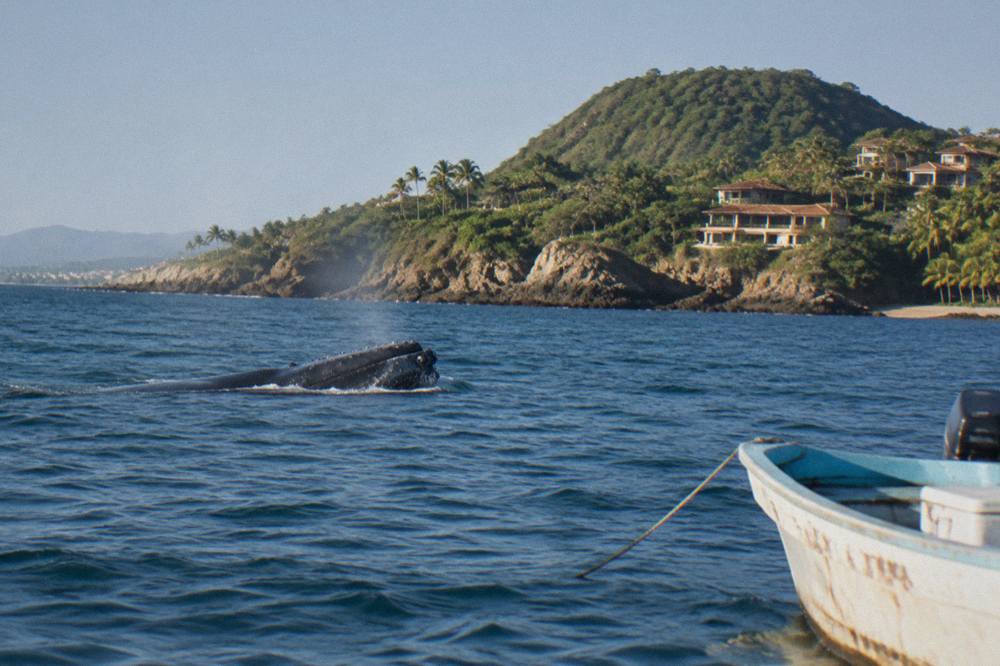
This is also where the choice of month meets the choice of tour. The small-group half day with a marine biologist and lunch, the most-reviewed biologist-led whale and dolphin tour, and the whale photo safari.
Between the two peak months, the honest answer is that the whales do not care which one you pick, and neither should you. Pick the month that fits your travel dates, then put your attention into the boat: a marine-biologist-led small group changes what you notice and understand far more than two weeks of calendar ever will. The behavior guide on how humpbacks behave in the bay explains what each of those surface displays means.
Can You See Whales In Early December From Nuevo Vallarta?
Yes, whales are commonly reported in early December. Last season's official window opened 8 December 2025; the next notice is not out yet. Early December is a genuine value window: whales are present and building, holiday crowds have not yet arrived, and the listings that depart Nuevo Vallarta and the Puerto Magico terminal are already running. Expect fewer animals than in January or February, not none.
The build-up is gradual rather than sudden. The first arrivals reported in late November are usually early adults, and December weeks add to the gathering through the month. Operators advertise the same 8 December opening for the new season, so the boats legally on the water in week one are the licensed, permitted ones, the same fleet that runs in February.
Nuevo Vallarta and the neighboring Puerto Magico terminal give December travelers a wide menu. The catamaran whale cruise with continental breakfast, buffet lunch and open bar, rated 4.8 from 413 reviews, runs from $99 per person from either Puerto Magico or the Nuevo Vallarta marina. The mega yacht sunset and whale watching sailing, rated 4.8 from 517 reviews, runs from $110 per person with an open bar and food. Both are format choices as much as month choices: December's softer demand makes the bigger boats easier to book at short notice, while January dates need more lead time.
One planning note for December specifically: sea conditions early in the month can be livelier than the flat-calm weeks of late winter, though no monthly swell data exists to rank it, so treat sea state in December as variable and pack for it. The guide on what to bring on a whale tour covers the practical list, and anyone sensitive to motion should read whether whale watching causes seasickness, because a choppy early-December morning is the scenario that article exists for.
Is March Too Late For Calves In Banderas Bay?
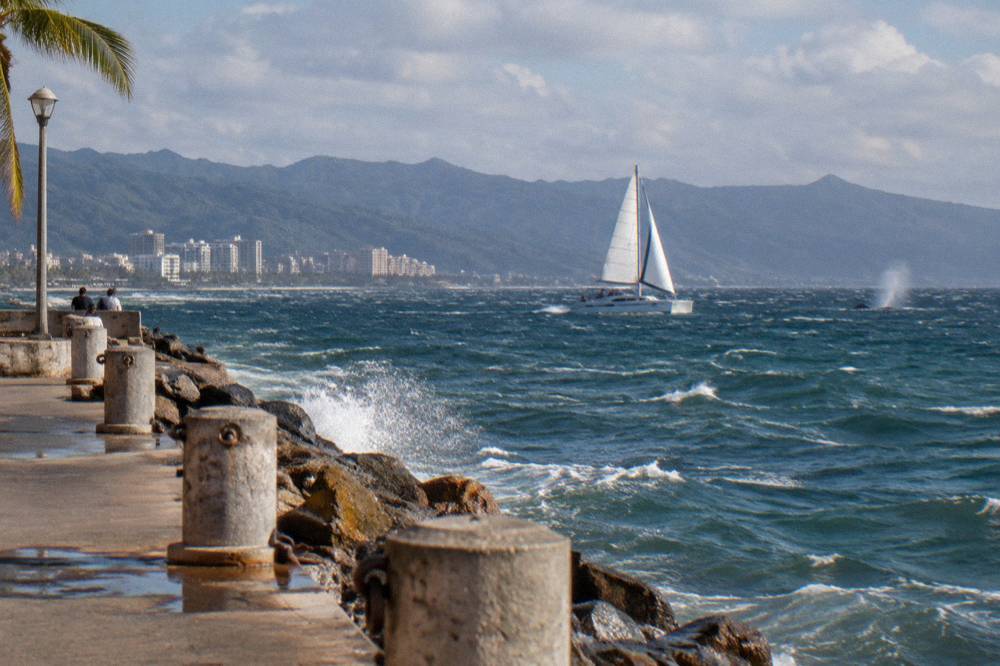
March is not too late, but the clock is running. The season stays open until 23 March, and the peak described by operators runs to mid-March. Mothers with calves are still reported through the closing weeks, and the northbound departure is gradual, so early March often feels like February with fewer boats. After the season closes, no licensed whale watching runs at all.
The mothers are the reason the season ends when it does. The federal notice protects the mother-calf pairs that concentrate in Banderas Bay each winter, and it is no accident that the closing date lands in late March as the whales begin leaving. A mid-March trip can still deliver everything a January trip delivers, surface activity, singing bulls on the hydrophone, calves staying close to their mothers, but the odds thin week by week. Anyone booking March should aim for the first half of the month and treat the final week as a bonus, not the plan. More of these guides are collected on Puerto Vallarta Whale Watching.
March also has a quiet advantage: the weather numbers. March averages just 4 mm of rain across one rain day, the air mean is a mild 22.2 C, and the sea sits around 23.9 C, which is as calm and dry as the winter gets on paper. Fewer visiting crowds than February means the small-group photo safari, rated 4.7 from 190 reviews from $79 per person, is easier to seat a family on with short notice.
How Does Sea State And Weather Compare By Month?
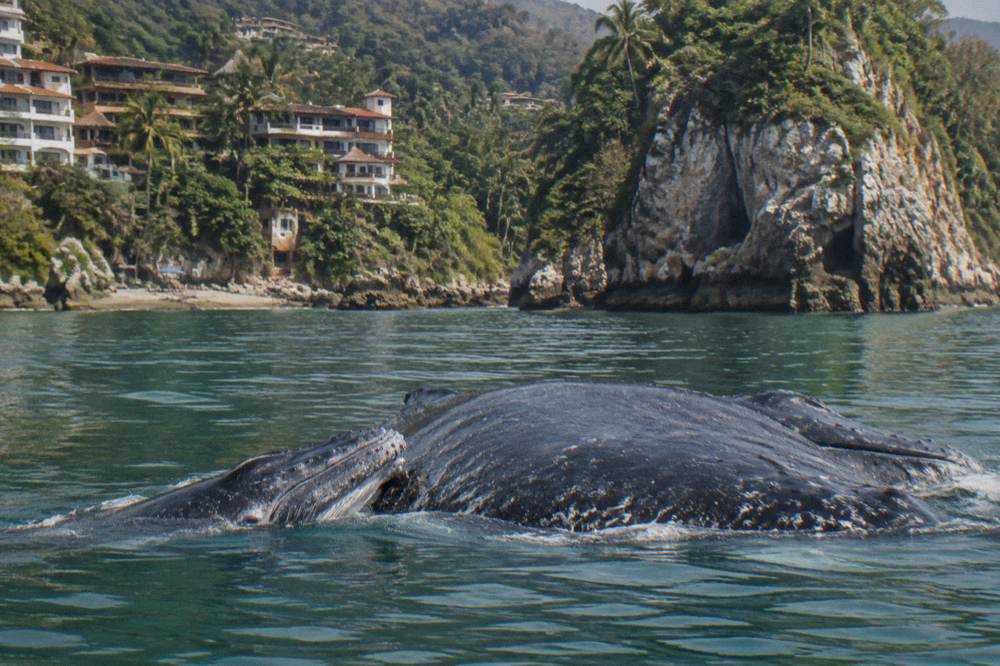
Verified weather numbers favor January through April as the driest, calmest stretch of the year. January averages 37 mm of rain over two rain days, February 12 mm over one, and March 4 mm over one, while the sea holds between 23.9 and 24.9 C. No monthly swell or visibility data exists, so sea-state comparisons beyond rain and temperature are qualitative only.
The numbers that follow are the verified climate record for Puerto Vallarta, and they explain why the whale season sits exactly where it does: the bay's driest, most settled months are the whales' months. The hurricane season of the Eastern Pacific runs 15 May to 30 November, so the season opening on 8 December begins once that risk window has closed, and the whole whale calendar lives inside the dry season.
| Month | Sea temperature (C) | Rain (mm) | Rain days | Notes for whale watching |
|---|---|---|---|---|
| December | 25.2 | 21 | 2 | Early arrivals, holiday crowds late in the month |
| January | 24.5 | 37 | 2 | Peak month named by operators and guides |
| February | 23.9 | 12 | 1 | Peak month, driest of the season on paper |
| March | 23.9 | 4 | 1 | Late-season calves, thinning whales, calm weather |
| April | 24.9 | 4 | 1 | Season closed, no licensed whale watching |
Rain matters less than you might think on the water and more than you might think for the trip around it. A rainy-day whale tour still runs, and humpbacks surface in rain. What rain changes is the viewing comfort, the photography light and the boat ride out, which is why the February and March numbers, 12 mm and 4 mm respectively, read so well next to July's 362 mm over 20 rain days. That contrast is also why July through September is the wrong season entirely: heavy rain, hurricane-season risk and a closed whale season all stack on the same months, as the worst month to visit Puerto Vallarta analysis covers in full. If rain alone is shaping your travel dates, the full month-by-month Puerto Vallarta breakdown shows which weeks to avoid and which ones reward the patience.
The restricted zones shape where any of this happens regardless of month. The federal notice prohibits whale watching within a 1.5 km radius of the Islas Marietas and in the 2 km wide coastal strip from Punta Mita to the Rio Ameca mouth, because that nearshore strip is where mother-calf pairs concentrate. A Marietas combo tour therefore does its whale watching outside those zones, in the open bay. The rules on approach distance and boat numbers are laid out in the whale watching rules and distance guide.
Which Month Has The Fewest Crowds In Banderas Bay?
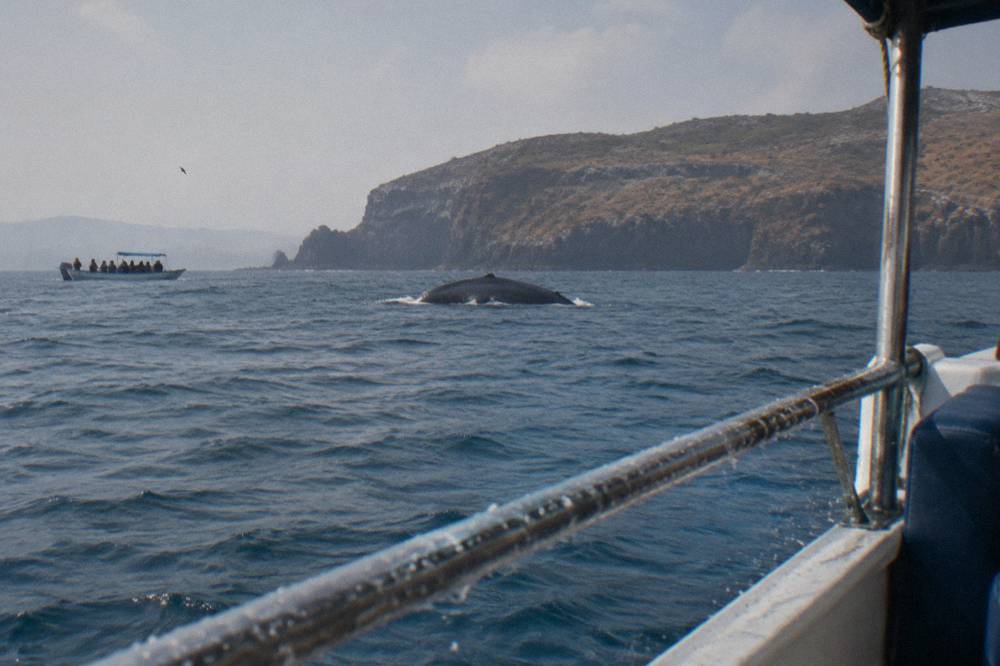
The quietest legal whale watching weeks are 8 to 20 December and the first week of March, on either side of the January-February peak. Early December offers building whale numbers with pre-holiday crowds, and early March offers peak-adjacent activity after the high-season travelers have left. Qualitative only: no monthly visitor or boat-count data is published.
Crowding plays out on two clocks. The travel clock is the familiar one: holiday weeks in late December, January and February are Puerto Vallarta's busiest, and the boats feel it. The whale clock matters more for what you see from the boat: the federal rule caps boats at four around any one whale or group and limits each to 30 minutes, so even in peak month the crowding is managed on the water. That is a real, enforced rule under NOM-131, and PROFEPA ran inspections through last season, boarding 17 vessels in a single Nayarit operation.
The crowd trade is therefore honest and simple. December and early March buy you quieter boats, easier bookings and lower pressure on dates, at the cost of somewhat fewer whales around. January and February buy maximum whale activity at the cost of booking early and sharing the bay. Nobody gets both in one week. What the shoulder months never give you is a worse tour: the same biologist-led whale and dolphin boat runs 8 December to the close, and the baguette lunch, granola snacks and sodas served on board are the same in week one as in week twelve.
| Tour | Format | Price | Rating | Best month fit |
|---|---|---|---|---|
| Whale and Dolphin Watching with a Biologist | Shared, 4 hours | from $105 per person | 4.9 from 702 reviews | Any month; biologist guide, lunch and snacks included |
| Small-Group Half-Day Whale-Watching Tour | Small group, 3.5 hours | from $110 per person | 5.0 from 353 reviews | Book well ahead for January and February |
| Whale Photo Safari (Small Group) | Small group, 3 hours | from $79 per person | 4.7 from 190 reviews | March, when seats open up again |
| Whale & Dolphin Watching All Inclusive | Shared, 4.5 hours | from $78 per person | 4.2 from 221 reviews | Early December value dates |
| Catamaran whale cruise with breakfast and buffet | Catamaran, 4 hours | from $99 per person | 4.8 from 413 reviews | December and March shoulder weeks |
The private route sidesteps the crowd question entirely, at a price. A private whale watching charter from $760 per group for up to 8 people, rated 5.0 from 113 reviews, includes lunch and soft beverages, and its dates are yours alone regardless of what the rest of the bay is doing. The private versus shared whale tours guide works through that trade in detail.
What Should You Book For Each Month Of The Season?
Book any small-group or biologist-led tour two to six weeks ahead for January and February, and more casually for early December or early March. Every listing on this site's roster shows free cancellation except where noted, so holding a peak-week date early costs nothing if plans change. The boat matters more than the week, within the season's core months.
That last point is the one worth repeating, because month anxiety eats more planning time than it deserves. Between 8 December and mid-March, every legal week on the water carries humpbacks. The differences between months are real but modest next to the differences between boats: a shared party-style cruise with an open bar from $78 per person and a 12-guest photo safari with hydrophones from $79 per person are nearly the same price and almost opposite experiences. Choose the format first, the month second, and the departure point third, using the Marina Vallarta versus Nuevo Vallarta departures comparison if your lodging pulls you toward one side of the bay.
| If your travel month is... | Book this early | Consider this instead | Why |
|---|---|---|---|
| Early December | Catamaran or all-inclusive cruise | Biologist-led shared tour | Whales building, boats uncrowded |
| Late December | Small-group tours, now | Shared boats with lunch | Holiday-week demand is the year's tightest window |
| January | Small-group half day or biologist tour | Private charter for a family | Peak density plus peak booking pressure |
| February | Anything small-group or a yacht sailing | The mega yacht sunset sailing | Peak whales, highest seasonal crowds |
| Early March | Photo safari or catamaran | Marietas whale combo | Calves still present, seats opening up |
| Late March onward | Nothing on the water | Plan for next December | Season closes on the official end date |
For readers based in Sayulita or the north end of the bay, the same month logic applies to the Sayulita whale watching options, where a handful of small operators run direct from the beach, and a biologist-led 3-hour trip from Sayulita Beach is listed from $90 per person. The month you choose still decides the whale density; the departure town only decides how early you wake up.
Common Questions About The Best Month For Whales In Banderas Bay
What is the best month for whale watching in Puerto Vallarta?
January and February. Operators and guides consistently name both as the peak for whale density, surface activity and mother-calf pairs. Last season's official window ran from 8 December 2025 to 23 March 2026, and no notice for the coming season has been published yet.
What is the best month for whale watching in puerto vallarta?
The same answer holds: January and February are the named peak months, with strong activity from mid-January to mid-March. Early December and early March are quieter, cheaper-feeling weeks with fewer whales but far fewer crowds.
Can you see whales in Puerto Vallarta in December?
Yes. First humpbacks are typically reported in late November. Last season's official window ran 8 December to 23 March; the 2026-27 notice has not yet been published. December carries fewer whales than January or February but also fewer boats.
Is March too late for whale watching in Banderas Bay?
No, especially the first half of the month. The peak described by operators runs to mid-March, mothers with calves are still reported in the closing weeks, and the season stays open until 23 March. After that date no licensed whale watching runs.
Which month has the best weather for a whale tour?
On the verified numbers, February and March: 12 mm and 4 mm of rain respectively, one rain day each, sea temperatures around 23.9 C, and mild air means in the low 20s C. January is only slightly wetter at 37 mm over two rain days.
Do I need to book a whale tour in advance for peak season?
For January and February, yes, ideally two to six weeks ahead, because small-group boats fill first. Nearly every listing on this site's roster shows free cancellation, so an early booking can be adjusted if your dates move.