What Is The Worst Month To Go To Puerto Vallarta?
September is the statistically worst month for Puerto Vallarta: the most rain, the most rain days, peak hurricane overlap and no whales. Here is how the calendar really breaks down.
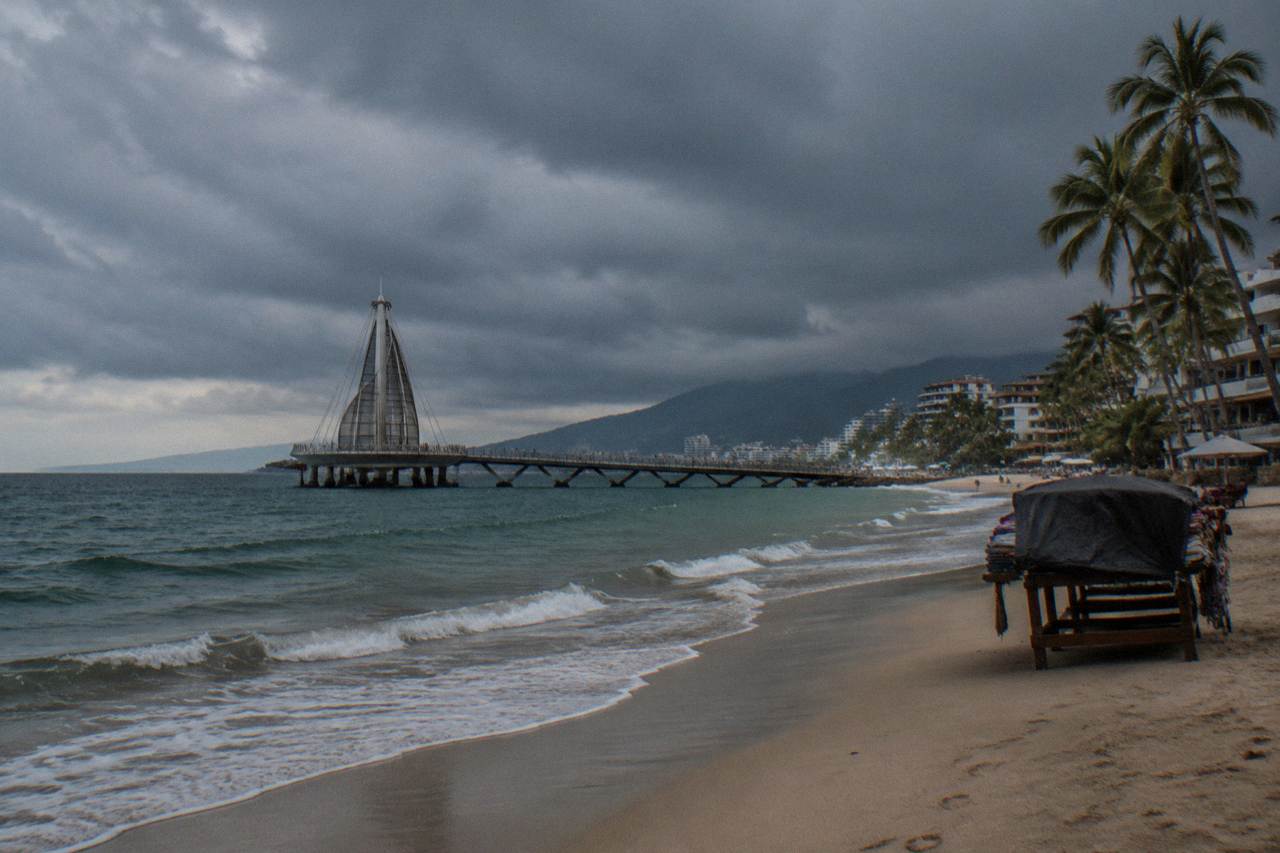
September is the worst month to go to Puerto Vallarta, and the gap is not close. The city averages 429 mm of rain across about 20 rain days, sea temperature peaks at 30.2 degrees Celsius, and the month sits squarely inside the Eastern Pacific hurricane season that runs 15 May to 30 November. The official whale-watching window, 8 December to 23 March, is still more than three months away, so the water is warm, humid and empty of the humpbacks most visitors come for.
That is the short answer, but a trip decision deserves the full calendar. August runs September close, with 380 mm of rain over 21 rain days, the highest rain-day count of the year. July is nearly identical. Together these three months form the core of the rainy season, when afternoon downpours, heat and the hurricane window stack on top of each other. On the Puerto Vallarta Whale Watching side of the planning question, the timing point matters more than any other: every whale boat on the roster, from the all-inclusive dolphin cruise to the biologist-led expeditions, only runs inside the federal season, so the worst weather months and the whaleless months are the same months.
The pairing is not a coincidence. Humpbacks arrive in Banderas Bay because the bay cools and the calendar turns; the same dry, settled pattern that makes December through March the pleasant months on land makes them the whale months on the water. A reader timing a trip around the worst month question usually discovers the answer points them straight at the best one.
Which Months Carry The Most Rain In Puerto Vallarta?
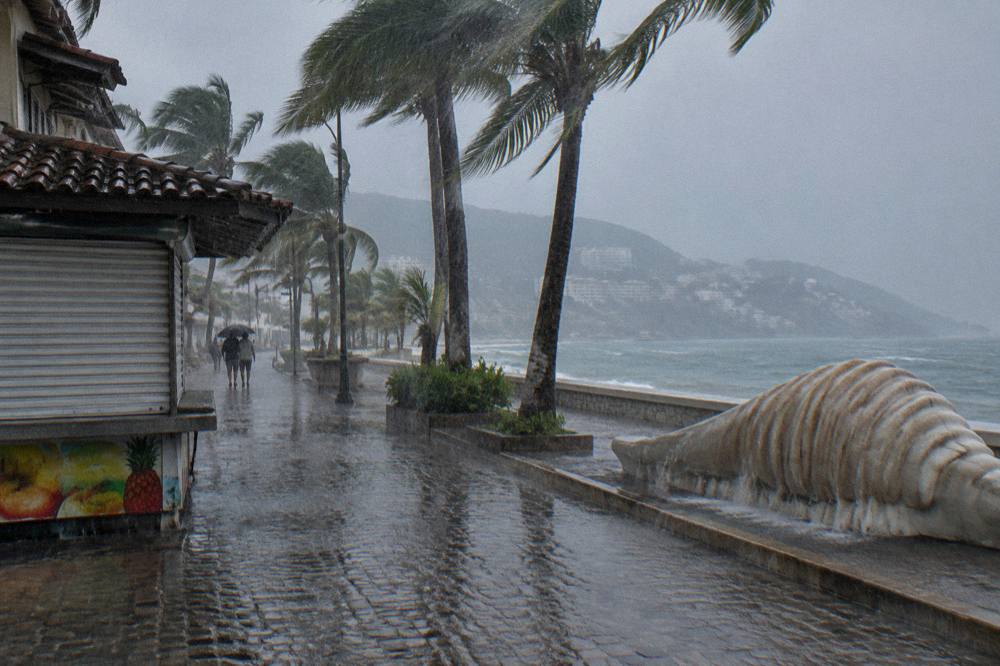
September is the wettest month in Puerto Vallarta with 429 mm of rain, ahead of August with 380 mm and July with 362 mm; together these three months form the rainy core of the year, each logging 20 or 21 rain days. June is already wet at 227 mm over about 15 rain days, and October tapers to 125 mm across 9 rain days. February through April are the driest stretch on record, at 12 mm, 4 mm and 4 mm, with roughly one rain day each.
The numbers come from the CONAGUA climate normals for Puerto Vallarta, reproduced by current weather-data services, and they describe a classic two-season tropical pattern rather than random showers. The dry months barely rain at all. The wet months rain almost daily, usually in heavy afternoon or evening bursts, with mornings that can still look deceptively clear.
| Month | Average rain (mm) | Rain days | Verdict for a visit |
|---|---|---|---|
| January | 37 | 2 | Dry, in whale season |
| February | 12 | 1 | Driest stretch, peak whales |
| March | 4 | 1 | Driest month, whale season closes 23 March |
| April | 4 | 1 | Dry, whale season over |
| May | 18 | 2 | Heating up, humid |
| June | 227 | 15 | Rainy season begins |
| July | 362 | 20 | Wet, hot, no whales |
| August | 380 | 21 | Wettest by rain days |
| September | 429 | 20 | Worst month: peak rain |
| October | 125 | 9 | Tapering, still hurricane window |
| November | 24 | 2 | Drying out, early arrivals possible |
| December | 21 | 2 | Dry, whale season opens |
Read the table as three blocks rather than twelve separate verdicts. February to April is effectively rainless. June to September is the monsoon-style stretch. November and December are the transition, and they happen to be when the first humpbacks are reported entering the bay, with hotel and operator guides noting late November arrivals ahead of the official opening.
A rainy-season trip is not automatically a ruined one. Mornings are often usable, prices across the hotel sector soften, and the landscape greens dramatically. But a traveler whose checklist includes boat days is betting against 20 rain days a month, and the boat calendar itself is closed to whale watching regardless of the weather.
If the whale window is the reason a trip shifts, the all-inclusive Whale & Dolphin Watching Cruise in Puerto Vallarta is a sensible anchor for the new dates: it departs the Puerto Magico Maritime Terminal, runs 4 hours 30 minutes with a marine biologist and hydrophone aboard, and includes continental breakfast, lunch and an open bar, from $78 per person. The same timing logic applies to the biologist-led whale and dolphin expedition from Opequimar Marine Center, from $105 per person, and to the breakfast-and-buffet catamaran cruise from Nuevo Vallarta, from $99 per person.
How Hot Does The Bay Get In The Worst Months?
The bay gets seriously hot in its worst months, with sea temperature climbing from 27.4 degrees Celsius in May to a yearly peak of 30.3 degrees Celsius in August, then staying at 30.2 degrees Celsius through September, so the water is at its absolute warmest during that late stretch of the year. January to April sea temperatures run 23.9 to 24.9 degrees. Air temperature means for the dry season sit at 21.8 to 23.3 degrees, and the rainy months feel hotter than the thermometer because humidity is at its annual maximum.
The sea figures matter more here than they first appear, because they explain the whales. Humpbacks breed and calve in Banderas Bay through the northern-hemisphere winter, when the water is at its coolest, and about 500 individual humpbacks visit the bay per season according to ECOBAC, the local research group. The 30-degree bathwater of August and September is precisely the water they leave behind when they return north to feed, from California up to the Aleutian Islands, as NOAA's species profile describes. A swim in September is genuinely warm. It is just warm in the wrong direction for everything else.
For visitors, the practical difference between a March day and a September day is not the rain alone. March averages around 22 degrees with one rain day and low humidity. September combines heat, near-total humidity and daily downpours, which is why the month shows up so consistently at the bottom of weather-driven rankings. Anyone weighing those two months against each other for a general vacation will find more depth in the Puerto Vallarta weather in whale season guide, which walks the season month by month.
Why Does Hurricane Season Overlap The Worst Months?
The overlap comes down to calendar timing: the Eastern Pacific hurricane season runs from 15 May to 30 November, which blankets the entire rainy stretch, so the worst weather months fall squarely inside it, and the season only ends a week before whale season opens. September sits at the historical peak of that window. The rain-month ranking and the hurricane-window ranking therefore point at the same answer: June through October carries the combined risk.
It is worth being precise about what that means, because the facts file supports only some claims here. The season dates come from NOAA. What is not supported is any promise about a given September being calm or stormy in a specific year, any cruise-calendar detail, or any dated closure of a specific harbor: those items change every season and do not belong in a planning article. What a reader can rely on is the structural pattern. When tropical systems approach the Jalisco and Nayarit coast, port authorities close navigation to smaller vessels, and whale-watching boats are smaller vessels. The correct framing is the one official sources use: check conditions and any government travel advisory before and during a rainy-season trip.
The silver lining of the overlap is that the risk has a hard official boundary. By 8 December, when operators advertise the new season opening, the hurricane window has closed, the rains have tapered to a couple of December rain days, and the federal whale-watching notice takes effect. The worst month and the best transition are only ten weeks apart.
How Does The Whale Season Avoid The Worst Weather?
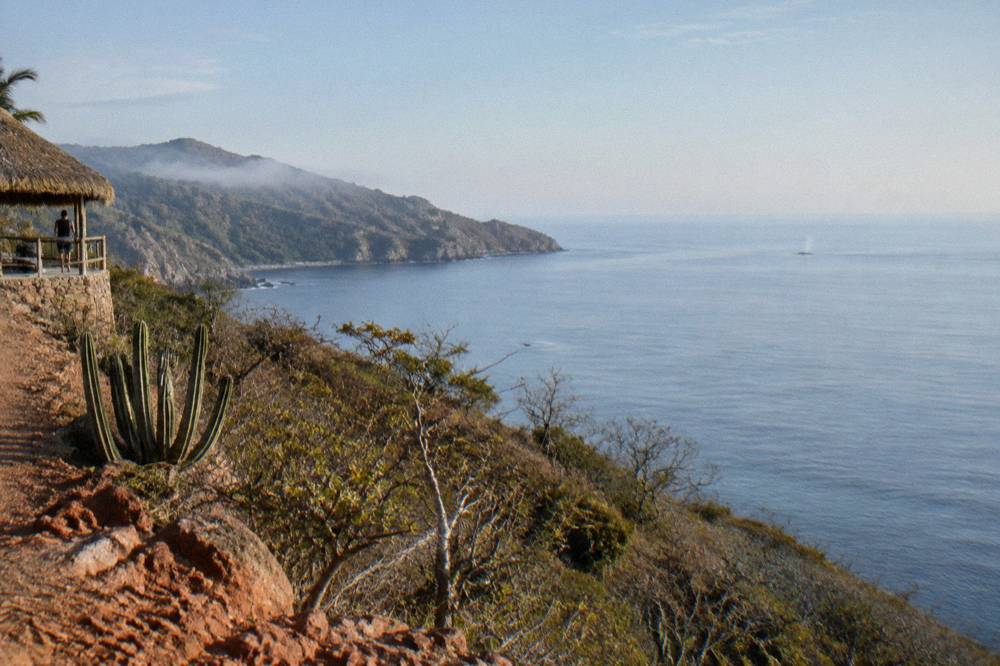
The official whale-watching season for Banderas Bay ran 8 December 2025 to 23 March 2026 under the SEMARNAT notice published in the federal gazette, and operators advertise the same 8 December opening for the coming season, though the new federal notice had not appeared as of this research. That window sits entirely inside the dry months: December at 21 mm of rain, January at 37, February at 12, March at 4.
This is the article's central insight, and it is the reason the worst-month question is easier here than in most beach destinations. The two calendars, weather and whales, are aligned rather than in tension. A visitor who simply follows the whale season never lands in September. A visitor who ignores both and books the cheapest month of the year, which is usually deep in the rainy stretch, gets the heat, the rain and an empty bay, because no operator may run whale watching outside the federal window and the whales are migrating or feeding far away.
Peak sightings within that window, as operators and guides name them, fall in mid-January to mid-March, with January and February singled out by the larger operators. Those two months also carry one and two rain days respectively on the climate record. In other words, the best whale months are among the driest, calmest months of the entire year, and the full month-by-month picture is laid out in the best month for whale watching in Banderas Bay guide.
For travelers who want the smallest possible boat inside that window, the small-group half-day whale tour from Marina Vallarta is the roster's strongest reviewed option, rated 5.0 from 353 reviews, from $110 per person for 3 hours 30 minutes with a marine biologist guide, lunch and soft drinks. At the value end, the shared whale and dolphin tour with hydrophone runs from $62 per person, rated 4.5 from 24 reviews.
What About November And Other Shoulder Months?
November is the honest compromise month: 24 mm of rain, about 2 rain days, sea at 27.7 degrees, and the first humpbacks reported entering the bay in late November, though the official season does not open until 8 December. May is its mirror, dry-ish at 18 mm but heating toward the humid months with no whales and no boat season.
The distinction that trips people up in November is between seeing a whale and going whale watching. Early arrivals are real and regularly reported by hotels and operators, but licensed commercial whale watching only begins when the federal season does. Boats may be on the water, and dolphins are commonly encountered year-round, but a November booking marketed as a whale tour is running ahead of the regulation. Anyone set on November should simply shift the whale day to the second week of December or later and use the earlier days for the Malecon, the Zona Romantica and the shoreline, which cost nothing and are covered in the free things to do in Puerto Vallarta guide.
May deserves a word in its defense for non-whale travelers: the sea is already 27 degrees, the rain is still modest, and the rainy season has not started in force. But it is the first month of the hurricane window, and for a site built around the whales, May is simply on the wrong side of the migration. The humpback's Mexico population, listed by NOAA as Threatened under the Endangered Species Act, breeds along the Pacific coast of Mexico in winter and feeds off California to the Aleutians the rest of the year. May is a feeding month, thousands of kilometers away.
For readers whose shoulder-month trip does become a December one, the value-tier shared whale and dolphin tour with hydrophone is the cheapest pure whale boat on the roster, from $62 per person for 4.5 hours with drinks and a marine biologist aboard, rated 4.5 from 24 reviews.
Which Departure Points Matter Once You Move Your Dates?
Once dates shift into the whale window, the practical question becomes where the boat leaves from: Marina Vallarta, the Puerto Magico terminal, Opequimar Marine Center, the Nuevo Vallarta marina, Los Peines pier or Sayulita, and each roster listing names its own dock. Transfer estimates from operator sites put the airport at 15 to 22 minutes from Marina Vallarta and 55 to 65 minutes from Sayulita.
The reason this belongs in a weather-and-timing article is simple. The worst month question often ends with a rebooked trip, and a rebooked trip is the right moment to choose the departure that fits the hotel. Staying in Nuevo Vallarta or the north shore puts the Nuevo Vallarta marina and La Cruz options closest. Staying in the Romantic Zone or Centro puts Los Peines and Puerto Magico within a short ride. Sayulita-based travelers have their own small-group departures off the beach, including a biologist-led 3-hour trip from $90 per person.
Two logistics notes from the verified research are worth carrying into any booking. Rideshare pickup is not permitted at the airport arrivals curb, so arriving travelers should plan on authorized taxis or a prearranged transfer to reach their departure marina. And departure points are locked per listing, so a traveler choosing the all-inclusive cruise should expect the Puerto Magico Maritime Terminal, while the biologist-led featured expedition leaves Opequimar. The Marina Vallarta versus Nuevo Vallarta departures comparison works through the trade-offs in detail.
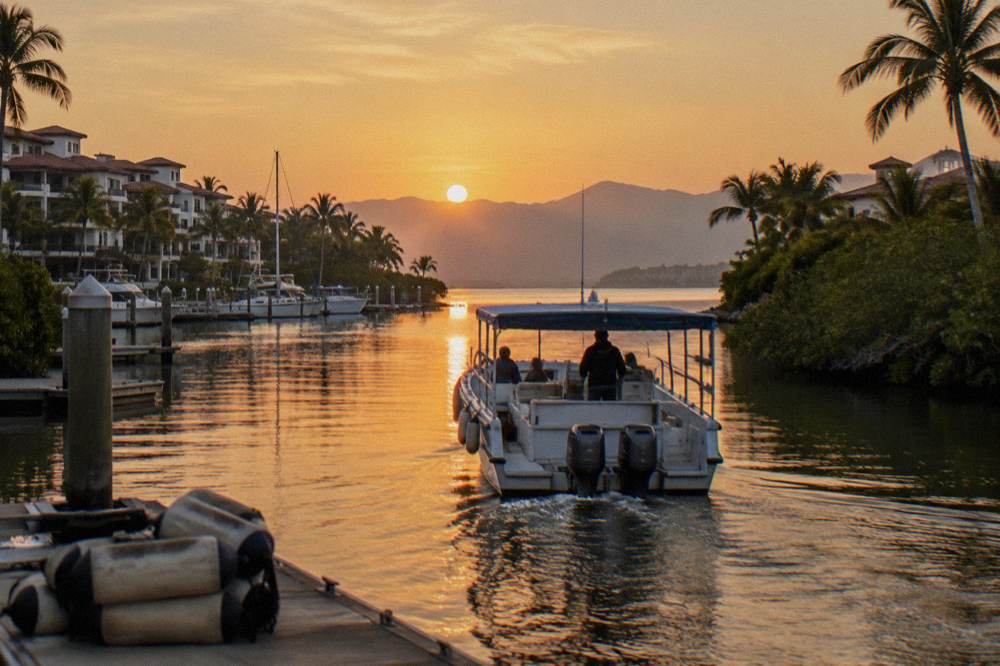
Every one of these numbers points the same way, which is rare in travel planning. The statistically worst month for weather, September, is also the wettest by volume, near the heat peak, inside hurricane season, and three months from a single legally running whale tour. The best months for whales, January and February, are also among the driest and mildest on the calendar. A traveler who moves a trip ten weeks lands in a different destination in every sense that matters.
Common Questions About Visiting Puerto Vallarta
What is the worst month to go to Puerto Vallarta?
September. It leads the year in rainfall at 429 mm across about 20 rain days, sits at the peak of the Eastern Pacific hurricane window that runs to 30 November, and falls three months before the official whale-watching season opens. August, at 380 mm and 21 rain days, is a close second.
What is the best month to go to Puerto Vallarta?
January or February for most visitors. Rainfall drops to 37 mm and 12 mm, air temperatures average around 22 degrees, and both months sit inside the official whale season with peak humpback activity, as operators and guides name mid-January to mid-March the strongest stretch.
Can you see whales outside the official season?
Not on a licensed whale tour. The official window ran 8 December to 23 March last season, and no commercial whale watching is permitted outside it. Early humpback arrivals are reported in late November, but boat-based whale watching waits for the federal opening.
Is October a bad month too?
October is better than September but still risky. Rain tapers to 125 mm across about 9 rain days and the sea stays near 30 degrees, but the month remains inside the hurricane season that runs to 30 November. There are no whale tours until December.
Does it rain all day in the rainy season?
Typically not. The climate pattern favors heavy afternoon and evening downpours, with mornings that are often clear and usable. The trade-off is 15 to 21 rain days per month from June through September, plus heat and humidity at their annual peak.
When does whale season start this year?
The official window ran 8 December to 23 March last season under the SEMARNAT notice, and operators advertise the same 8 December opening for the new season. The federal notice confirming this season's dates had not been published at the time of this research, so treat 8 December as the operators' date until the gazette confirms it.