Humpback Season In Banderas Bay: When The Whales Arrive And Leave
The last federal season notice for Banderas Bay ran 8 December 2025 to 23 March 2026, but the bay fills and empties in stages. Here is what each stretch of the winter actually looks like, and which weeks reward booking a boat.
Short answer
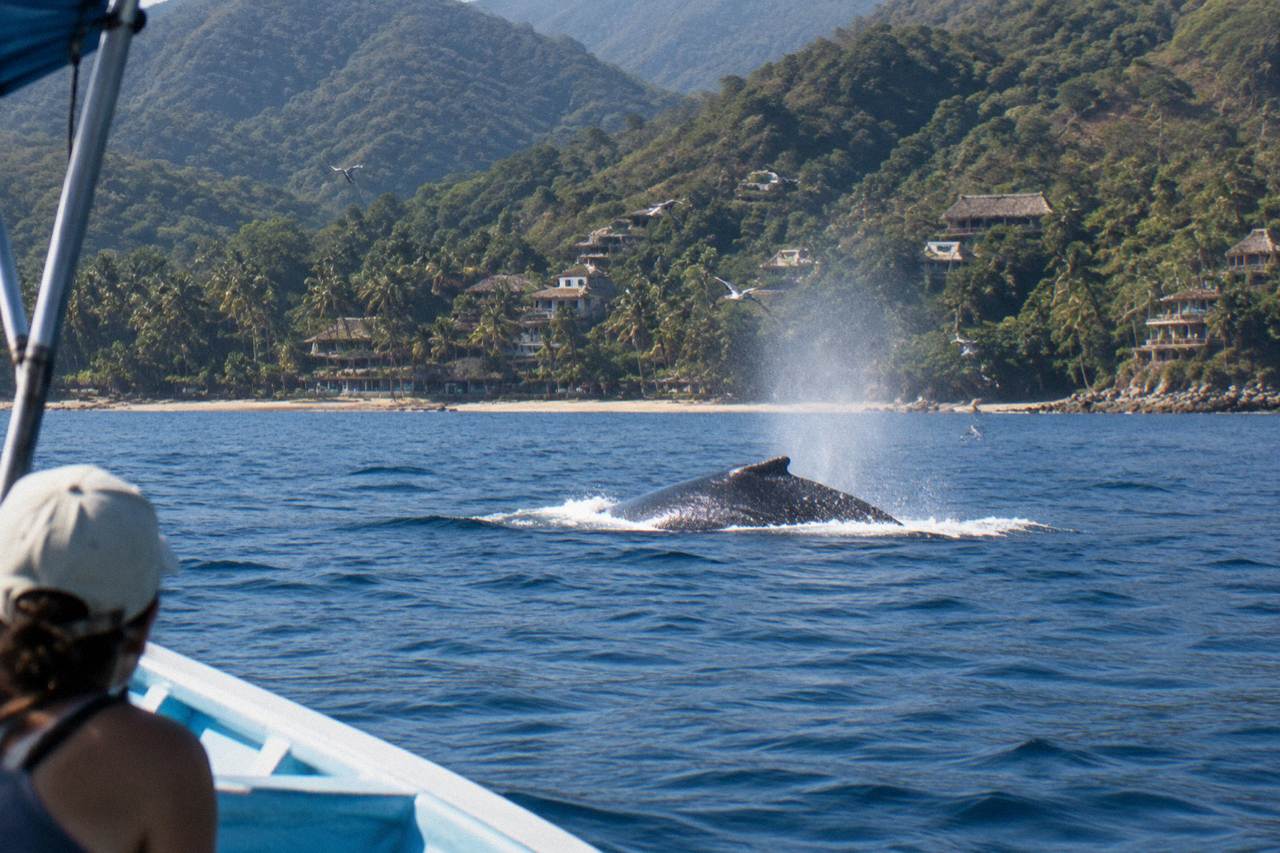
The official whale-watching window for Banderas Bay ran 8 December to 23 March last season, and operators advertise the same 8 December opening this year, though the new federal notice has not appeared yet. Peak is mid-January to mid-March. No commercial whale boat runs outside the federal season.
Every winter, humpback whales leave their feeding grounds between California and the Aleutians and travel to Mexico's Pacific coast to breed and calve, and Banderas Bay is one of the places they gather. The bay, roughly 100 km of coastline between Punta Mita and Cabo Corrientes, hosts about 500 individual humpbacks per season by the estimate of the local research group ECOBAC. Those numbers are not spread evenly across the winter. The whales arrive in waves, the mothers and calves concentrate in particular months, and the whole show is closed by federal rule on a fixed date in March.
This guide walks the Puerto Vallarta whale season from the first late-November reports to the final week in March: what the water looks like in each stretch, what a tour actually delivers in early December versus mid-February, and how to match your travel dates to the experience you want. The reader fixing dates is really deciding which weeks to book a boat, and that is exactly the decision the listings answer.
When To Go Whale Watching In Puerto Vallarta?
The strongest weeks are mid-January through mid-March, when operators and guides consistently name the highest concentration of whales, mothers with calves, and surface activity. Early December is the official opening but with fewer animals freshly arrived; late March is the tail end, with departing adults and the last mother-calf pairs. Outside 8 December to 23 March no licensed whale boat sails.
That answer comes with an important caveat about this specific year. The SEMARNAT notice published in the Diario Oficial on 10 October 2025 set the 2025-26 season for Banderas Bay at 8 December 2025 to 23 March 2026. No federal notice for the 2026-27 season is on record yet; operators advertise an 8 December start for the new season, so the official window ran 8 December to 23 March last season, operators advertise the same 8 December opening this year, and the federal notice confirming the new dates has not appeared yet. The full text of last season's aviso, including the restricted zones, is on the Diario Oficial de la Federación.
If your dates are flexible, aim for the last week of January through the third week of February. If they are not flexible, the rest of this guide explains what each stretch of the season delivers, because a mid-December boat and a mid-February boat are genuinely different trips. For a deeper month-by-month comparison of weather and crowds, see the companion page on the best month for whale watching.
What Is Whale Season In Mexico?
Mexico's Pacific humpback season runs through the winter months, roughly December to March, timed to the whales' annual breeding migration. Each bay and state gets its own federally published window; for Banderas Bay the official record is 8 December to 23 March. The season is a legal construct as much as a biological one, enforced under the NOM-131 whale-watching standard. If you're deciding where within that legal window to base yourself, our guide to the best place in Mexico to see whales compares Banderas Bay against the other Pacific viewing spots.
The Mexico humpback population, listed as Threatened by NOAA Fisheries, breeds along the Pacific coast of Mexico and feeds from California to the Aleutian Islands. Winter is when that population moves south into shallow warm bays like this one to mate and give birth, which is why the entire commercial season sits inside the coldest, driest months of the local calendar: December through March.
Two things follow from the legal framing. First, no commercial whale watching happens outside the window, so a trip planned for April cannot simply move the goalposts; there is no licensed whale boat to board. Second, the federal notice draws two restricted zones inside the bay where whale watching is prohibited entirely: a 1.5 km radius around the Islas Marietas and a 2 km wide coastal strip from Punta Mita to the mouth of the Rio Ameca. That coastal strip is precisely where mother-calf pairs concentrate, which is why boats work the middle of the bay and why a Marietas combo tour does its whale watching well outside the islands' radius. The rules behind this are covered in detail in the guide to whale watching rules and distance in Mexico.
| Season concept | What it means here | Dates on record |
|---|---|---|
| Federal season window | Only period licensed boats may run whale tours in Banderas Bay | 8 Dec to 23 Mar (2025-26 official record) |
| Advertised opening | What operators promote before the new notice appears | 8 December (2026-27, unofficial) |
| Peak concentration | Weeks guides and operators name for numbers and activity | Mid-January to mid-March |
| Pre-season arrivals | First humpbacks reported entering the bay | Late November, per hotel and operator guides |
| Restricted zones | No whale watching areas inside the bay | 1.5 km around Islas Marietas; 2 km strip Punta Mita to Rio Ameca |
With the frame set, the rest of this guide follows the season month by month, from the first arrivals to the final sailings. For readers who already know their dates and want to weigh boats, the compared whale tours page breaks the full roster down by price and format.
What Does Early Season Look Like On The Water In December?
December splits in two: the first week is closed, and the opening weeks bring fresh adult arrivals, active mating groups, and flat calm seas, but no calves yet and no guarantee of density. The official window ran 8 December to 23 March last season, operators advertise the same 8 December opening this year, and the new federal notice has not appeared yet, so confirm a December tour is running before you lock flights.
Early December is the connoisseur's stretch. The whales that have arrived are mostly adults: males singing, competing surface-active groups, courtship chases. Operators and hotel guides report the first humpbacks typically entering the bay in late November, ahead of the legal opening, so the population is already seeded when the boats launch. What December lacks in raw numbers it can make up in behavior, since the mating season's competition groups put on some of the most physical displays of the year.
Sea conditions help. December water sits around 25.2 C with only about 21 mm of rain across the month on roughly two rain days, the tail of the November dry-down. The trade-off is simple: fewer whales in the water than February, and a small risk that the season's official confirmation shifts dates. Every listing on this site's roster shows free cancellation, so a December booking made early is easy to adjust.
Tours that suit early season are the ones with a strong interpretive layer, because a biologist guide turns a two-whale morning into a lesson in migration and song. The featured biologist-led whale and dolphin boat, Whale and Dolphin Watching with a Biologist, from $105 per person and rated 4.9 from 702 reviews, the most reviewed listing on the roster, includes a baguette sandwich lunch, granola-bar snacks, bottled water and soda, with no alcohol served, all under the eye of a biologist guide. Simple provisions suit a trip where the guide, not the bar, is the draw. Check availability
When Is Peak Whale Watching In Banderas Bay?
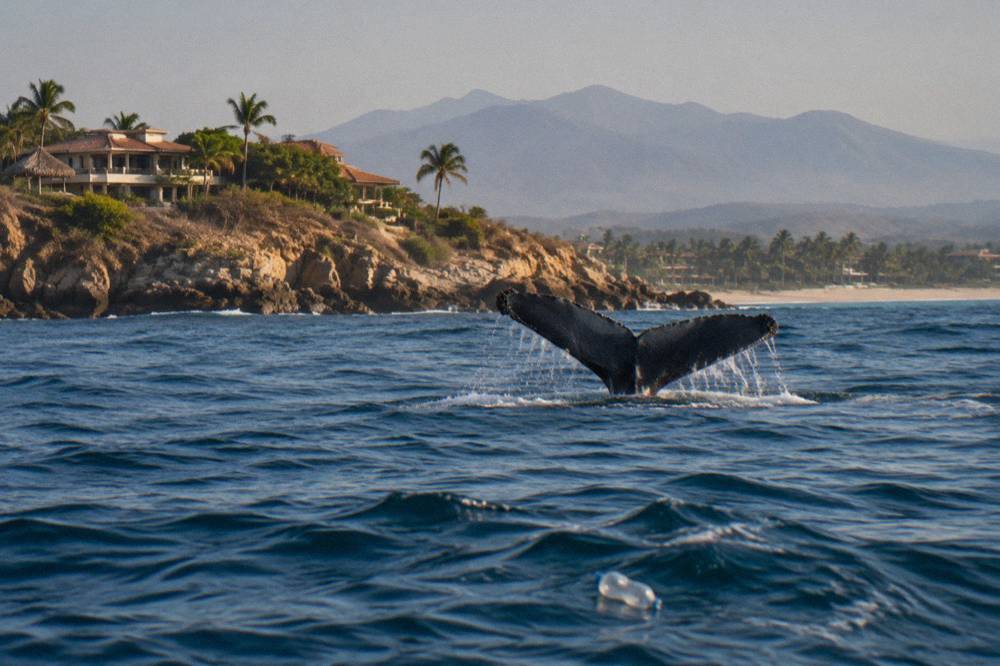
Peak runs mid-January to mid-March, with operators and guides naming January and February as the strongest months. By then the arriving population is fully in, mother-calf pairs are established in the protected coastal strip, and adult surface activity continues. This is the window to book if seeing the greatest number of animals matters most, and the window that sells out first.
By mid-January the seasonal population, about 500 individuals by the ECOBAC estimate, is distributed through the bay. The mothers that calved in the warmest southern waters move with newborns through the shallow coastal strip, while competitive mating groups keep working the deeper middle. Boats under NOM-131 rules keep 60 to 80 m back, wait at 240 m, and spend at most 30 minutes with any one whale or group, so a peak-season tour is a rotation across many sightings rather than a long sit with one animal. The practical effect is that density translates into variety: more flukes, more breaching chances, more singing picked up on hydrophones.
February is February for a reason. Air means hover around 21.9 C, sea temperature around 23.9 C, and rain is the lowest of the year at about 12 mm over one rain day. It is the driest, most comfortable month on the calendar and the month with the most whales, which is why guides are unanimous about it.
For peak weeks, format matters as much as date. The catamaran with breakfast and buffet, Whale Watching Cruise in Puerto Vallarta and Nuevo Vallarta run by Mike's Fishing & Tours, from $99 per person and rated 4.8 from 413 reviews, is the classic family choice: four hours, continental breakfast, buffet lunch, open bar, live commentary, departing either the Puerto Magico API terminal or the Nuevo Vallarta marina. If you are deciding between bases, the guide to Marina Vallarta versus Nuevo Vallarta departures covers the trade-offs.
Travelers who want the whales without a crowd share the boat with should look at the small-group half day with lunch, from $110 per person, rated 5.0 from 353 reviews, departing Marina Vallarta with a marine biologist guide, lunch, and soft drinks included. Peak season is also the best argument for a private charter, since a private boat can work the sighting rotation on your family's schedule rather than a shared one.
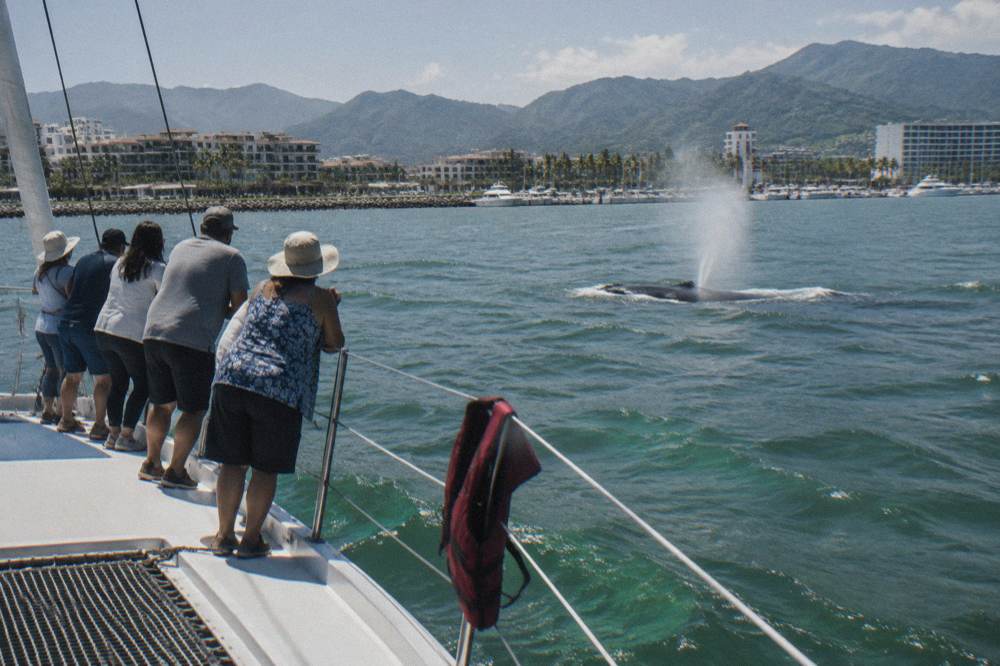
What Happens In March, The Last Weeks Of The Season?
March is a season inside the season: strong through roughly the middle of the month, then a rapid emptying as adults depart for the north. The official window ran to 23 March last season, and late March boats often find the last mother-calf pairs preparing to leave. Book the first half of March for near-peak whale density, and treat the final week as a farewell tour.
The middle of March still sits inside what operators call peak, but the biology shifts. The mating competition winds down, adult males begin the journey back toward the feeding grounds, and the bay's story narrows to the mother-calf pairs, which stay latest because calves need weeks in warm water before the long migration. A mid-March morning can still deliver mothers nursing close to the surface inside the restricted coastal strip, viewed from the legal distance outside it.
The hard edge matters more than the soft one. When the federal window closes, it closes for everyone: no commercial whale watching after the final date, no exceptions for whales still present. If your trip lands in the last week of March, a whale boat may not be available at all, and the honest planning move is to either pull the trip a week earlier or accept a non-whale day on the water. The how long whale tours last guide covers what those final-week sailings typically look like in duration and pacing.
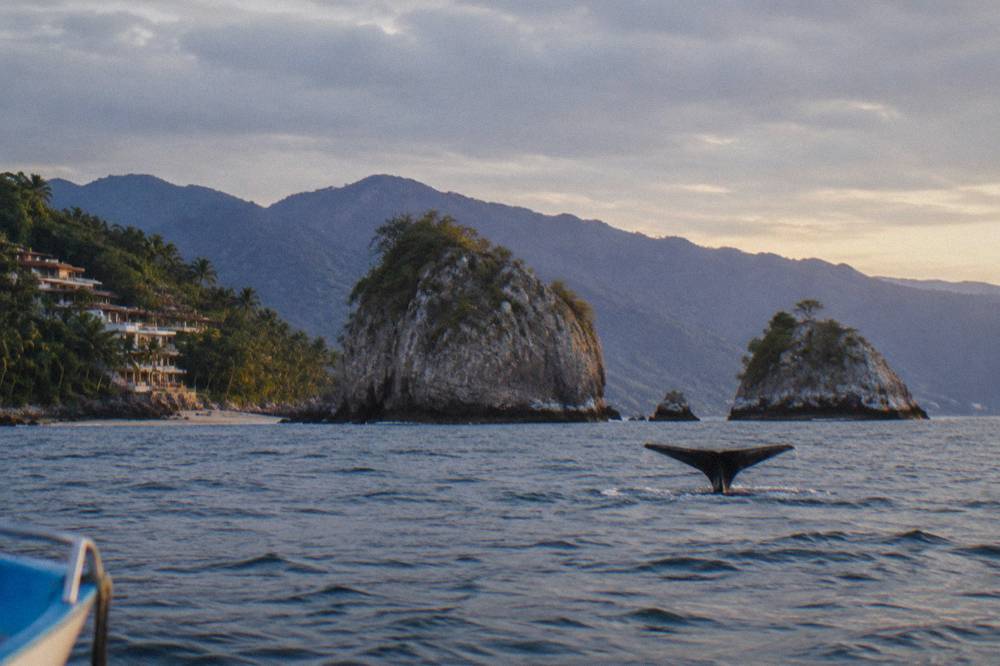
What About Late November Or April, Outside The Official Window?
No licensed whale-watching boat runs outside the federal season, so a late-November or April trip cannot include commercial whale watching in Banderas Bay. Late November brings reported early arrivals but no tours until the official opening; April is fully closed, with the population departed north. Neither month offers a legal whale boat.
Late November is the tease. Hotel and operator guides report the first humpbacks typically entering the bay then, ahead of the legal start, and shore-based watchers sometimes spot blows from the Malecon or the point at Punta Mita. But reported sightings from land are one thing and a licensed tour is another: the boats wait for the opening date, and the enforcement body PROFEPA runs inspections throughout the season. A Thanksgiving-week visitor who wants whales on the water needs to shift dates to December 8 or later, or content themselves with shoreline viewing, which costs nothing and is one of the genuinely free things to do in Puerto Vallarta.
April is the harder case because it looks like whale weather: warm, dry, calm. But the biology is finished. The Mexico population is feeding its way back toward California and the Aleutians by then, and the bay's whale economy pivots to snorkeling, Marietas trips without the whale component, and sailing. Anyone with fixed April dates should plan around the snorkeling at Los Arcos and Marietas instead of hunting for a whale boat that cannot legally sail.
For a month-by-month reality check on the worst stretches of the calendar, the rain and hurricane data behind July through September is laid out in the worst month to go to Puerto Vallarta post.
Which Departure Point Works Best In Each Stretch Of The Season?
Whale boats leave from Marina Vallarta, the Puerto Magico terminal, Opequimar Marine Center, the Nuevo Vallarta marina, the Los Peines pier, the La Cruz marina, and Sayulita, and every one of them runs the full official window. Departure choice is about your hotel, not the whales: the bay is small enough that all fleets work the same waters under the same NOM-131 distance rules.
Puerto Vallarta side options cluster around Marina Vallarta and the downtown piers: the featured biologist-led whale and dolphin boat leaves Opequimar, the small-group half day leaves Marina Vallarta, and the small-group experience from Vallarta Adventures departs the Puerto Magico terminal. Nuevo Vallarta and La Cruz serve the Nayarit side, including the Mike's Fishing & Tours catamaran from either the API terminal or Nuevo Vallarta. Sayulita is the northern outlier, with two small-group listings departing the beach itself, covered fully in the Sayulita whale watching tours guide.
One seasonal note on the northern departures: the restricted 2 km coastal strip from Punta Mita to the Rio Ameca means Sayulita and Punta Mita boats run south and outside that zone before they can begin observation. That is a longer run to the whales than a Marina Vallarta departure, which is worth knowing when comparing a $90 Sayulita small group against a similarly priced Puerto Vallarta boat.
| Departure point | Listings on the roster | Side of the bay | Notes for season planning |
|---|---|---|---|
| Marina Vallarta | 5 including the private charter and two biologist-led boats | Jalisco | Shortest run to mid-bay sighting areas |
| Puerto Magico terminal | 5 including catamaran and all-inclusive cruises | Jalisco | Cruise-adjacent, central |
| Opequimar Marine Center | 2, including the featured biologist-led pick | Jalisco | Small-boat hub |
| Los Peines pier (Isla Iguana) | 2, including the $42 whale and snorkel combo | Jalisco, Zona Romantica side | Closest to old town hotels |
| Nuevo Vallarta marina | Catamaran and mega-yacht sunset listings | Nayarit | Best for Nuevo and Bucerias stays |
| La Cruz marina | The Sayulita-and-Banderas-Bay yacht adventure | Nayarit | Quiet marina north of the bay's elbow |
| Sayulita beach or office | 3 small-group listings | Nayarit coast | Long run south around the restricted strip |
How Does The Weather Track The Season Month By Month?
The whale season sits inside the driest, calmest quarter of the Puerto Vallarta year: December through March averages 1 to 2 rain days a month against 20 to 21 in July through September, with sea temperatures between 23.9 and 25.2 C and January-to-April air means of about 22 C. Weather almost never cancels a season-window tour; it is the summer that shuts the coast down.
The overlap is not a coincidence. Humpbacks arrive when the bay is at its calmest, and the federal window matches both the whale biology and the navigable season. Eastern Pacific hurricane season runs 15 May to 30 November, ending just before the whales and the tours begin. Rain collapses from 125 mm in October to 24 mm in November to 21 mm in December, and January through March brings 37, 12, and 4 mm respectively.
| Month | In the whale season? | Sea temp C | Rain mm (rain days) | What the stretch delivers |
|---|---|---|---|---|
| November | No, pre-season | 27.7 | 24 (2) | Reported early arrivals, viewing from shore only |
| December | Yes, opening | 25.2 | 21 (2) | Fresh adults, mating groups, no calves yet |
| January | Yes, building to peak | 24.5 | 37 (2) | Full population arriving, first calves visible |
| February | Yes, peak | 23.9 | 12 (1) | Highest density, mothers and calves, calm seas |
| March | Yes, closing | 23.9 | 4 (1) | Strong to mid-month, then rapid departure |
| April | No, closed | 24.9 | 4 (1) | Population headed north, no whale boats |

Which Tour Format Suits Which Part Of The Season?
Match the format to the month: early December rewards biologist-led small boats that interpret thin sightings, peak weeks suit everything from a $62 shared hydrophone tour to a $760 private charter, and March's mother-calf stretch favors patient small groups over fast shared boats. Prices on this roster run from $42 per person for a whale and snorkel combo to $2,088 per group for a private luxury yacht.
Early season favors interpretation. The hydrophone-and-lecture format of the Ecotours Vallarta marine-biologist adventure, from $120 per person and rated 5.0 from 168 reviews, makes a two-whale December morning a full story, with coffee, tea, and a light bite included. Peak weeks reward scale: the shared Live and Traveler Tours boat with hydrophone and biologist, from $62 per person, is the cheapest pure whale listing on the roster, while the all-inclusive Vallarta by Boat cruise from $78 per person stacks lunch, snacks, and an open bar onto 4.5 hours on the water, with a marine biologist and hydrophone aboard.
For families or photographers in the peak stretch, the small-group Whale Encounter run by Eco Explorer Vallarta, from $99 per person and rated 4.9 from 530 reviews, includes snacks, hydrophone, life vests, and the federal permits, departing Marina Vallarta. And for the March mother-calf weeks, the private charter from Vallarta Natours, from $760 per group for up to 8 with lunch and a professional guide (you make your own way to the marina), lets a family linger within the legal 30-minute rule without a shared boat's schedule pressure. The full private-versus-shared trade-off, including the $600 per group 4-hour private option and the $2,088 luxury yacht, is broken down in the private versus shared whale tours guide.
Whatever the format, the booking rhythm is the same: January and February dates fill first, and December and March dates rarely do. Travelers holding loose dates can wait for the federal notice to confirm the opening; travelers locked into peak weeks should not.
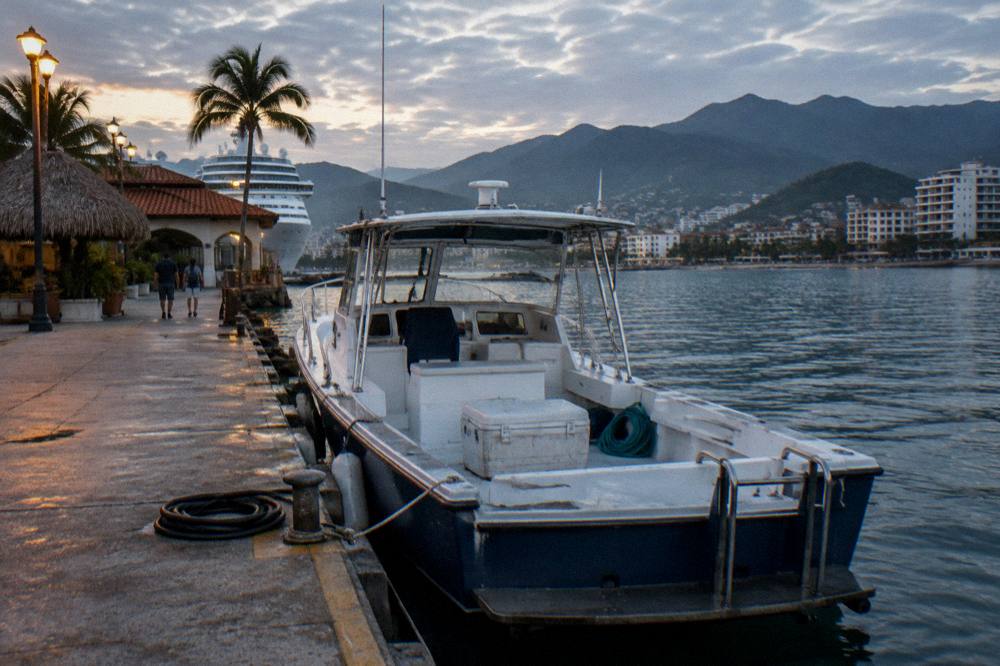
The site behind this guide, Puerto Vallarta Whale Watching, carries the full compared roster, the trip picker, and season-by-season booking notes, if you want the whole picture in one place.
Common Questions About The Banderas Bay Whale Season
When to go whale watching in Puerto Vallarta?
Mid-January through mid-March is the peak stretch, with operators and guides naming January and February as the strongest months. The official window ran 8 December to 23 March last season; operators advertise the same 8 December opening this year, but the new federal notice has not appeared yet.
When is whale season in puerto vallarta
The federal season notice set the 2025-26 window for Banderas Bay at 8 December 2025 to 23 March 2026. Operators advertise an 8 December start for the coming season, and no commercial whale watching runs outside the official window.
What is whale season in Mexico?
Mexico's Pacific humpback season covers the winter breeding months, roughly December to March, with each region published by federal notice. Banderas Bay's record window is 8 December to 23 March, timed to the Mexico humpback population's annual migration from feeding grounds between California and the Aleutians.
Can you see whales in Puerto Vallarta in November?
Not from a tour. Hotel and operator guides report the first humpbacks typically entering the bay in late November, but licensed whale boats cannot sail until the official opening on 8 December. Shoreline viewing from the Malecon or the marina areas is the only option before then.
Is March too late for whale watching in Banderas Bay?
No, but it is a fast-fading window. The first half of March is still near-peak, with the last mother-calf pairs in the bay, and the season closes by federal rule in late March. Book early March rather than the final week.
Do whale tours run in April in Puerto Vallarta?
No. The season closes in late March by federal notice and no licensed whale-watching boat operates in April. The population heads north to feed, and the bay's boat economy shifts to snorkeling and sailing trips.