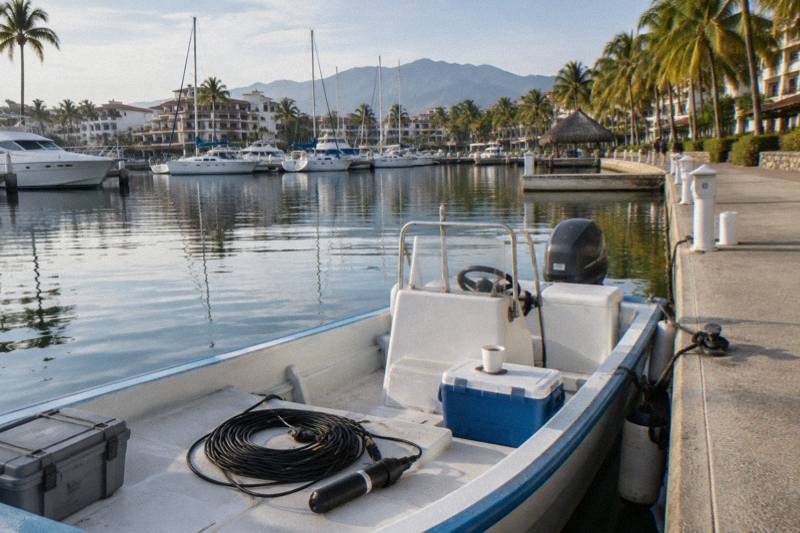
Whale Watching Rules In Mexico: Distance, Speed And Why They Matter
Every whale boat in Banderas Bay operates under NOM-131-SEMARNAT-2010, a federal standard that fixes how close boats may approach, how fast they may travel near whales and who may run tours at all. Knowing the numbers makes you a better judge of which operator deserves your money.
Short answer
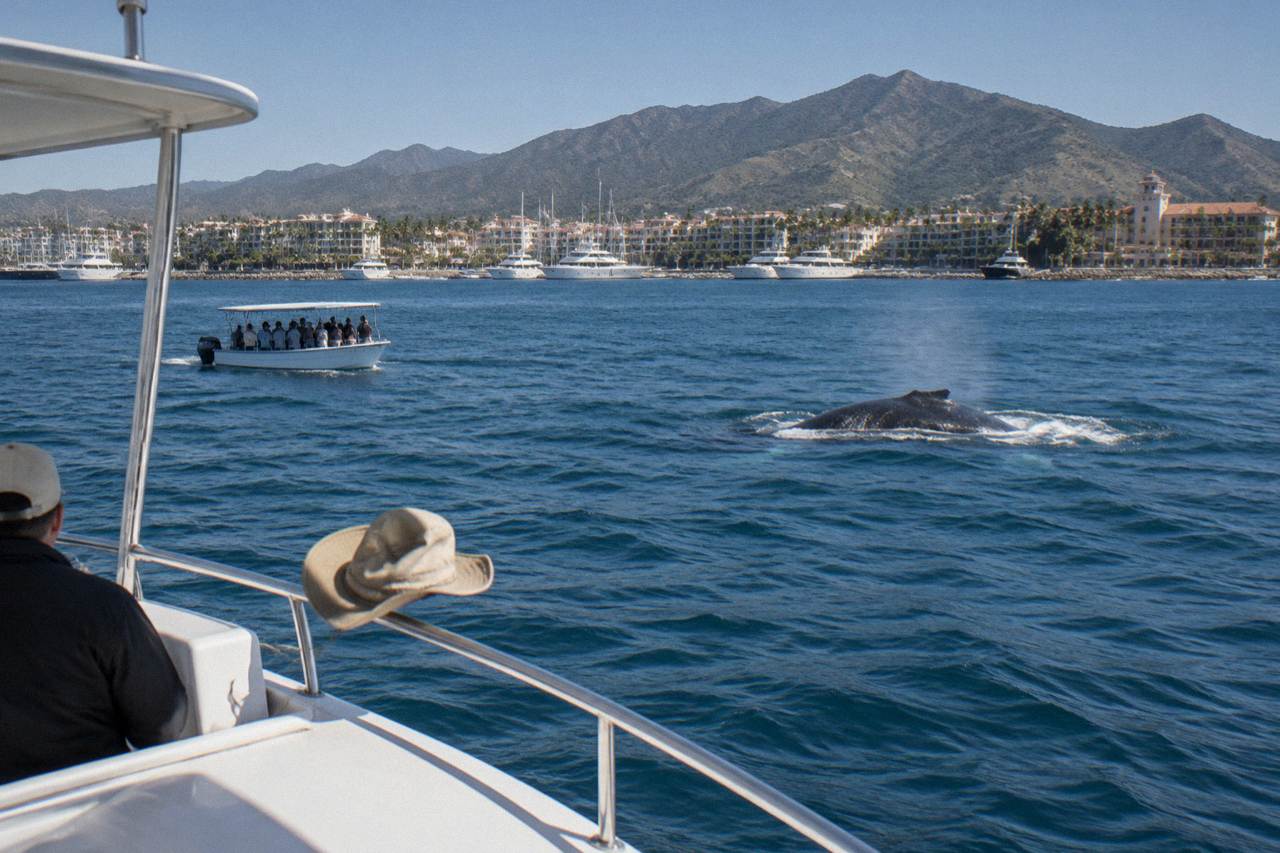
Mexican federal rule NOM-131-SEMARNAT-2010 sets the rules: authorized boats approach to 60 m for small vessels and 80 m for larger ones, wait first at 240 m, keep under 5 knots near whales and spend at most 30 minutes with the same whale. About 500 humpbacks visit Banderas Bay each season, and the rules exist to keep that population healthy.
Every whale tour in Banderas Bay runs inside one of the most detailed wildlife-watching rulebooks in the Americas. The standard is called NOM-131-SEMARNAT-2010, published in the Diario Oficial de la Federación, and it fixes everything from the meters a boat may close to, to the knots it may travel, to the numbered flag it must fly. It exists because the whales it protects are valuable and vulnerable: about 500 individual humpbacks visit the bay each season according to ECOBAC, a local research NGO, and the Mexico humpback population is listed as Threatened by NOAA Fisheries.
For a visitor, the rules are more than trivia. They are the single best quality signal when you compare listings. The featured biologist-led whale and dolphin boat lists a biologist guide plus water, soda, a baguette sandwich and granola-bar snacks among its inclusions, the small-group half day with lunch runs with a marine biologist on board, and the catamaran cruise carries live commentary: these are the hallmarks of operators who invest in compliance. A boat that ignores the distance rules for a closer photo is also a boat that cuts corners elsewhere.
What Are The Whale Watching Rules In Mexico?
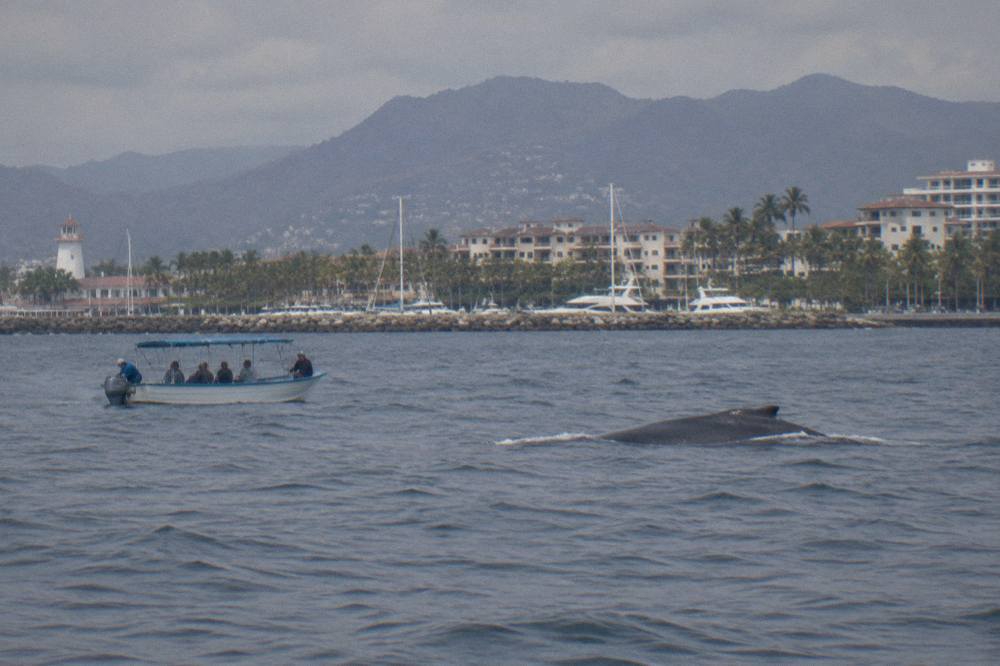
Mexican whale watching is governed by NOM-131-SEMARNAT-2010, a federal standard that regulates authorized approach distances, speeds, time limits, boat counts and permitted vessel types around whales. It applies in all federal waters, including both the Jalisco and Nayarit sides of Banderas Bay, and it is enforced by federal inspectors through the season. Since the same standard applies to every permitted vessel, our guide to catamaran and sailboat whale tours explains how these rules shape each type of sailing cruise on the bay.
The norm was published in the Diario Oficial on 17 October 2011 and no amendment has been issued since. It sits underneath a seasonal aviso, a separate notice that SEMARNAT publishes each year to open and close the whale watching window and define restricted zones. For the 2025-26 season that aviso set the dates at 8 December 2025 to 23 March 2026, per the official Diario Oficial publication. For the coming season, operators advertise the same 8 December opening, and the federal notice had not appeared in the Diario Oficial as of late October 2026, so treat any new-season date as operator advertising until the aviso lands.
The rules serve one purpose: whales in the bay are often mothers with calves, and the norm is built around not disrupting them. The same thinking shapes what tours sell. The listing for the featured biologist-led whale and dolphin boat names government permits and conservancy wrist bands among its inclusions, which is the rulebook translated into a product. Readers deciding between a private charter and a shared boat can see how each format behaves under the same rules in our private versus shared whale tour comparison.
| Rule area | What NOM-131 says | What it means on the water |
|---|---|---|
| Approach distance | 60 m for small boats, 80 m for medium and large boats | The boat stops short, whales choose to close the gap |
| Waiting distance | 240 m for all vessels | Boats hold far back before entering an observation zone |
| Time limit | At most 30 minutes with the same whale or group | No boat parks on one animal all morning |
| Boat cap | At most 4 vessels around one whale or group | Crowded sightings get thinned out by rotation |
| Speed | Below 5 knots in observation areas, below 2 knots entering | Slow approaches, no wakes pushed at whales |
How Close Can Boats Get To Whales In Banderas Bay?
An authorized small boat may close to 60 meters of a humpback in Banderas Bay, and a medium or large boat to 80 meters. Before closing, every vessel must wait at 240 meters, and no more than four boats may surround the same whale or group at once. Whales frequently swim to the boat on their own.
The distance ladder is the heart of the norm, and its numbering is precise. A boat first approaches no nearer than 240 m, assesses the animals, and only then enters an observation zone at under 2 knots. Small vessels, which is most of the fleet serving Marina Vallarta and Nuevo Vallarta, hold at 60 m; larger catamarans and yachts hold at 80 m. Boats without a whale watching licence must stay at the full 240 m, which is one reason an authorized tour is not the same product as a water taxi with a driver who happens to know where whales surface.
Two more numbers close the loop: the 30-minute time cap with the same whale or group, and the four-vessel cap. Together they prevent the pile-ups that stress animals, and they explain something visitors often notice, that a good captain walks away from a whale that is still visible. The whale encounter tour by Eco Explorer Vallarta and the small-group photo safari by Vallarta Adventures both operate under these caps like every other licensed boat; the rules are identical whether you depart Marina Vallarta, Puerto Magico or Sayulita.

It is worth being clear about what the distances do not mean. A 60 m approach is not a distant speck; a humpback is about 60 ft long and can weigh about 40 tons per NOAA, so at approach range an adult fills a meaningful slice of your view, and whales routinely swim much closer to idle boats of their own accord. Hydrophones make the close moments richer still. The whale watching adventure led by a marine biologist from Ecotours Vallarta lists a hydrophone system and an onboard whale lecture among its inclusions, and the captain may shut the engine to use it, a maneuver the norm explicitly permits.
How Fast Can Whale Watching Boats Go In Puerto Vallarta?
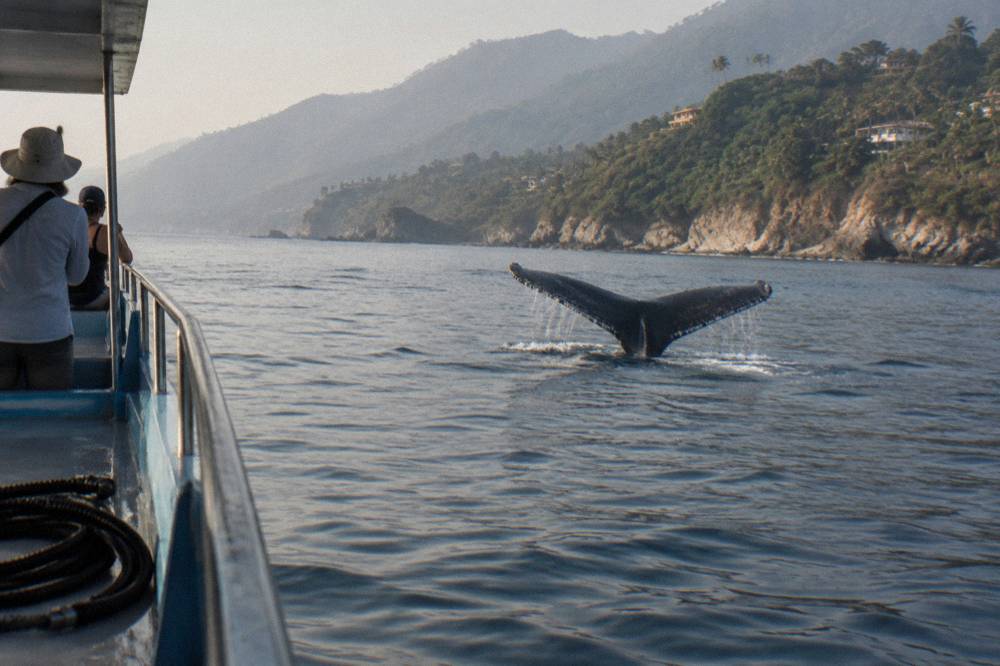
Inside a whale observation area, boats must travel below 5 knots, about 9 km/h, and when entering the zone they slow further to below 2 knots, about 4 km/h. A vessel must never move faster than the slowest whale nearby, and the engine drops to idle in neutral whenever a whale is not moving.
The speed rules are where passengers can most easily judge a crew. A compliant approach looks patient: the boat decelerates well before the whales are close, avoids sudden course changes, and settles into neutral when animals dive or rest. A boat that planes straight at a surfacing whale, or carves tight turns to keep it on the sunny side of the deck, is breaking numeral 4.10 of the norm even if it never gets closer than 60 m. Speed is judged by behavior, not just by radar.
For planning around Puerto Vallarta departures, note that the speed limits apply only in observation areas. Getting from Marina Vallarta or the Puerto Magico terminal out to where the whales are is normal open-water running, and tour durations reflect that: the roster's shared boats run 3 to 4.5 hours door to dock to whales and back. Our guide to how long whale tours last in Banderas Bay breaks the durations listing by listing.
Where Is Whale Watching Off Limits Around Banderas Bay?
The seasonal aviso bans whale watching within a 1.5 km radius of the Islas Marietas and inside a 2 km wide coastal strip running from Punta Mita to the mouth of the Rio Ameca. Both closures protect mother and calf concentrations, and both applied for the full 8 December to 23 March season.
The two zones reshape how different departures behave. The coastal strip from Punta Mita to the Rio Ameca covers the northern shoreline of the bay, so boats from the Nuevo Vallarta marina and the Punta Mita pier run out and around rather than working the beach line. The Marietas radius means a combined whale and snorkel trip does its whale watching outside the protected ring, then moves into the park waters for the reef stop. That is why the Marietas whale combo run by Sayulita Entourage lists snorkeling equipment, a certified guide and lunch, with the whale segment and the reef segment as separate parts of one 5-hour day.
| Zone | Boundaries per the DOF aviso | Effect on tours |
|---|---|---|
| Islas Marietas radius | No whale watching within 1.5 km of the archipelago | Combos watch whales outside the ring, then snorkel in park waters |
| Northern coastal strip | 2 km wide, from Punta Mita to the Rio Ameca mouth | Northern-departure boats head to open water before observing |
| Park waters (CONANP rules) | Entry 125 MXN per person per day, children under 12 exempt | Separate from whale rules; covers the reef and island stop |
| Season window | Set each year by SEMARNAT aviso; ran 8 Dec to 23 Mar last season | No licensed whale trips outside the official dates |
It also means no tour swims with whales, anywhere, ever. Snorkel combos snorkel at a reef or beach stop well away from the whales, because numeral 4.19 of the norm prohibits swimming, diving and fishing around the animals outright. Our Marietas Islands whale combo guide covers how those hybrid days are built, and the park itself charges a separate entry fee of 125 MXN per person per day under CONANP rules, with children under 12 exempt.
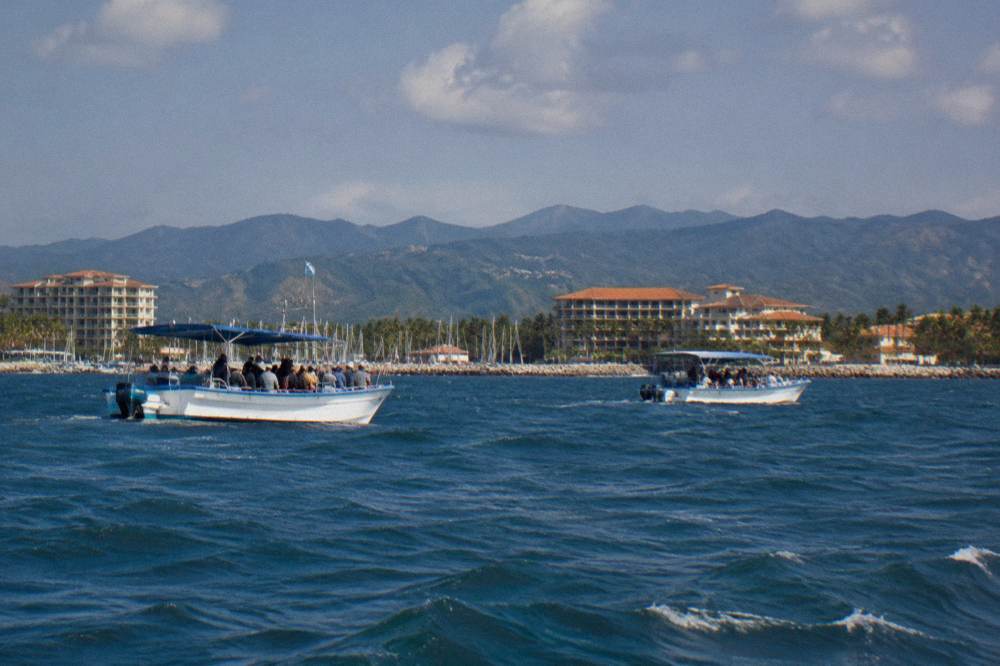
What Does An Authorized Whale Boat In Puerto Vallarta Look Like?
An authorized whale watching vessel flies a numbered flag carrying the federal seal, issued under its SEMARNAT permit. On the water, the visible signs are the 60 to 80 m standoff, the slow approach, the idle engine near resting whales and a crew that gives up a whale when the 30 minutes or the four-boat cap requires it.
The numbered flag matters because permits are not decoration, they are the legal basis of the whole activity. Operators must hold a SEMARNAT authorization for non-extractive wildlife use, and the flag with the federal seal is the public proof. Unlicensed boats, by contrast, must stay 240 m from any whale, which in practice removes them from the whale watching business entirely. If a booking page cannot tell you who holds the permit, that is a question to ask before you pay.
The roster gives concrete examples of what compliance looks like as a product feature. The whale encounter listing by Eco Explorer Vallarta states whales government permits and whales conservancy wrist bands as inclusions, meaning the paperwork is priced into your ticket. The featured biologist-led whale and dolphin boat lists bottled water, soda with no alcohol, a baguette sandwich lunch and granola-bar snacks among its inclusions for that 4-hour trip from Opequimar Marine Center. And the all-inclusive cruise by Vallarta by Boat pairs its open bar with a marine biologist and hydrophone on board, a reminder that party-boat format and rule compliance are not opposites.
| Signal | Authorized boat | Boat to walk away from |
|---|---|---|
| Flag | Numbered flag with federal seal displayed | No flag, or a faded unnumbered pennant |
| Approach | Stops at distance, whales close the gap | Chases surfacing whales for photo angles |
| Speed | Slows to a crawl, idle near resting animals | Planes at full speed up to the pod |
| Group handling | Maximum 4 boats, leaves when others arrive | Crowds in as the fifth or sixth vessel |
| Mother and calf | Never positions between them | Cuts across the pair for a closer pass |
| Time | Moves on after the time cap | Parks on the same whale indefinitely |
How Do You Spot A Responsible Whale Tour Operator In Puerto Vallarta?
Look for four things: a named biologist or naturalist guide in the inclusions, a hydrophone listed as equipment, stated federal permits or conservation fees, and a published approach policy consistent with NOM-131. On this site every listing states its inclusions verbatim, so the comparison takes minutes, not guesswork.
Responsible operators tend to volunteer their credentials because compliance is their selling point. Ecotours Vallarta's small-group adventure lists a lecture about humpback whales alongside the hydrophone system, coffee, tea and a light bite, and even travel insurance. Vallarta Whales' 4-hour trip from the Los Peines pier lists a licensed bilingual naturalist guide, didactic materials and the federal mandatory port tax, so the regulatory costs appear on the ticket rather than hidden. These details distinguish listings from the same operator too: Vallarta Adventures runs both a shared lunch-and-open-bar boat and a small-group photo safari, and the format and inclusions differ on each line, so read the one you are actually booking.
Reviews reward the patient style the rules require. The small-group half day out of Marina Vallarta holds a 5.0 rating from 353 reviews, and the whale encounter holds 4.9 from 530, both with free cancellation listed, which matters in a season where weather moves trips. One recent review on the live listing calls the crew's respect for the animals the highlight of the morning; that sentiment, repeated across hundreds of guests, is what the rulebook looks like from the deck. See the full compared lineup of Banderas Bay whale tours for prices and ratings side by side, and check the small-group half day via the operator's live listing.
What Happens If A Boat Breaks Whale Watching Rules In Banderas Bay?
Federal inspectors from PROFEPA board and verify vessels during the season; in one operation on the Nayarit side of the bay, inspectors checked 17 tourist and private boats for NOM-131 compliance and permit validity. The norm sets no published fine amount, and enforcement runs through inspections and permit action rather than on-the-spot penalties.
The inspection campaign is real and ongoing. PROFEPA, the federal environmental prosecutor's office, runs verification operativos through the whale season, checking SEMARNAT permits, approach distances and vessel behavior, and it states it will continue inspections across the entire season. The three rules inspectors emphasize publicly are the same three a guest can watch for: minimize impact on the whales, be patient during sightings, and use only authorized operators and vessels. There is no fine figure in the norm's text, so be wary of any page quoting one.
Enforcement also explains the flag system from the visitor's side. If inspectors verify permits, then a boat flying a numbered federal-seal flag is displaying paperwork that has survived exactly this kind of check. It also explains why the established operators, from Vallarta Adventures at the Puerto Magico terminal to La Orca de Sayulita on Sayulita beach, publish their compliance features: they have been through the process. For Sayulita-based travelers, our Sayulita whale watching tours guide covers the biologist-led 3-hour trips that run direct from the beach.
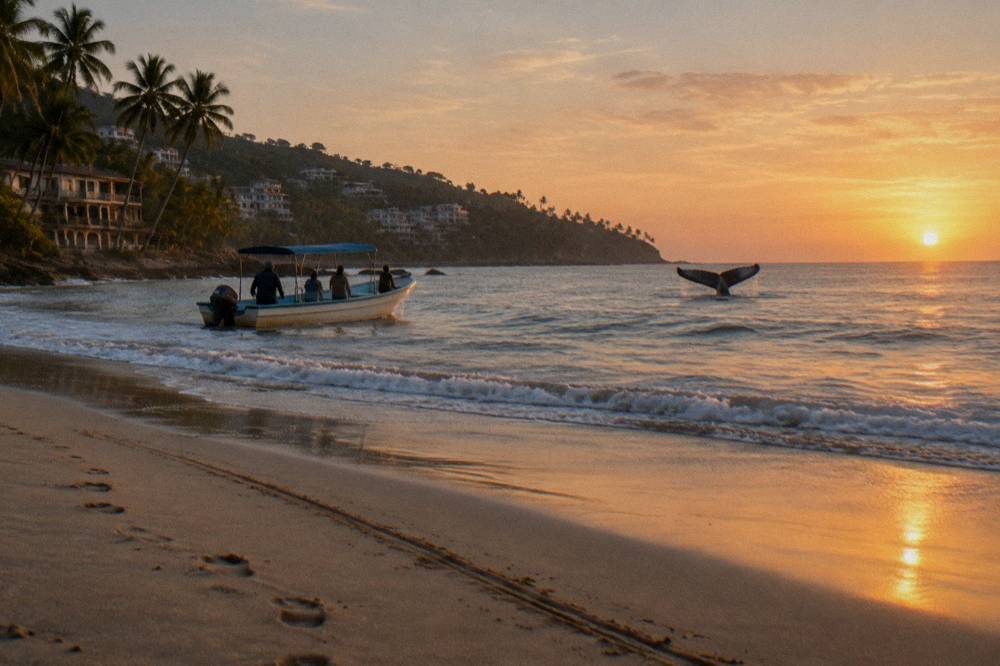
Do The Rules Change The Tour From Nuevo Vallarta Or Sayulita?
No. NOM-131 applies identically across Banderas Bay regardless of departure point, so a boat from Nuevo Vallarta marina, the Puerto Magico terminal or Sayulita beach follows the same distances, speeds and time caps. What changes by departure is the route out, the restricted zones it must respect and the tour format.
Departure choice is a logistics decision, not a rules decision. From the Nuevo Vallarta marina, the catamaran cruise by Mike's Fishing & Tours lists continental breakfast, buffet lunch and an open bar across its 4-hour format, departing either Puerto Magico or Nuevo Vallarta. From Sayulita, the biologist-led 3-hour trips by La Orca de Sayulita list snacks, a hydrophone, photos and life jackets in a smaller, faster-to-water package. Both are bound by the same 60 m approach and the same 30-minute cap; the experience around those constants is what you are choosing between. The distinction between the two main hub marinas is unpacked in Marina Vallarta versus Nuevo Vallarta departures.
For guests who want the rules held with maximum attention, a private charter keeps the decision-making small. The private whale watching tour by Vallarta Natours, from $760, lists lunch and soft beverages, and a 5.0 rating from 113 reviews; the group is yours, so the guide's attention, and the captain's patience, are not divided across a shared deck. Check availability on the operator's live listing before peak weeks, when January and February, the months operators and guides name as peak, fill first.
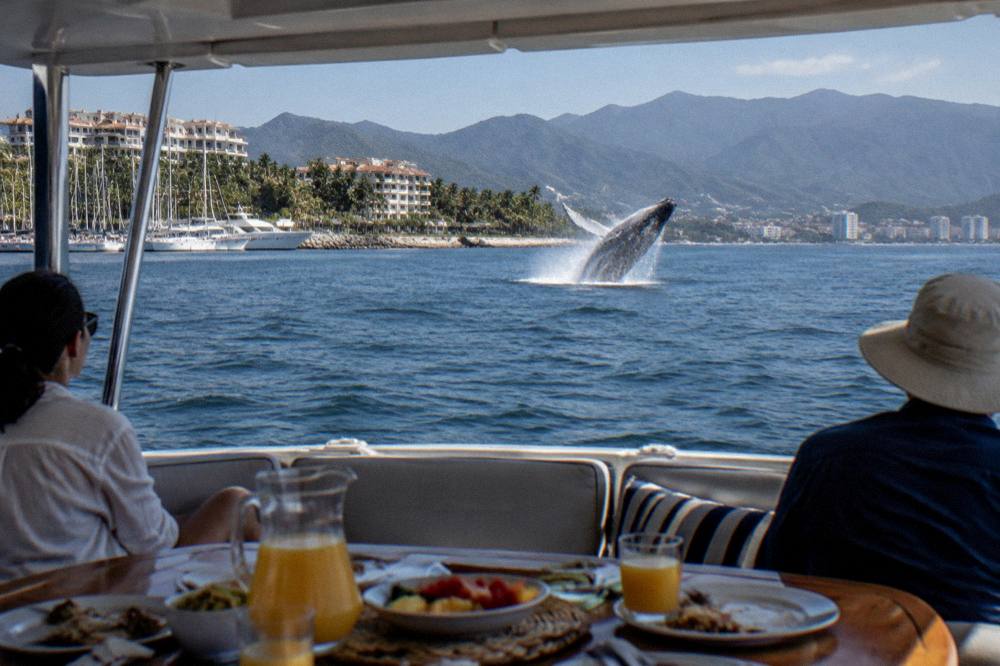
Why Do The Whale Watching Distances Exist At All?
The distances exist because Banderas Bay is a breeding and calving ground: the whales in the bay each winter include mothers with newborn calves, and the Mexico humpback population is listed as Threatened by NOAA Fisheries. Approach rules reduce stress on animals that are already spending energy on birth and nursing.
The biology explains the numbers. Humpbacks reach about 60 ft and about 40 tons, and the Mexico population breeds along the Pacific coast of Mexico before feeding migrations that run from California to the Aleutians. A calf born in the bay nurses through the winter, and every unnecessary flight from a fast boat costs energy the calf needs for the northbound migration in spring. The 240 m waiting distance, the four-boat cap and the never-between-mother-and-calf rule all target the same risk from different angles. That is also why the restricted zones hug the coastline where mothers and calves concentrate, and why the season closes in late March rather than running as long as whales linger.
The rules and the tourism are not in conflict, they are the same bargain. The federal permits printed on your ticket, the numbered flag flown by authorized boats, the wrist bands and conservation fees in the listings, and the biologist guiding on trips like the Wildlife Connection tour are all one system. Puerto Vallarta Whale Watching exists because the whales come back, and the whales come back partly because the rulebook in this guide is enforced. Choosing an operator that follows it is not just ethical, it is the version of the trip where the crew can tell you what you are looking at.
Common Questions About Whale Watching Rules In Mexico
How close can a whale watching boat get in Banderas Bay?
Authorized small boats approach to 60 m and medium or large boats to 80 m, after waiting at 240 m. Whales very often swim closer to an idle boat on their own, which is legal and is the behavior the rules are designed to invite.
Is swimming with whales allowed in Puerto Vallarta?
No. NOM-131-SEMARNAT-2010 prohibits swimming, diving, fishing and water skiing around whales, and also bars jet skis, kayaks and canoes from whale observation. Snorkel combos on this site snorkel at a reef or beach stop away from the whales.
How can I tell if a whale tour is legal?
Authorized vessels fly a numbered flag with the federal seal, and compliant listings name their permits, conservation fees or biologist guides in the inclusions. If a booking page names none of these, ask before you pay.
What speed do whale watching boats have to slow to?
Below 5 knots, about 9 km/h, inside an observation area, and below 2 knots, about 4 km/h, when entering it. A boat must never travel faster than the slowest whale present, and engines drop to idle when a whale is not moving.
Are whale watching rules enforced in Banderas Bay?
Yes. PROFEPA inspectors boarded and verified 17 vessels in one operation on the Nayarit side of the bay and state that inspections continue through the whole season. The norm sets no published fine amount; enforcement works through permits and inspections.
Why can boats only stay 30 minutes with a whale?
The time cap, together with the four-boat limit, prevents multiple vessels from pressuring the same animals all day. Mothers with calves in the bay need to rest and nurse without a permanent escort, so crews move on even when the sighting is spectacular.