Catamaran Or Sailboat: Whale Tours Under Sail
Not every whale trip in Puerto Vallarta happens on a speedboat. Three listings on this roster put sails, decks and open bars between you and the humpbacks, and each one trades a little maneuverability for a lot of comfort.
Short answer
Sailing and catamaran whale cruises in Puerto Vallarta run from $99 to $130 per person for the three decked options on this roster. The catamaran cruise from $99 includes breakfast, buffet lunch and open bar, the mega yacht sunset trip runs from $110, and a biologist-guided catamaran starts at $130. All three last 3 to 4 hours.
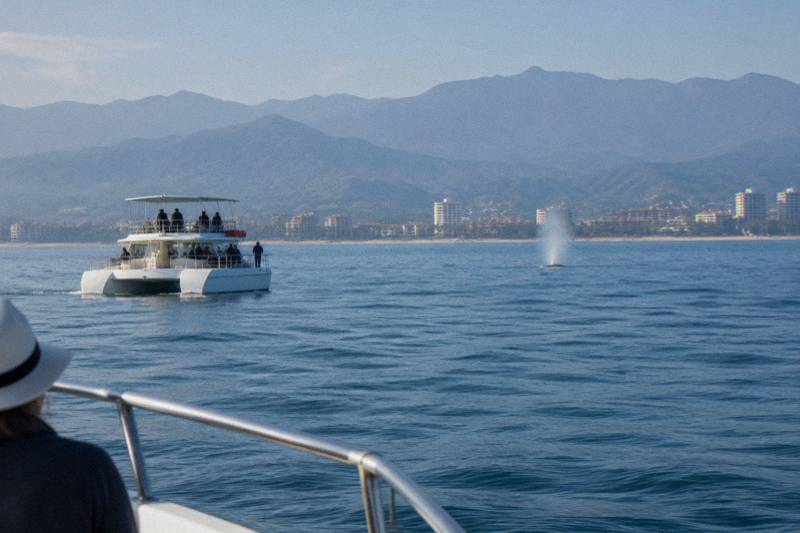
The humpbacks that winter in Banderas Bay do not care what kind of hull you ride. They care about the 60 to 80 meter approach line that Mexican federal rules draw around them, and that rule applies identically to a six passenger panga and a 100 passenger catamaran. The difference between those two boats is entirely yours: space, food, bar service, shade, restrooms, and how your stomach feels three hours in. This guide compares the sailing category on the roster, three listings strong, against the shared and private alternatives, so a reader who wants the deck-and-sail experience can pick the right one.
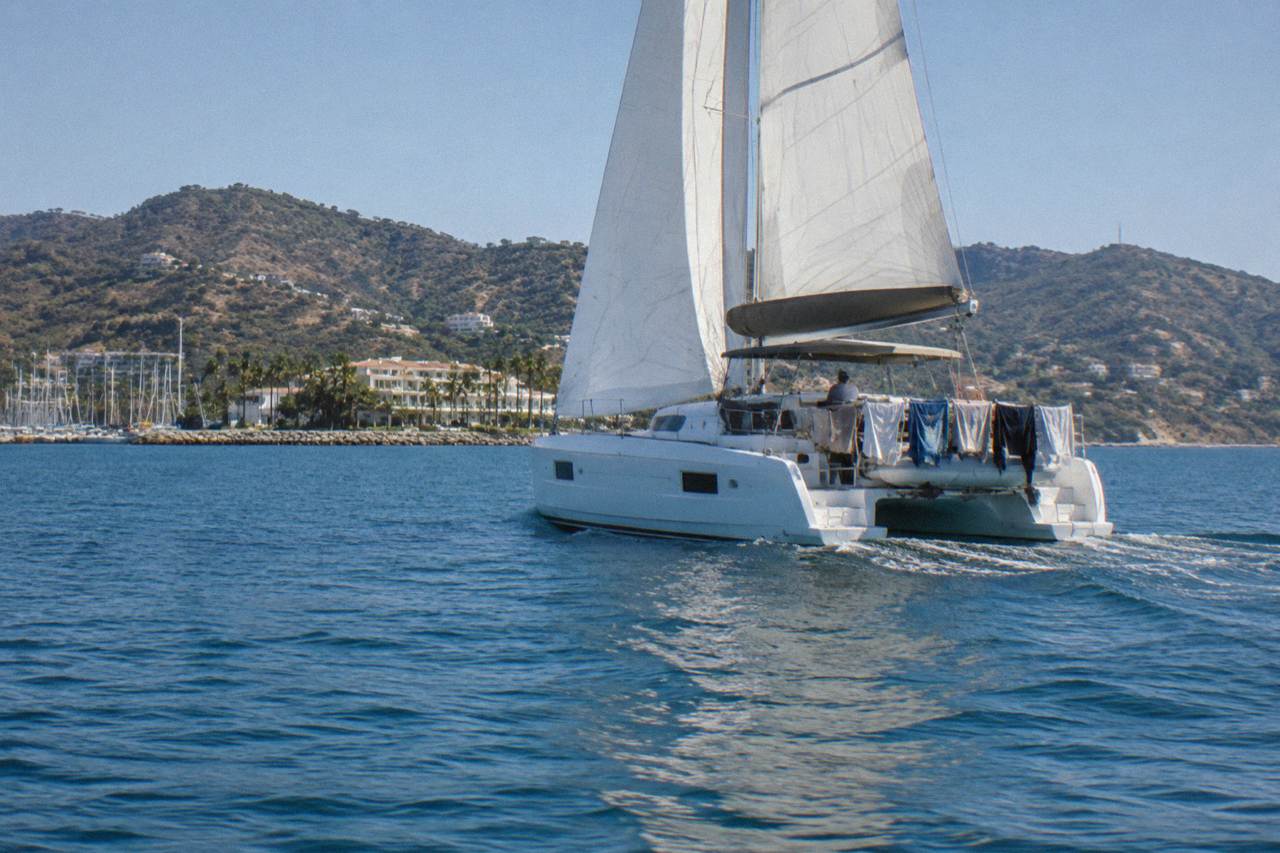
The sailing family here is small and distinct. There is the catamaran whale watching cruise operated by Mike's Fishing & Tours, from $99 per person with breakfast, buffet lunch and an open bar. There is the mega yacht sunset and whale watching trip from Chica Locca Tours, from $110 per person with food and open bar. And there is a biologist-guided catamaran from $130 per person with hydrophone and morning breakfast or noon lunch departures. Everything else on the roster with a sail is a private yacht charter, which the private versus shared whale tours guide covers separately.
Why Choose A Catamaran Or Sailboat For Whales In Banderas Bay?
A catamaran or sailboat buys you deck space, shade, restrooms, a real meal and a bar, at a similar price to the biologist small boats, and the trade is speed and closeness of the ride rather than what you see. Humpbacks surface on their own schedule inside the same federal approach distances no matter the hull. The three decked listings run $99 to $130 per person for 3 to 4 hours.
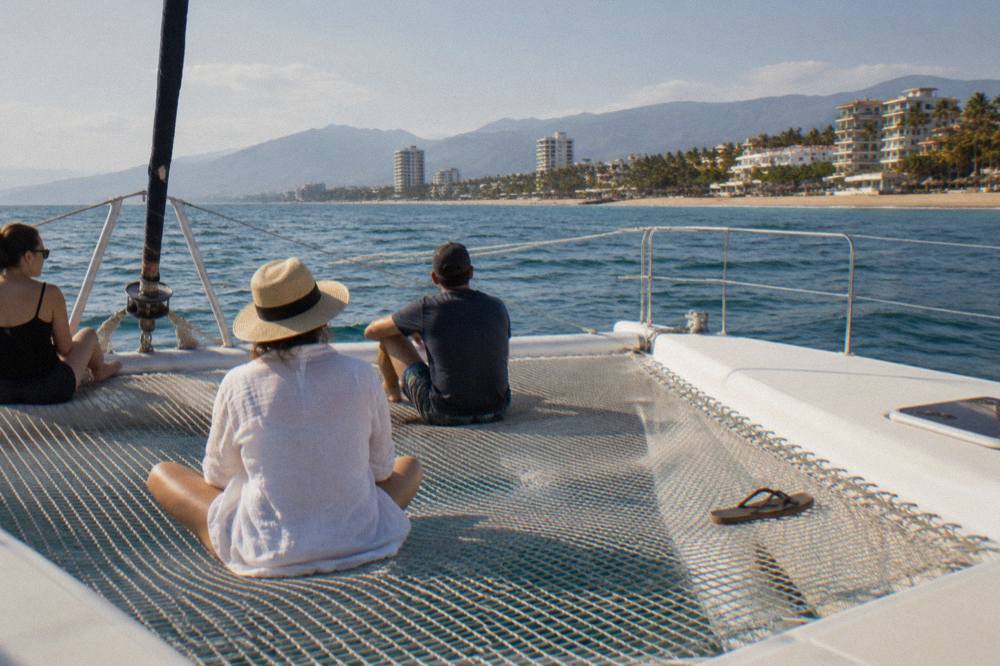
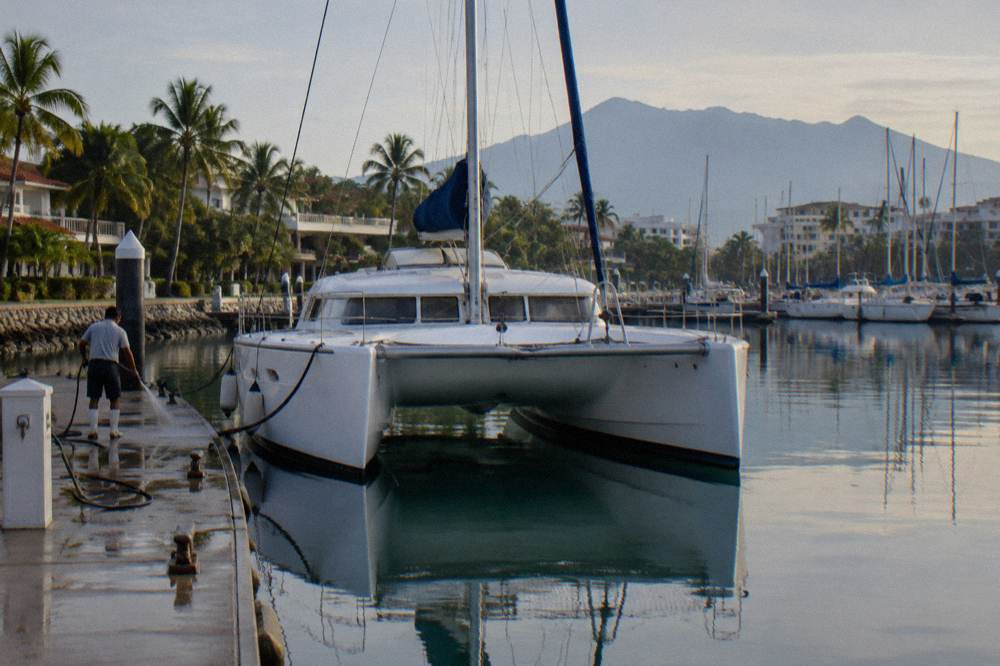
The case for two hulls is comfort. A catamaran's twin design spreads the boat wide, which cuts the rolling motion that bothers people on narrow monohulls and small pangas, a point worth weighing if you have already read our piece on whether you will get seasick whale watching. You get a netted trampoline at the bow, seating that is not a bench, and enough rail space that twenty other passengers do not crowd your view. Two of the three listings carry live commentary or a biologist, so the educational content survives the bigger boat.
The trade is real too. Small boats reach observation zones quickly and turn tightly, and the biologist-led whale and dolphin tour from $105 or the small-group half day with lunch from $110 can spend more of their four hours near whales and less in transit. A catamaran motors or sails at cruise speed, arrives, and holds position politely. What you lose in agility you gain in the hour after the sighting: lunch served on deck, a drink, a slow ride home along a coastline that runs about 100 km from Punta Mita to Cabo Corrientes.
What Do Catamaran Whale Tours In Puerto Vallarta Include?
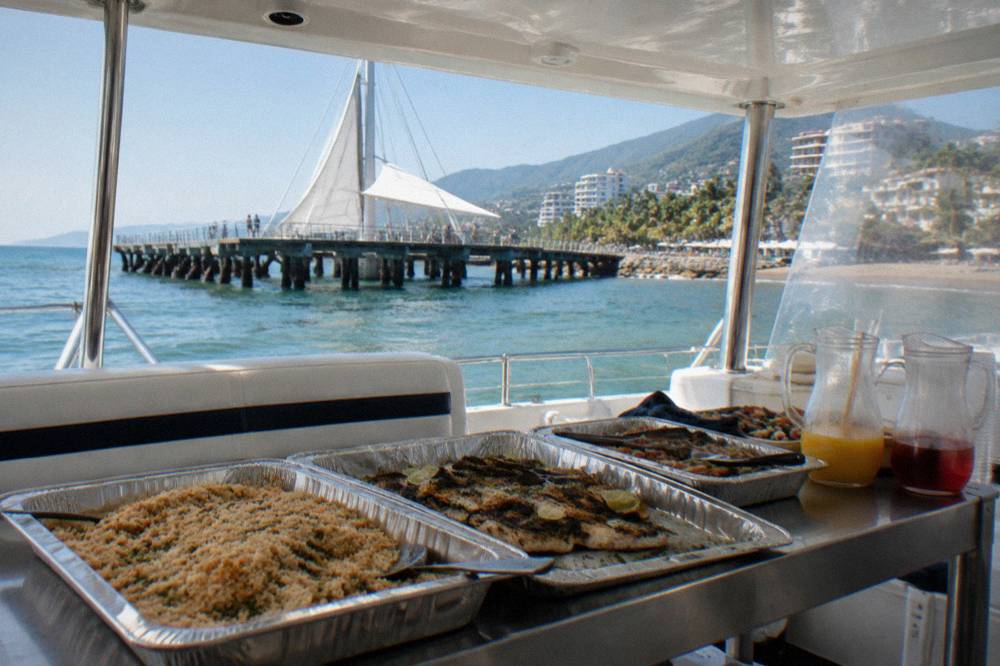
The catamaran cruise from $99 includes continental breakfast, buffet lunch and an open bar of alcoholic and non-alcoholic drinks plus live commentary, over 4 hours from Puerto Magico or Nuevo Vallarta. The $130 biologist catamaran includes a hydrophone, coffee and juice, breakfast on the morning run or lunch at noon, and restrooms onboard. The mega yacht from $110 lists open bar and food.
Inclusions are where the sailing category earns its keep, because on a speedboat you get a granola bar. The Mike's Fishing & Tours catamaran states continental breakfast, buffet lunch, open bar and live commentary on its listing. The biologist catamaran lists a guided tour by a biologist, a hydrophone to listen to whale songs, coffee and juice, non-alcoholic drinks, and restrooms, with breakfast on the morning tour and lunch on the noon departure. Chica Locca's mega yacht lists open bar and food alongside the whale watching itself.
| Listing | Price (USD) | Duration | Food and drink stated | Rating |
|---|---|---|---|---|
| Whale Watching Cruise (Mike's Fishing & Tours) | from $99 per person | 4 hours | Continental breakfast, buffet lunch, open bar | 4.8 from 413 reviews |
| Mega Yacht Sunset and Whale Watching (Chica Locca Tours) | from $110 per person | 3 hours | Open bar, food | 4.8 from 517 reviews |
| Whale Watching on Catamaran (biologist-guided) | from $130 per person | 4 hours | Coffee, juice, breakfast or lunch tour, non-alcoholic drinks | No rating yet, 1 review on file |
A word on that third line: one review is one review, and this site prints review counts beside every rating for exactly that reason. The two established listings carry real pools, 413 and 517 reviews respectively, while the biologist catamaran is new enough that no star claim is honest yet.
If this format is the one you want, the three-deck comparison below is the shortlist.
One more inclusion note that saves arguments at the dock: port and conservation fees are printed on some roster lines and not others. Two shared listings state a 39 MXN port tax, and the Marietas park entry of 125 MXN per person per day is a separate CONANP charge that applies only to park combos. For the three sailing listings, treat anything not on the inclusion list as not stated, and confirm at booking.
Which Marinas Do Sailing Whale Cruises Depart From In Puerto Vallarta?
The catamaran cruise departs Puerto Magico's API terminal or the Nuevo Vallarta marina, the mega yacht departs Nuevo Vallarta with marina pickup stated on its listing, and the biologist catamaran does not state a departure point, so you confirm it at booking. Departure choice matters more than the boat: it sets your transfer time and your transit time to the whales.
Puerto Magico sits at the cruise terminal end of Marina Vallarta, and the airport to Marina Vallarta transfer runs 15 to 22 minutes according to operator transfer sites. Nuevo Vallarta adds roughly 20 to 30 minutes from the airport but puts you closer to the north bay waters where humpbacks gather. Our Marina Vallarta versus Nuevo Vallarta departures guide works through this trade in detail, including which side of the bay each pier serves.
| Departure point | Listings using it | Airport transfer (operator sites) | Notes |
|---|---|---|---|
| Puerto Magico API terminal | Catamaran cruise (Mike's) | 15 to 22 minutes to Marina Vallarta area | Also the cruise terminal zone |
| Nuevo Vallarta marina | Catamaran cruise (Mike's), mega yacht | 20 to 30 minutes | Marina pickup stated on the mega yacht listing, confirm |
| Not stated | Biologist catamaran | n/a | Confirm the meeting point when booking |
If you are staying north of the bay, in Sayulita or San Pancho, no catamaran on this roster departs your beach, though small-boat options from Sayulita exist and the Sayulita whale watching guide covers them. The honest summary: sailing trips are a Puerto Vallarta and Nuevo Vallarta product.
There is a decision moment here. If breakfast, buffet lunch and an open bar on a catamaran sounds like your kind of morning, the Mike's cruise is the related tour for this page and the one we would point a first-time sailing reader to.
Book the direct listing if you already know your dates: Check availability. Free cancellation is listed on it, so an early booking costs you nothing but a placeholder.
How Stable Is A Catamaran Compared To A Small Whale Boat?
Catamarans roll less than monohulls and small open boats because two hulls spread the buoyancy wide, which is why they are the standard answer for motion-sensitive guests. The listing data supports this indirectly: the sailing category carries 4.8 ratings across 413 and 517 reviews, while the one whale and snorkel combo rated 3.9 from 65 reviews runs on a shared smaller vessel.
Stability physics is simple. A panga or a monohull pivots on a single line, so swell tips it; a catamaran resists tipping across its beam because the two hulls brace each other. In Banderas Bay that mostly matters on the exposed transit legs, since inside the observation zone every authorized vessel slows below 5 knots regardless of size, per the federal norm. The trade runs the other way in a following sea, where a cat's bridgedeck can slap, but for a three to four hour wildlife outing the wide boat is the gentler ride.
None of this is a seasick promise, and this site does not make those. Conditions vary, and the Puerto Vallarta weather in whale season guide covers what the verified monthly data shows: sea temperatures of 23.9 to 25.2 degrees Celsius and only 1 to 2 rain days a month from January through March, the heart of the season. Practical advice from every operator page is the same: take motion medication before boarding, stay on deck, and watch the horizon.
A catamaran also gives you somewhere to retreat. Restrooms onboard are stated on the biologist catamaran listing, shade is structural rather than a bimini flap, and you can walk around rather than being pinned to a seat for three hours. For families weighing age limits, the kids and whale watching piece notes that age and health rules live on each listing, never in a general policy.
What Do Sailing Whale Tours Cost In Puerto Vallarta?
The three decked sailing listings run from $99 to $130 per person, a band that overlaps the biologist small boats at $105 to $120 and sits above the cheapest shared options, from $62 for a hydrophone trip with drinks and from $78 for an all-inclusive cruiser. Private sailing starts much higher, from $319 per group for a yacht holding up to 15.
Price in this category buys the boat and everything on it. The table below places every sailing-relevant listing against the roster's endpoints so you can see what the premium actually is. Note that the all-inclusive cruise from Vallarta by Boat, from $78, is a motor cruiser rather than a sailing vessel, but it matches the sailing category on inclusions, with lunch, an open bar, a hydrophone and a marine biologist aboard, so it functions as the budget alternative to a catamaran day. The wider set of guides lives on Puerto Vallarta Whale Watching.
| Listing | Type | Price basis | Duration |
|---|---|---|---|
| Whale & Dolphin Watching with Hydrophone (Live and Traveler Tours) | Shared motor vessel | from $62 per person | 4.5 hours |
| Whale & Dolphin Watching Cruise All Inclusive (Vallarta by Boat) | Shared cruiser | from $78 per person | 4 hours 30 minutes |
| Whale Watching Cruise (Mike's, catamaran) | Catamaran | from $99 per person | 4 hours |
| Mega Yacht Sunset and Whale Watching (Chica Locca) | Mega yacht | from $110 per person | 3 hours |
| Whale Watching on Catamaran (biologist-guided) | Catamaran | from $130 per person | 4 hours |
| Yacht Adventure Sayulita and Banderas Bay (Chica Locca) | Private yacht, up to 15 | from $319 per group | 3 to 4 hours |
The Live and Traveler Tours hydrophone trip deserves its line: from $62 per person, rated 4.5 from 24 reviews, with a marine biologist, drinks including beer and spirits, and morning lunch listed. It is the cheapest way onto water with a biologist on this roster, and it undercuts every catamaran listing on price.
For the open-sea, drinks-included, big-deck day specifically, the spread from $78 to $130 is the honest planning range across these six listings, and every figure above comes straight from the roster.
Can You Sail And Snorkel On The Same Trip In Banderas Bay?
Two paths combine a sailing-style day with snorkeling: the Marietas whale watching and snorkeling combo from $85 per person, and the 3-hour whale and snorkeling trip from $42 per person, and both snorkel at a reef or beach stop away from the whales, because swimming with humpbacks is prohibited outright under NOM-131 numeral 4.19 d. No sailing listing on the roster includes snorkel gear.
The federal rule is unambiguous: no swimming, diving, fishing or water skiing in whale observation areas, and no jet skis, kayaks or canoes around whales either. So every legitimate combo does its two activities in two places. The Sayulita Entourage Marietas combo, rated 4.9 from 56 reviews, lists snorkeling equipment, a certified guide, lunch and taxi transport, and does its whale watching outside the restricted zone that bans whale watching within 1.5 km of the Islas Marietas. The Travel vallarta 3.5-hour combo, from $42 per person with a 39 MXN port tax, lists life jackets, a guide and snorkel gear.
The Marietas park itself charges 125 MXN per person per day to enter, with seniors, disabled visitors and children under 12 exempt, and access is only permitted with a CONANP-authorized operator, per the official park page. The park is open Tuesday to Sunday 8:00 to 18:00. Whether the famous Hidden Beach itself is accessible changes with federal decisions, so ask the operator on the day rather than planning around it.
If your mental picture is sail out, watch whales, drop anchor, snorkel, sail home with a beer, the honest answer is that no single roster listing does all of it on a sailing hull. The closest is the Marietas combo by taxi-boat, or the private yacht from Chica Locca, from $319 per group for up to 15, which includes a premium open bar, a continental breakfast and snacks such as guacamole and chips.
What Rules Apply To Sailing Near Whales In Mexico?
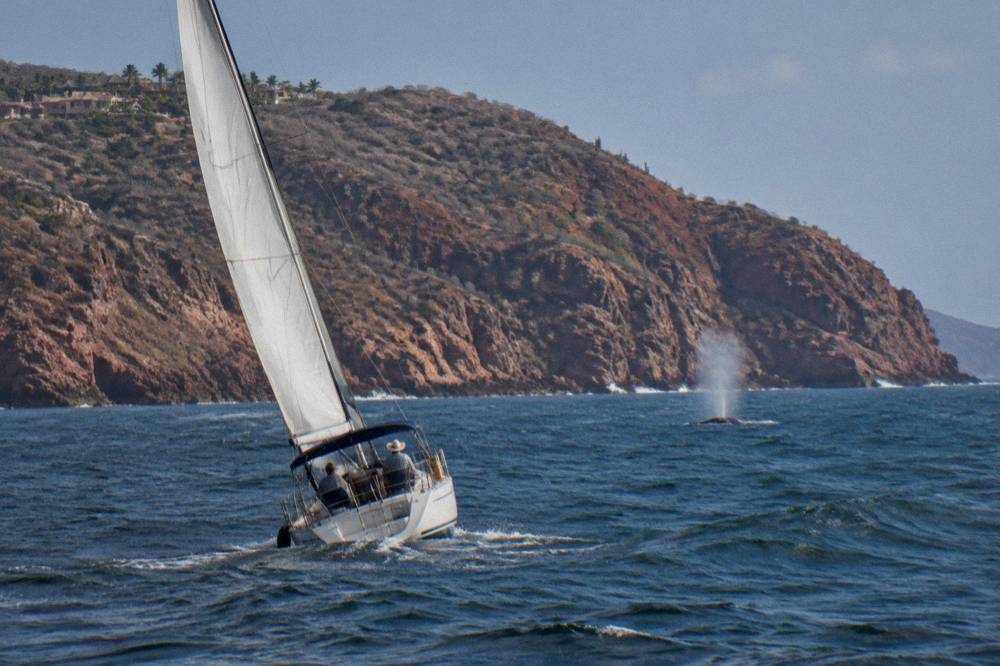
NOM-131-SEMARNAT-2010 governs every vessel, sail or motor: authorized boats fly a numbered flag with the federal seal, approach no closer than 60 m for small boats and 80 m for larger ones, wait at 240 m, keep at most 4 boats around a whale or group, and spend at most 30 minutes with the same animals, at speeds below 5 knots inside the observation zone.
The norm, published in the Diario Oficial in October 2011 and unchanged since, also requires engines to idle in neutral when a whale is not moving, with shutdown allowed for hydrophone listening, and forbids positioning between a mother and calf. Unlicensed boats must stay 240 m away from any whale. The full text lives at the Diario Oficial de la Federación, and the whale watching rules guide on this site translates the operative numbers.
| Rule | Value | Applies to |
|---|---|---|
| Approach distance | 60 m small boats, 80 m medium and large | All authorized vessels |
| Waiting distance | 240 m | All vessels, mandatory for unlicensed |
| Boats per whale or group | 4 maximum | All |
| Time with same whale or group | 30 minutes maximum | All |
| Speed in observation zone | Below 5 knots (9 km/h), below 2 knots entering | All |
| Swimming, diving, kayaks, jet skis near whales | Prohibited | Everyone |
Enforcement is not theoretical. PROFEPA runs inspection operations through the season and boarded 17 vessels in one Nayarit sweep, checking permits and compliance. The season itself is set by federal notice: the official window ran 8 December 2025 to 23 March 2026 last season, operators advertise the same 8 December opening for the coming one, and the new federal notice had not appeared on record as of late October 2026. The aviso also draws two no-watching zones: a 1.5 km radius around the Islas Marietas and a 2 km coastal strip from Punta Mita to the Rio Ameca mouth, both protecting mother and calf concentrations.
For a sailor this changes one expectation: the boat will not chase. A catamaran holds its distance, cuts engines to idle, and lets the hydrophone do the intimate work. Guests who understand that the closeness is acoustic, listening to a humpback song through the speaker while the animal feeds hundreds of meters off the bow, rate these trips higher than guests expecting a photo at ten meters.
How Do You Pick The Right Sail Or Catamaran Trip For Whales?
Pick the Mike's catamaran from $99 for the full meal-and-bar day with the largest review pool in the category, the mega yacht from $110 for a sunset departure and the highest review count at 517, or the biologist catamaran from $130 for the hydrophone and guided science. Pick a private yacht from $319 per group only if the group fills it.
The decision runs on three axes: food and drink, science, and time of day. On food, the Mike's catamaran is the most complete listing, breakfast plus buffet lunch plus open bar, rated 4.8 from 413 reviews. On time of day, Chica Locca's mega yacht is the roster's only sunset-format whale product, 3 hours at 4.8 from 517 reviews, and our best time of day to see whales piece explains why morning and late afternoon both have arguments. On science, the biologist catamaran at $130 is the only sailing listing with a hydrophone stated, though it carries a single review so far.
Readers who keep landing on the sailing category but keep comparing it against small boats should hear the honest version of that hesitation, which the is whale watching worth it in Puerto Vallarta post frames generally: the experience quality correlates most with the guide and the boat's behavior around animals, not the hull material. A catamaran with a biologist beats a rushed speedboat; a disciplined small boat beats a party catamaran blasting past the observation zone. The listings above, and the wider compared tours guide, let you check each one's stated format.

One planning note on season timing: operators and guides name January and February as the peak months in the bay, with mid-January through mid-March cited as the densest window, and the best month guide works month by month. If your dates are flexible inside the official window, mid-season gives you the most whales on the water while your catamaran holds its patient 60 to 80 meters.
Whatever you choose, book early for January and February, when the sailing category fills first, and hold the date with a free-cancellation listing rather than an unrefundable one, since sea state and season dates can shift a day either way.
Common Questions About Catamaran Whale Tours In Puerto Vallarta
Are catamaran whale tours in Puerto Vallarta more stable than small boats?
Generally yes. A catamaran's twin hulls resist rolling across the beam, which is why the format suits motion-sensitive guests, while small open boats pivot on a single hull and tip more with the swell. Inside the whale observation zone every authorized vessel slows below 5 knots regardless of size, so the comfort difference comes mostly on the transit legs.
How much does a catamaran whale tour in Puerto Vallarta cost?
The catamaran cruise with breakfast, buffet lunch and open bar runs from $99 per person, the mega yacht sunset trip from $110 per person, and the biologist-guided catamaran from $130 per person. All three are 3 to 4 hours. A shared motor alternative with biologist and drinks starts at $62 per person if the sailing format itself is not the priority.
Do catamaran whale tours include food and drinks?
On this roster, yes, all three sailing listings state food and drink. The Mike's catamaran lists continental breakfast, buffet lunch and an open bar; the mega yacht lists open bar and food; the biologist catamaran lists coffee, juice, non-alcoholic drinks and breakfast on the morning run or lunch at noon. Confirm current inclusions on the live listing when you book.
Where do catamaran whale tours depart from?
The Mike's catamaran departs the Puerto Magico API terminal or the Nuevo Vallarta marina, with the choice made at booking. The Chica Locca mega yacht departs Nuevo Vallarta, with marina pickup stated on its listing and worth confirming. The biologist catamaran does not state a departure point, so confirm before you travel.
Can you snorkel on a catamaran whale tour in Puerto Vallarta?
No sailing listing on this roster includes snorkeling. Combos exist, from $42 to $85 per person, and they snorkel at a reef or beach stop away from the whales, because swimming with humpbacks is prohibited under NOM-131-SEMARNAT-2010. A private yacht from $319 per group for up to 15 lists a premium open bar, continental breakfast and snacks such as guacamole and chips.
When is catamaran whale watching season in Banderas Bay?
The official window ran 8 December 2025 to 23 March 2026 last season under the federal notice, and operators advertise the same 8 December opening for the coming season, though the new federal notice had not been published as of late October 2026. Operators and guides name January and February as the peak months. No whale tours run outside the official season.