Will I Get Seasick On A Whale Watching Tour?
An honest look at seasickness on Banderas Bay whale tours: which boats feel steadiest, what actually causes it, which remedies help, and when to cancel or rebook.
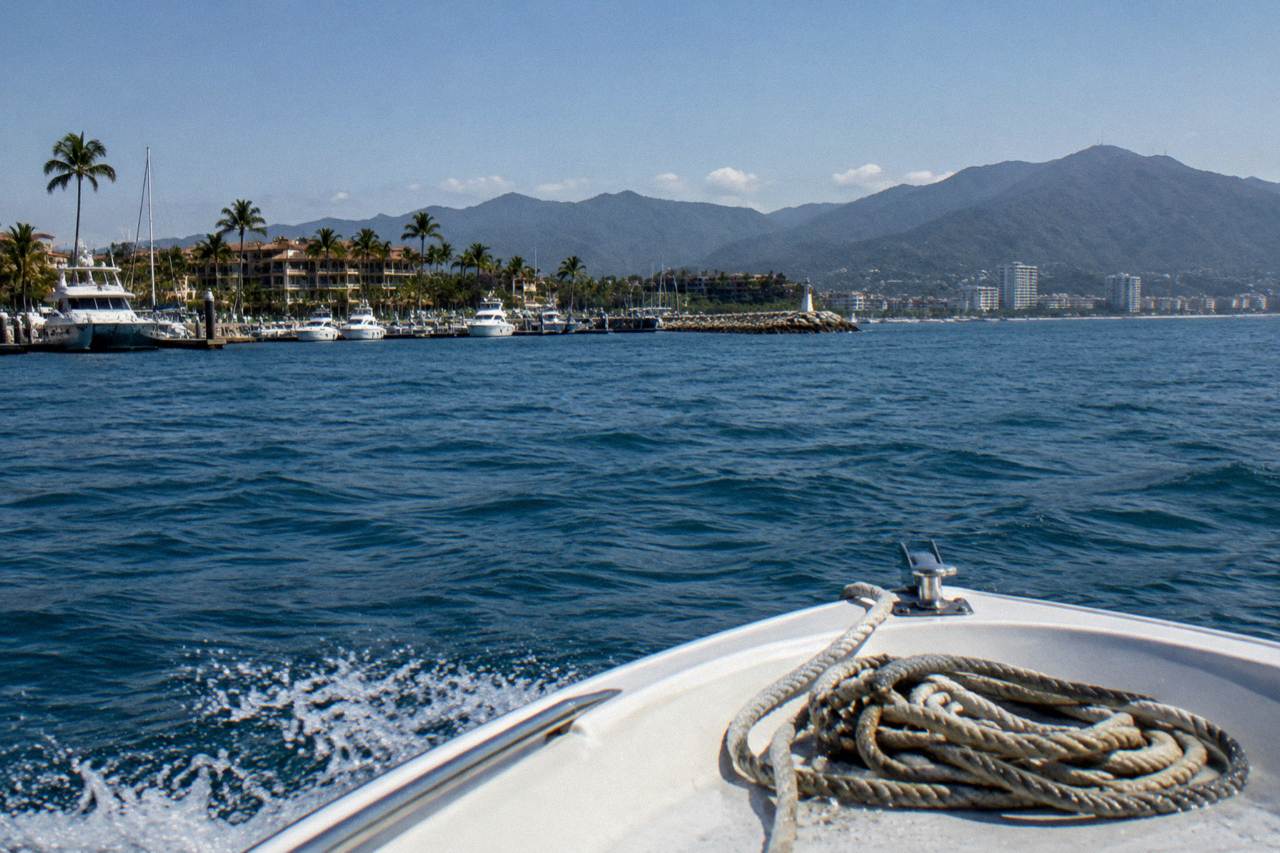
Roughly one in three people who hesitate before booking a Banderas Bay whale tour cite the same worry: the boat, and what the boat does to their stomach. It is a fair question, and the honest answer is more encouraging than most people expect. The bay is a large, sheltered body of water, about 987 km2 with roughly 100 km of coastline, and winter is the calmest stretch of the year on it. Whale season, 8 December to 23 March by the official record, sits entirely inside that calm window.
Still, "sheltered" is not "flat," and a small share of guests do feel queasy on any whale boat anywhere in the world. This article walks through what actually causes seasickness on Banderas Bay, which of the boats on this site's roster feel steadiest underfoot, what the remedies landscape looks like, and the cancellation question: when to rebook and when to just go. The catamaran cruise with breakfast and buffet, the mega yacht sunset trip and the biologist-led catamaran all come up along the way, because the boat you pick does half of this work for you.
Will I Get Seasick On A Whale Watching Tour?
Most people do not, a minority feel briefly unwell, and only a small fraction have a genuinely rough time. The outcome depends far more on the boat, the sea state that morning and your own history than on luck. If you have been seasick before on a small vessel in choppy water, plan for it now rather than hoping on the dock.
No source on file gives a seasickness rate for Banderas Bay, and this site will not invent one. What the record does support is the structure of the risk. Seasickness is motion sickness: your inner ear registers movement your eyes do not confirm, and the mismatch produces nausea. The bigger and steadier the platform, the smaller the mismatch. That is why the question "will I get seasick" is really three questions: how big is the boat, how is the sea that day, and how sensitive are you.
Banderas Bay helps in ways open-ocean departure points do not. The whale watching happens inside the bay rather than beyond the headlands, and the federal rules that govern every licensed trip also shape the ride: NOM-131-SEMARNAT-2010 requires boats to slow below 5 knots in observation areas and below 2 knots when entering them, and to idle in neutral when a whale is not moving. The slowest moments of a whale tour, the moments you came for, are also the gentlest on your stomach. It is the transit out and back that moves most.
Your own history is the best predictor. If you read in a car, feel unwell on winding roads or have been seasick on a fishing boat, treat that as information and book accordingly: a catamaran, a yacht or a larger shared boat rather than a small open skiff. If none of those apply, the odds are plainly on your side. First-timers with no motion-sensitivity history complete these tours without issue every day of the season, and the guest reviews across the most-booked listings on this site talk far more about whales than about nausea.
If the fear is the main thing between you and a booking, start with the steadiest platforms in the sailing and catamaran family, then work down in size only if you want a more intimate boat:
Which Boats Feel The Steadiest On Banderas Bay?
Wide, multi-hull and large boats feel steadiest: catamarans, yachts and bigger shared cruisers. Small-group open boats put you closer to the water and the whales, but they also transmit more of the swell to your body. On this roster, the catamaran cruise, the mega yacht and the biologist-led catamaran are the friendliest picks for a nervous stomach.
Catamarans are the standard answer to seasickness for a mechanical reason: two hulls and a wide beam resist rolling, which is the side-to-side motion that bothers most people. The Whale Watching Cruise in Puerto Vallarta and Nuevo Vallarta, run by Mike's Fishing and Tours, is a 4-hour catamaran trip from $99 per person, rated 4.8 from 413 reviews, with a continental breakfast, buffet lunch and open bar included. Eating a real breakfast on a steady deck is quietly one of the best anti-nausea moves available, and this listing builds it into the fare. The sailing and catamaran whale cruises guide compares all of them in one place.
The mega yacht option takes the same idea further. The Mega Yacht Sunset and Whale Watching trip from Chica Locca Tours runs from $110 per person, rated 4.8 from 517 reviews, with food and an open bar on a large vessel. A mega yacht is the heaviest, slowest-rolling platform on the roster, and the sunset departure means you spend the trip in the calmest part of the day. The biologist-guided catamaran at from $130 per person rounds out the trio with a hydrophone, coffee and a breakfast or lunch departure depending on the time slot.
At the other end, small-group boats are not banned territory, they are a tradeoff. The small-group half day with lunch from $110 per person, rated 5.0 from 353 reviews, and the biologist-led whale and dolphin trip from $105 per person keep groups small and get you low to the water. Many guests prefer exactly that intimacy. But an honest seasickness answer has to say it plainly: a smaller hull rolls more, and if your stomach has voted against boats before, the catamaran family is the safer first booking.
| Boat type on the roster | Typical listing | Price basis | Stability for a sensitive stomach |
|---|---|---|---|
| Catamaran | Whale Watching Cruise (Mike's Fishing and Tours) | from $99 per person | High, wide beam resists roll |
| Mega yacht | Mega Yacht Sunset and Whale Watching (Chica Locca) | from $110 per person | Highest, heaviest platform |
| Large shared cruiser | All-inclusive whale and dolphin cruise (Vallarta by Boat) | from $78 per person | Good, bigger hull |
| Small-group boat | Small-Group Half-Day with lunch | from $110 per person | Moderate, more motion felt |
| Open skiff style | Sayulita beach direct trips | from $90 per person | Most motion felt |
Every listing on the roster shows free cancellation on its booking page, so a nervous first-timer can reserve a catamaran, see how the morning feels, and decide with a real exit in hand rather than guessing weeks in advance.
What Actually Causes Seasickness On A Whale Boat?
A sensory conflict does: your inner ear feels a rolling motion your eyes and body cannot reconcile, and the brain responds with nausea, cold sweat and dizziness. It is not psychological, it is not weakness, and it usually fades within a day of being back on solid ground. Knowing the mechanism tells you where to sit and where to look.
The classic triggers on a whale boat are the transit legs, not the watching. Boats cross the bay at speed to reach the observation areas, and that is when a swell moves the hull most. Once a whale is found, the rules slow everything down: under NOM-131 at most four boats may gather around one whale or group, engines drop toward idle, and the vessel holds position for at most 30 minutes with the same animals. The regulatory framework is published in the Diario Oficial de la Federación and the full NOM-131 text spells out each of these handling rules. For a prone-to-queasiness guest, that means the worst ten minutes of any trip are usually the run out, and the best hour is the part you paid for.
Where you sit and stand matters more than most people realize. The center of the boat, low and near the middle, moves least; the bow and the upper deck move most. Eyes on the horizon give your brain a stable reference that resolves the sensory conflict, so a prone guest should face forward, watch the skyline and stay out in open air rather than going below deck. Reading a phone, staring straight down at the water beside the rail, or spending the transit in an enclosed cabin are the three most reliable ways to make a marginal stomach worse.
Hunger and heavy greasy food both work against you, which is why the breakfast-included listings have a hidden advantage. Alcohol the night before, a coffee-only morning and a hangover all lower your threshold. The whale and dolphin cruise with hydrophone from $62 per person includes drinks and a morning lunch; the featured catamaran cruise serves a continental breakfast on board. Something bland and solid in your stomach, taken before or early in the trip, is the cheapest intervention there is.
Which Remedies Work And When To Take Them?
The over-the-counter options most pharmacies stock are dimenhydrinate, meclizine and scopolamine patches, and each works best taken before the boat moves, not after symptoms start. Ginger is the widely used non-drug fallback. Timing is the part people get wrong: remedies prevent seasickness far better than they reverse it.
This site does not give medical advice, so treat this as the planning picture and check with a pharmacist or doctor for your own situation. The general pattern, widely repeated across travel-medicine guidance, is that motion-sickness medications need to be in your system before departure: oral tablets roughly 30 to 60 minutes before boarding, patches applied hours ahead. Taking a tablet at the first wave of nausea usually means it arrives too late to matter, because digestion slows once nausea sets in. Speak to a pharmacist about dosing and interactions, especially for children.
Ginger, acupressure wristbands and staying on the open deck facing the horizon are the non-drug standbys. Evidence-quality varies and this site prints no success percentages, but they are low-risk and many guests carry them. Cold water in small sips, dry crackers and slow breathing in fresh air help once mild symptoms begin. Lying down with eyes closed mid-deck, low and centered, settles some people when sitting upright no longer does.
The roster's own format does some of this work. Trips that include breakfast or lunch, like the catamaran cruise with its buffet and the whale watching tour with a marine biologist from $120 per person, which serves coffee, water, a light bite and granola bars, take the empty-stomach problem off the table. Longer formats such as the all-inclusive whale and dolphin cruise, 4 hours 30 minutes from $78 per person, also give your body time to adapt; mild seasickness often eases within the first hour aboard as the inner ear adjusts to the motion.
When Should You Cancel Or Rebook Your Whale Tour?
Cancel or rebook when a strong wind or storm system is forecast for your morning, when you are already unwell, or when your listing's free-cancellation window is still open and your gut says no. Do not cancel for ordinary winter conditions, which are the bay's calmest of the year; most days in season the water is well within what a first-timer handles.
Every shared and private listing on this roster except one shows free cancellation on its booking page, and the whale watching season sits in the driest, calmest quarter of the local year. January rain averages 37 mm across about 2 rain days, February 12 mm across 1, March 4 mm across 1. The hurricane season, 15 May to 30 November per NOAA, ends before whale season begins, which is why the calendar itself is on your side: winter in Puerto Vallarta is the steadiest weather the coast offers. The real cancellation triggers are an unusual wind event, a named system outside the season norm, or personal illness, and in those cases operators themselves often reschedule.
The practical pattern is this: book early in your trip, not on your last day. If morning-of conditions look wrong, or you wake up unwell, a free-cancellation listing lets you move the date rather than lose the fare, and mid-January through February, which operators and guides name as the peak of the season, gives you the most rescheduling runway. Guests who book their one and only day sometimes sail into conditions they would never have chosen. Guests with three spare mornings almost never regret it.
Be suspicious of any operator that promises a specific sea state; none is in a position to, and this site's own whale pages aside, no official source publishes swell forecasts as a booking condition. The skipper makes the call on the day, restricted zones and speed rules shape the ride, and a legitimate operator will tell you honestly if the morning is a bad one for a nervous first-timer. That honesty is also a proxy for how they handle everything else.
How To Prepare The Day Before And The Morning Of
Sleep well, eat a plain breakfast, hydrate, go easy on alcohol and take your chosen remedy before boarding, not after. On the boat, claim a mid-ship spot facing the horizon, stay in open air, and keep your eyes on the skyline during the transit. Those six habits cover most of what determines a good day on the water.
The evening before, the two levers are sleep and alcohol. A short night and a late tequila round are the most common self-inflicted causes of a rough morning on any boat, and they cost nothing to fix. The morning of, eat something bland and real, toast or fruit rather than coffee alone, and bring water. If you have chosen a medication, follow the pharmacist's timing. Pack for the day with the what to bring on a whale tour checklist; a light layer, sunscreen and a waterproof bag matter more than people expect, and the remedy you already own matters more than the one you plan to buy at the marina.
At the dock, ask the crew where the boat rides steadiest; they answer this question every day and will usually steer a nervous guest to the best spot without being asked twice. Once under way, face forward, watch the horizon and keep talking: conversation distracts the brain from the mismatch. Avoid the phone during the transit, then bring it out during the drift, when the boat is nearly still and the whales are the show. Photographers should read the boat photography guide beforehand so the camera comes up at the calm moments, not the fast ones.
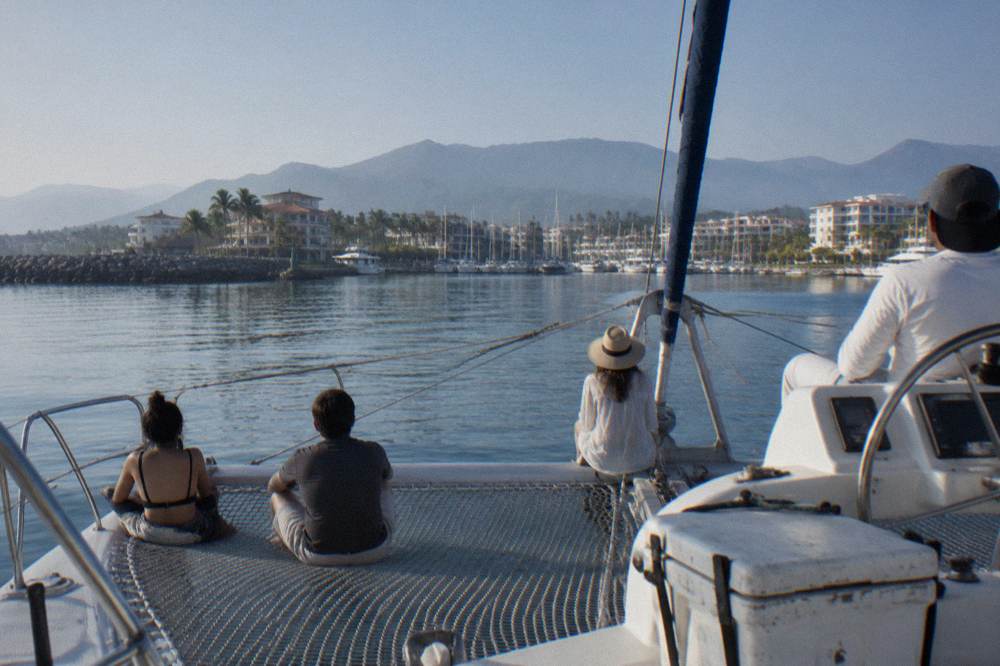
A word on the drift itself, because it is the payoff. When a boat holds near whales, engines idle or shut off, and on hydrophone-equipped trips, such as the biologist-led catamaran and the whale and dolphin trip with hydrophone, the crew may lower a microphone so the humpback song comes over the speakers while the boat sits nearly motionless. Guests who spent the transit gripping the rail regularly describe the drift as the moment the day turned. About 500 individual humpbacks visit the bay in a season according to local research group ECOBAC, and the rules that keep their distance, 60 m for small boats and 80 m for larger ones, are the same rules that keep your ride slow and level while you watch them.
If you have read this far, the fear has probably shrunk to a manageable size, which was the point. Pick a wide boat if your stomach has opinions, eat before you sail, take your remedy on time and give yourself a spare morning for a reschedule. The rest of the planning, when to go and which tour fits your budget, is covered across Puerto Vallarta Whale Watching, including the homepage comparison and the three-question trip picker. The steadiest rides on the roster are below, side by side:
Common Questions About Seasickness On Whale Tours
Will I get seasick on a whale watching tour?
Probably not. Most guests on Banderas Bay boats finish the trip without symptoms, a minority feel briefly queasy, and a small fraction have a rough time. Your personal history, the size of the boat and the sea state that morning predict the outcome far better than chance. Book a catamaran or larger vessel if you are prone to motion sickness, and take any remedy before boarding.
Which whale tour in Puerto Vallarta is best if I get seasick easily?
A catamaran or the mega yacht. The Whale Watching Cruise in Puerto Vallarta and Nuevo Vallarta runs on a catamaran from $99 per person, and the Mega Yacht Sunset and Whale Watching trip from $110 per person is the heaviest, slowest-rolling platform on the roster. Both include food, which helps, and both list free cancellation.
Should I take seasickness tablets before the boat leaves?
Yes, if you are going to take them at all. Oral motion-sickness medications are generally taken 30 to 60 minutes before departure, and patches hours ahead, because they prevent symptoms better than they reverse them. Confirm timing and dose with a pharmacist, especially for children.
Is Banderas Bay rough in whale season?
Whale season sits in the calmest, driest part of the local year, outside the 15 May to 30 November hurricane season, with one to two rain days a month from January through March. Conditions still vary day to day and no operator can promise a sea state, so check the forecast and use a free-cancellation listing so you can move your date if a morning looks windy.
Can I cancel my whale tour if I feel unwell that morning?
Usually yes. Every listing on this roster except one shows free cancellation on its booking page, subject to each listing's own cutoff window. Check the cancellation terms when you book, and schedule your tour early in your stay so you have spare mornings to rebook rather than lose out.