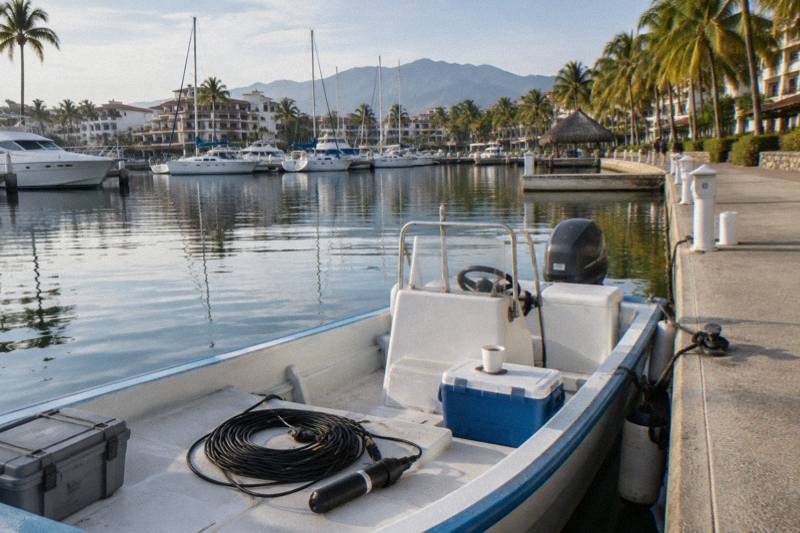
What To Bring On A Whale Tour: Packing List And What To Skip
Sun, wind, spray and a fast-moving boat change what your bag needs to hold. This guide breaks the packing list down by category, matches it to what the Marina Vallarta and Puerto Magico boats already hand you, and names the items that only get in the way.
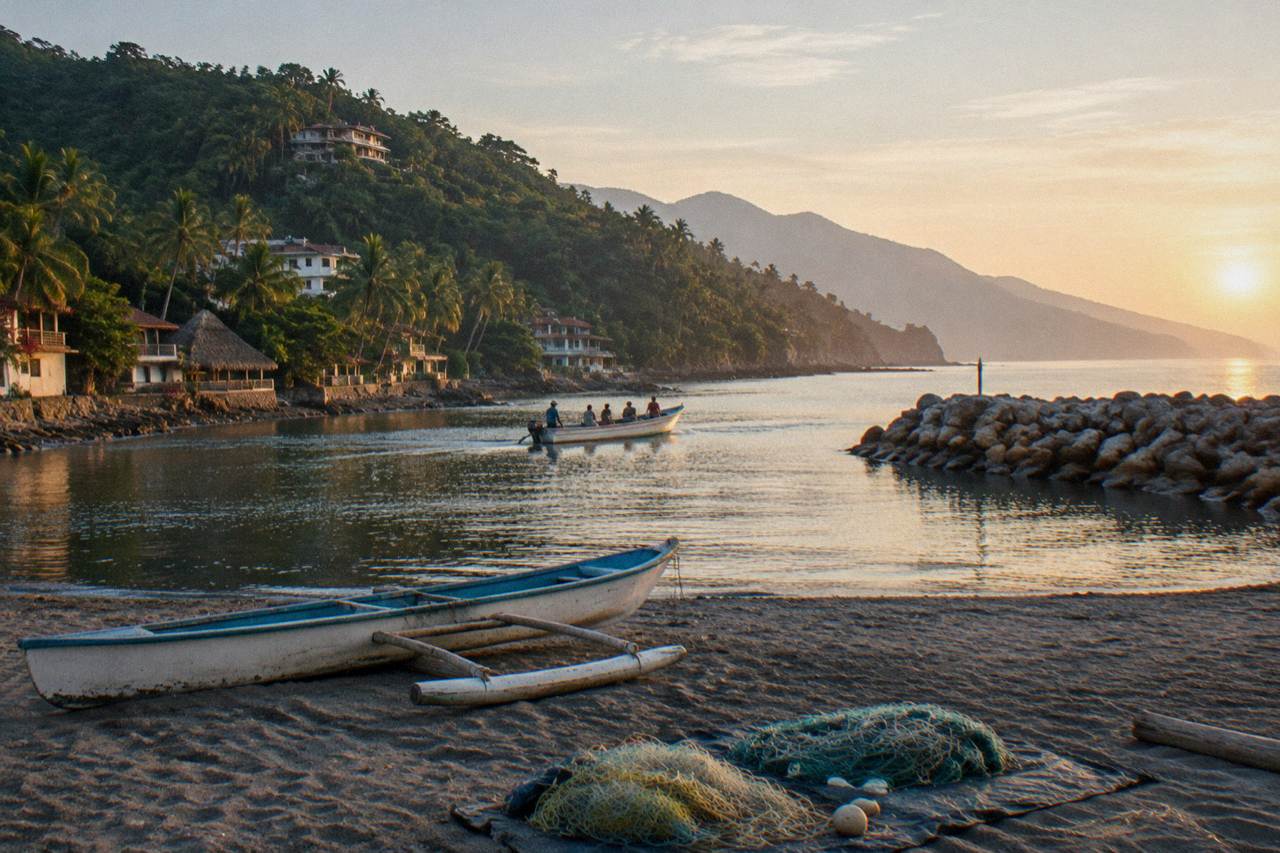
Short answer
Bring reef-safe sunscreen, a hat with a strap, sunglasses, a light windproof layer, motion sickness remedies taken before boarding, a dry bag for electronics, cash for port taxes and tips, and your camera. Boats on this roster already provide life vests, and most serve drinks and snacks; check your listing before packing duplicates.
What Should You Pack For A Whale Tour In Banderas Bay?
The core packing list for a Banderas Bay whale tour is short: strap-on hat, polarized sunglasses, reef-safe sunscreen applied before boarding, a light windproof layer, motion sickness remedies taken a full hour before departure, a dry bag or ziplock for phones, cash in small bills for port taxes and tips, and your camera with a charged battery. Everything else is either provided by the boat or a burden. Tours run three to five hours on open water under a sun that reflects off the bay on both sides of the boat, so the mistakes travelers make are almost always too little sun protection and too much stuff. The featured biologist-led whale and dolphin boat from Opequimar Marine Center, the small-group half day with lunch from Marina Vallarta, and the catamaran with breakfast and buffet from Puerto Magico all expose you to the same equation: direct sun above, reflected sun below, and a boat that moves.
Start with the sun layer, because it is the one that ruins trips. A baseball cap blows off; a hat with a chin strap stays. Polarized sunglasses cut the glare off the water and genuinely help you spot a blow at distance before anyone announces it. Reef-safe sunscreen matters here as well, since federal rules treat the bay and its protected islands carefully, and many operators ask for it outright. Apply the first coat at the dock, not mid-trip, and bring the tube for a second application after a few hours. Lip balm with SPF belongs in the same pocket.
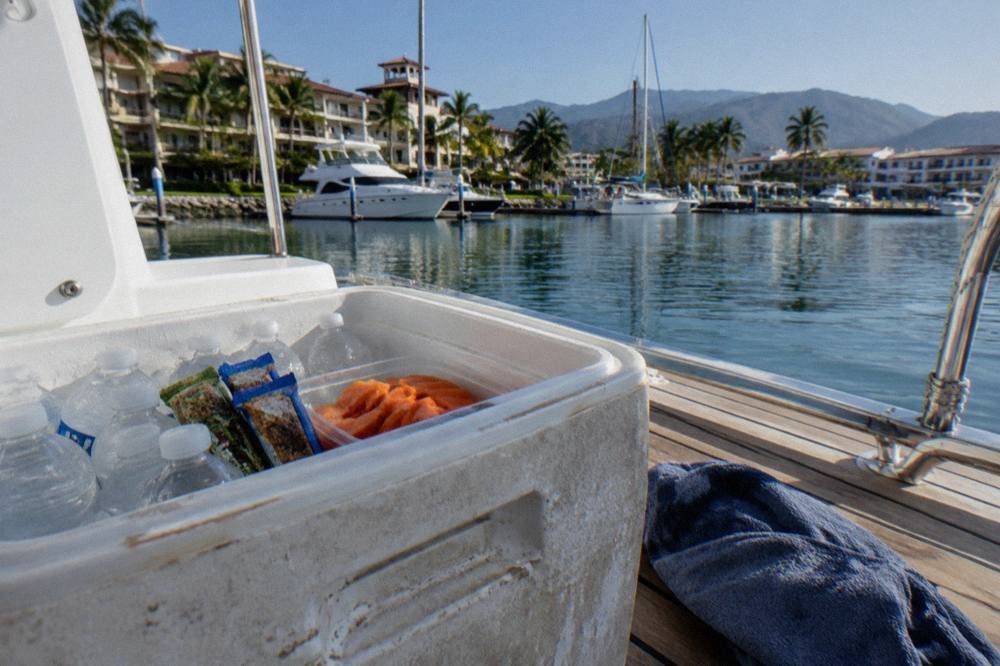
The second layer is the water and motion layer. Even on a warm Puerto Vallarta afternoon, a boat at 9 km/h in the observation zone creates its own windchill, and a wet sleeve stays cold. A thin windbreaker or long-sleeve shirt handles it. Motion sickness is covered in its own section below, but the packing version is simple: whatever remedy you choose goes in the bag, and the first dose goes into you before the boat leaves the pier. For the full run-down on timing and remedies, the seasickness guide for whale watching walks through the options in detail.
| Category | Items | Why it earns its place |
|---|---|---|
| Sun | Strap hat, polarized sunglasses, reef-safe sunscreen, SPF lip balm | Reflected glare doubles your exposure on open water |
| Warmth | Light windbreaker or long-sleeve shirt | Boat-generated wind chills a wet traveler fast |
| Motion | Your chosen remedy, taken before boarding | Cheaper and more effective than treating it mid-bay |
| Dry | Dry bag or ziplock for phone and wallet | Spray comes over the bow when the boat repositions |
| Cash | Small bills in pesos or dollars | Two roster listings state a 39 MXN port tax; crews are tipped in cash |
| Optics | Camera, charged battery, empty memory card, binoculars | Whales surface without warning and at distance |
Money deserves a line of its own. Several listings on the roster fold port taxes and conservation fees into the printed price, including the photo safari from Puerto Magico and the all-inclusive catamaran cruise, but two shared listings state a 39 MXN port tax separately, and the Marietas national park charges 125 MXN per person per day for entry. Small bills solve every version of this. If you are still deciding which departure style suits you, the comparison of shared and private whale tours covers the trade-offs before you pack for one.

What Do The Boats Provide On Whale Tours From Marina Vallarta And Nuevo Vallarta?
Most boats on this roster provide a life vest, a licensed guide or marine biologist, and some form of hydration, while many add snacks, full meals or an open bar; the exact list sits on each operator's live listing, so read it before duplicating anything in your bag. There is no reason to carry a water bottle onto a boat that hands you purified water and a granola bar. The small-group half-day whale-watching tour from Marina Vallarta lists lunch and soft drinks, the biologist-led adventure from Ecotours Vallarta lists coffee, tea, sodas and granola bars, and the Whale Encounter trip from Eco Explorer Vallarta lists granola bars, fruit, juice and drinking water. The all-inclusive cruise from Vallarta by Boat goes further, with an open bar, soda, chips and fruit, and lunch included from $78 per person.
| Tour (operator) | Food and drink on the listing | Gear on the listing |
|---|---|---|
| Whale Encounter Puerto Vallarta (Eco Explorer Vallarta) | Granola bars, fruit, juice, drinking water | Life vest, hydrophone |
| Small-Group Half-Day Whale-Watching Tour | Lunch, soft drinks | Marine biologist guide |
| Whale Watching Adventure (Ecotours Vallarta) | Coffee, tea, water, sodas, granola bars | Hydrophone system, travel insurance |
| Whale & Dolphin Watching Cruise All Inclusive (Vallarta by Boat) | Breakfast, lunch, open bar | Hydrophone, marine biologist |
| Private Whale Watching Tour (Vallarta Natours) | Lunch, soft beverages | Professional guide, hotel pickup and drop-off |
| Whale Watching and Snorkeling in Marietas (Sayulita Entourage) | Lunch | Snorkeling equipment |
Two patterns are worth noticing. First, the listing that says "snorkel gear: not stated" is not the same as a listing that says no gear; it means the listing is silent, and a quick message to the operator settles it. Second, the private and yacht options carry the most on board. The private charter from Vallarta Natours, from $760 per group for up to 8, includes lunch and soft beverages but not hotel pickup, so your bag comes down to sun gear, a camera and your own way to the meeting point. The luxury yacht option from Vallarta Yacht Rentals adds WiFi, a restroom, an international open bar and an underwater microphone for listening to the whales, from $2,088 per group for up to 12.
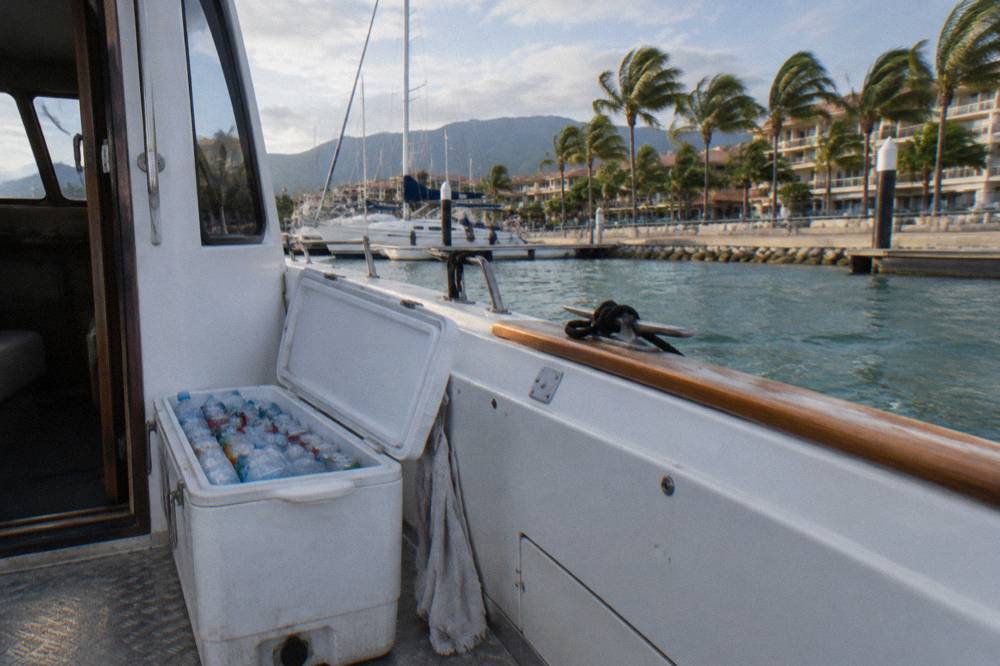
Hydrophones deserve a mention because they change what you pack for your ears rather than your stomach. Several listings include one, including the biologist-led whale and dolphin boat from Opequimar and the hydrophone and drinks tour from Live and Traveler Tours, which lets the crew cut the engine and drop the microphone so the whole boat hears the humpbacks singing. Under the federal whale-watching norm, engines go to idle when a whale is not moving, which is exactly the moment the hydrophone gets used. You bring nothing for this; just know it exists, and ask whether your boat carries one. The guide to whale watching rules and distance in Mexico explains the engine and approach rules if you want the background.
Deciding between a listed-inclusion-heavy boat and a bare-bones one is a real fork in the packing process. If your tour already includes lunch and drinks, your bag is a hat, a layer, remedies and a camera. If it lists nothing, add water and a proper snack, because three and a half hours in the sun on an empty stomach is how good trips go flat.
The trio above spans the packing spectrum. The Whale Encounter listing from Eco Explorer Vallarta includes snacks, water and vests, the small-group half day from Marina Vallarta adds a full lunch and soft drinks at from $110 per person, and the whale photo safari from Vallarta Adventures keeps it light with a snack and purified water at from $79 per person, leaving you to carry the optics.
Do You Need Sea Sickness Remedies For A Puerto Vallarta Whale Tour?
Yes, pack a remedy even if you have never been seasick, and take it 30 to 60 minutes before departure, because Banderas Bay tours spend three to five hours on open water and the observation zones sit well outside the shelter of the marinas. Boats approaching whales slow below 5 knots, which is gentle, but the transit out and back can cross swell, and a rolling bay is the classic trigger. Remedies only work preventively; once nausea starts on the water, nothing in your bag catches up with it. Choose whatever your body already tolerates on shore, whether that is dimenhydrinate, a scopolamine patch applied the night before, ginger chews or acupressure bands, and pack a backup form.
The honest reporting here is that nobody can promise you calm water, and nobody should. Sea state varies trip to trip, and this site does not forecast it. What is verifiable is that the season itself sits in the driest, calmest part of the Puerto Vallarta year: January averages 2 rain days, February and March one each, against 20 to 21 rain days in July through September. December through March sea temperatures run 23.9 to 25.2 degrees Celsius, which is cool enough that a wet, windy deck can feel genuinely cold to someone dressed for the beach.
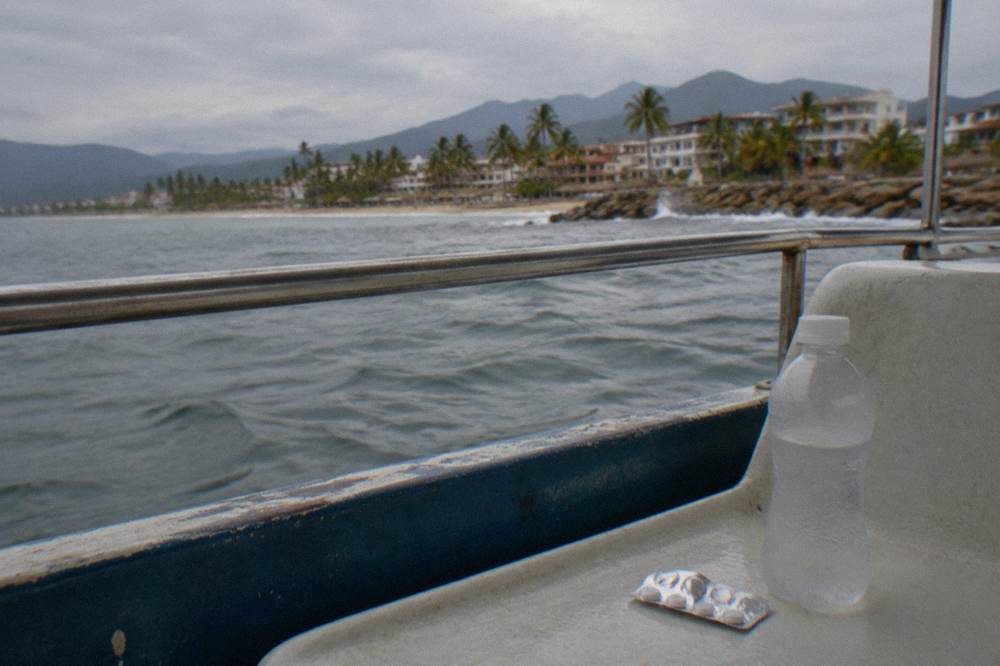
Where you sit also matters more than what you swallow. The middle of the boat, low and near the centerline, moves least; the bow moves most. Stay on deck, watch the horizon rather than your phone screen, and keep something in your stomach, which is another reason the listings that include breakfast or lunch, like the catamaran cruise with buffet from Mike's Fishing & Tours, from $99 per person, have a practical edge for nervous travelers. The full physiology and remedy comparison lives in the seasick on a whale tour guide.
The all-inclusive cruise from Vallarta by Boat lists lunch on board, a croissant or sandwich, plus an open bar with rum, beer and tequila, while the mega yacht sunset and whale watching trip from Chica Locca Tours serves food with an open bar, from $110 per person. Neither prevents motion sickness, but both give your stomach something to work with, which is half the battle.
Packing for motion is ultimately one small pocket of the bag: your remedy, a backup, water and a light snack. If you want a boat that minimizes the cause rather than treating the symptom, the small-group half day from Marina Vallarta runs 3 hours 30 minutes, one of the shorter durations on the roster, which simply gives the bay less time to argue with your inner ear.
What Camera Gear Should You Bring To Photograph Humpbacks In Banderas Bay?
Bring one camera body with the longest zoom lens you own, a charged spare battery, an empty memory card, a dry bag for the transit out, and nothing else photographic; humpbacks surface for seconds, so gear you have to set up is gear you will not use. A phone gets horizon shots and breaching silhouettes on bright days, and modern phones do that well. Anything more demands serious zoom reach, because the federal approach rules keep boats 60 m from a whale for small vessels and 80 m for larger ones, with all boats waiting at 240 m. Your framing is a crop, not a close-up.
The rules shape the photography directly, and they are worth knowing before you pack. The whale-watching norm NOM-131-SEMARNAT-2010 caps time with the same whale or group at 30 minutes and holds boats below 5 knots inside the observation area, per the official text published in the Diario Oficial de la Federación. A boat that obeys the norm gives you slow, predictable approaches and idle-engine moments, which is when hydrophones drop and when surface activity often picks up. PROFEPA ran an inspection operation in the season that boarded 17 vessels on the Nayarit side, so the rules are enforced, not decorative.
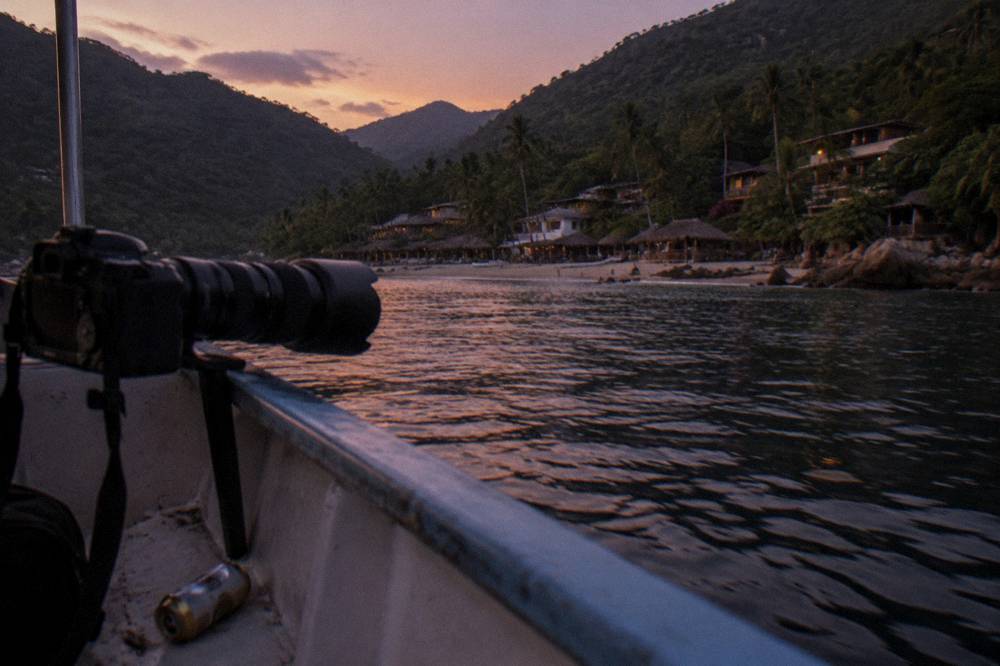
Technique beats equipment here. Set a fast shutter, fast enough to freeze a breach, prefocus on the water where the whale last surfaced, and shoot bursts. Humpbacks in this bay are the same animals NOAA describes as reaching about 60 ft and 40 tons, and their full-body breaches are over in about a second. If framing the timing is the part you want to master, the photographing humpbacks from a boat guide breaks down settings and positions deck by deck.
One roster option exists purely for this packing category. The whale photo safari from Vallarta Adventures, from $79 per person and rated 4.7 from 190 reviews, is built around cameras, with hydrophones, a light snack and purified water listed. For anyone whose bag is 70 percent optics by weight, that is the natural booking, and you can Small-Group Whale Photo Safari alongside the internal photo safari tour page.
What Should You Wear On A Whale Watching Boat In Puerto Vallarta?
Wear a swimsuit or quick-dry shorts under light clothing, a t-shirt plus the long-sleeve layer in your bag, shoes with grip that you do not mind getting wet, and a strap hat; December through March air means run 21.8 to 23.3 degrees Celsius on land and several degrees colder on a moving deck. The instinct to dress for the beach is right about the fabric and wrong about the amount. Cotton that soaks with spray stays cold in the wind; a synthetic base layer sheds it. Sandals with tread are fine, flip-flops are not, because boarding a rocking boat at Marina Vallarta or the Los Peines pier often means a wet step and a metal ladder.
The month changes the answer more than travelers expect. Sea temperature falls from 27.7 degrees in November to 25.2 in December and bottoms at 23.9 in February and March, while the same months are the driest of the year, with one to two rain days each. That combination, dry air and cool water, is exactly what produces the cold-wind surprise. The weather in whale season guide carries the full monthly table if your dates are flexible.
| Month | Sea temp C | Rain days | What the deck feels like | Layer to pack |
|---|---|---|---|---|
| December | 25.2 | 2 | Warm sun, cool wind by afternoon | Light windbreaker |
| January | 24.5 | 2 | Comfortable midday, chilly at speed | Long-sleeve plus windbreaker |
| February | 23.9 | 1 | The coolest water of the season | Windbreaker, long pants option |
| March | 23.9 | 1 | Warming, sun intensity rising | Long-sleeve sun shirt |
Color is a minor but real consideration. Dark shirts soak sun; white reflects it onto your face from below. A light-colored, loose long-sleeve sun shirt is the single best garment for this trip, and it doubles as the wind layer. Sunscreen still goes on underneath, because the reflection off the bay does not care how good your shirt is. If your departure is the sunset mega yacht trip from Chica Locca Tours out of Nuevo Vallarta, remember that the last hour has no direct sun at all, which is where the packed layer earns its slot.
Kids and seniors follow the same rules with more margin. Nobody on this roster publishes age limits in the listing data, so check the listing for the operator's age and health rules before you book, and dress children in one more layer than you wear, since they sit lower, get wetter and complain less until they are cold. The what age can kids go whale watching post covers the decision, and Puerto Vallarta Whale Watching keeps the packing basics the same for every age.
What Should You Leave Behind On A Whale Tour In Banderas Bay?
Leave behind drones, jet skis and any plan to swim with whales, all of which federal rules prohibit in whale observation areas, plus glass bottles, bulky hard coolers, umbrellas, spare bags and anything you would be upset to see soaked, because deck space is small, spray is routine and the prohibited list is federal law rather than operator preference. The norm, NOM-131, bans swimming, diving, fishing and water skiing around whales, and bars jet skis, kayaks, canoes and drone-class aircraft from whale observation altogether. Unlicensed vessels must stay 240 m back, and authorized boats fly a numbered flag with the federal seal, which is one way to confirm your boat is legal before you step aboard.
The practical leave-behind list is shorter than the legal one but saves more trips.
| Skip it | Reason |
|---|---|
| Drone | Prohibited for whale observation under the federal norm |
| Big hard cooler | Boats that include drinks already carry ice; boats that do not have no deck space |
| Glass bottles | Breakage on a moving deck is a trip-ender |
| Umbrella or shade tent | No room, and it becomes a projectile when the boat speeds up |
| Full-size tripod | No stable deck platform; a monopod or handheld works better |
| Second and third bags | One soft daypack per person is the realistic limit on small boats |
| Snorkel fins | Only the combo listings include snorkeling, and only at a reef stop, never with whales |
The snorkel line matters enough to repeat in full here: swimming with whales is prohibited outright, and the snorkel combos on the roster, such as the whale and snorkeling tour from Los Peines at from $42 per person, do their in-water stop at a reef or beach away from the whales. Nobody on a legal boat gets in the water with a humpback, so fins and masks belong in the bag only if your listing explicitly includes a snorkel stop, and the can you swim with whales in Puerto Vallarta post gives the full rule.
Marietas combos add one more leave-behind: alcohol. The national park prohibits alcoholic beverages inside its boundaries, life jackets are mandatory in the water, and entry costs 125 MXN per person per day, per the CONANP official park page. If your trip combines whales with the islands, the boat's open bar stays behind at the park boundary and the park's own rules take over. Rules and access conditions at the islands do change, so let the operator confirm the day's plan rather than packing against a rumor.
For a packing lesson in what a boat can absorb for you, consider the lunch and open bar trip from Vallarta Adventures, from $89 per person and rated 4.6 from 64 reviews, which lists lunch and an open bar among its inclusions, or the hydrophone and dolphin cruise from Live and Traveler Tours at from $62 per person, the cheapest pure whale boat on the roster, which includes morning lunch and drinks during the tour. Either way your bag shrinks to sun, layer, remedy, camera, cash.
Where Do You Store Your Bag On Whale Tours Departing Puerto Vallarta?
Store your single soft daypack in the boat's dry cabin or under the center bench, keep phone, cash and remedies on your body in zipped pockets, and leave everything else at the hotel; none of the marina departure points on the roster offer a staffed luggage room for tour gear. The departures run from named piers, Marina Vallarta, the Puerto Magico terminal, Opequimar Marine Center, the Los Peines pier and Nuevo Vallarta's marina, and they are working docks, not luggage desks. What you carry on is what you live with for the next three to five hours.
Pick the bag for the boat, not for the walk. A soft daypack slides under a bench; a wheeled suitcase does not, and on the small-group listings, including the biologist-led half day from Marina Vallarta and the Eco Explorer Vallarta whale encounter, deck space is the scarcest commodity. Dry bags earn their keep on every listing, but especially the speedboat option in the speedboat-or-catamaran tour, which lists a box lunch and runs a faster, wetter hull. Ziplock bags are the cheap version and honestly fine for a phone and a wallet.
| Departure point | Roster listings | Practical bag note |
|---|---|---|
| Marina Vallarta | Small-group half day; Ecotours Vallarta adventure; private charters | Working marina docks, board with everything |
| Puerto Magico terminal | All-inclusive cruise; photo safari; lunch and open bar trip | Cruise-terminal style queues, travel light to move fast |
| Opequimar Marine Center | Biologist-led whale and dolphin trip | Small dock, one soft bag per person |
| Los Peines pier (Isla Iguana) | Vallarta Whales experience; whale and snorkel combo | Urban pier near Los Muertos, no storage |
| Nuevo Vallarta marina | Catamaran cruise; mega yacht sunset trip | Larger vessels have cabin stowage, still pack small |
Timing your arrival is the last packing-adjacent decision. Operator transfer sites put the airport to Marina Vallarta at 15 to 22 minutes and to Nuevo Vallarta at 20 to 30, but from the Zona Romantica hotels the Los Peines pier is the walkable one, and Sayulita-based travelers have their own departure set, covered in the Sayulita whale watching tours guide. Aim to arrive with the bag already final, remedies already taken, sunscreen already on, because the pre-boarding minutes are for life vests and safety briefings, not for repacking. If you are still choosing between departure bays, the Marina Vallarta versus Nuevo Vallarta departures comparison settles it.
The federal context is worth one final paragraph, because it explains why the crews are strict about movement and clutter on deck. The same norm that sets the 60 m approach and the 30 minute limit also governs how boats maneuver around mother and calf pairs, never between them, and NOAA lists the Mexico humpback population as Threatened, per the NOAA species page. A bag that stays put is a small part of a boat that behaves predictably around the animals, and about 500 individual humpbacks visit this bay per season by the local research group ECOBAC's count. Pack light, hold on, and let the boat do the work.
The private charter from Vallarta Natours, from $760 and rated 5.0 from 113 reviews, leaves hotel pickup and drop-off out. Lunch and soft beverages are included, though, so the packing question shrinks to a hat, a layer, a camera and your own plan for reaching the meeting point.
Common Questions About Whale Tour Packing In Banderas Bay
What should you pack for a whale tour in Banderas Bay?
A strap hat, polarized sunglasses, reef-safe sunscreen, a light windproof layer, motion sickness remedies, a dry bag for electronics, small-bill cash and your camera. Everything else is either provided by the boat or dead weight.
Do whale watching boats in Puerto Vallarta provide food and drinks?
Many do. The listing states it in each case: the small-group half day includes lunch and soft drinks, the Whale Encounter trip includes snacks and water, and several cruises include full breakfast, lunch and an open bar. Read your listing before packing duplicates.
Should you take motion sickness pills before a whale tour?
Yes, and 30 to 60 minutes before departure, not after boarding. Remedies work preventively; the observation zones sit outside the sheltered marina waters and transit can cross swell.
Can you bring a drone on a whale watching tour in Puerto Vallarta?
No. The federal whale-watching norm bars aircraft of that class from whale observation, along with jet skis, kayaks and canoes. Leave the drone at the hotel.
What should you wear on a whale watching boat?
Quick-dry clothing, a light-colored long-sleeve layer, shoes with grip, and a hat with a strap. December through March decks run several degrees colder than the beach, especially wet and at speed.
Do you need cash on a whale tour in Banderas Bay?
Yes, small bills. Two listings state a 39 MXN port tax, Marietas park entry is 125 MXN per person per day, and crews are tipped in cash. Many other listings fold taxes into the price, so check yours.