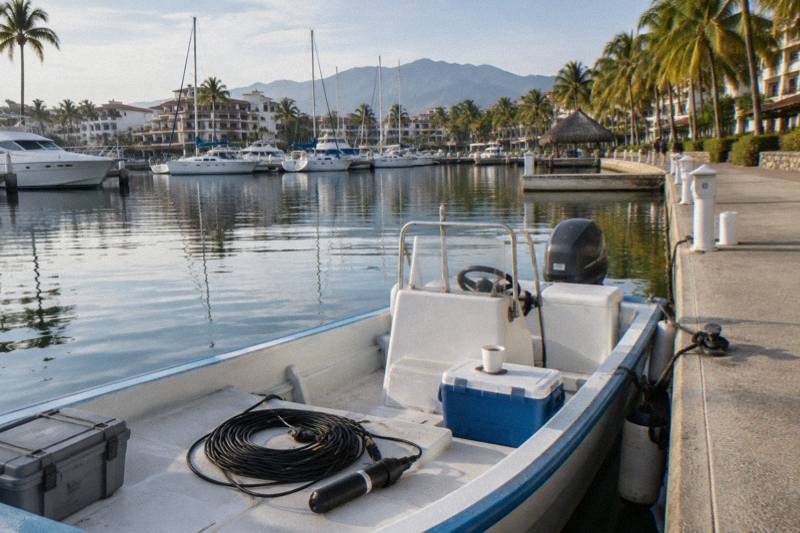
What Time Of Day Is Best To See Whales: Morning Or Afternoon?
No source shows whales are more active or easier to see at one hour than another in Banderas Bay, so the honest answer is about light, wind and which departure slot fits your day. Here is how to pick.
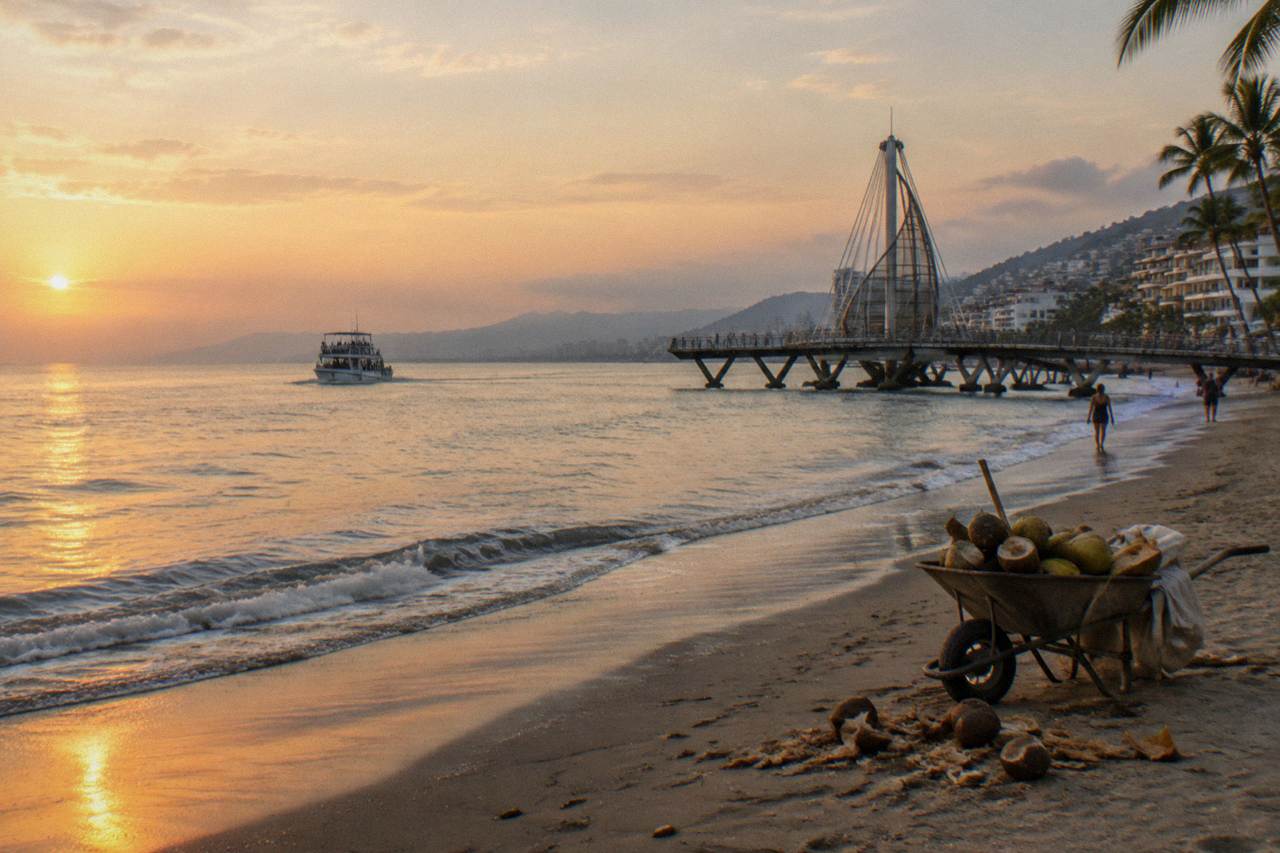
Humpback whales in Banderas Bay do not publish a schedule, and any article that tells you they breach more at 10 AM or feed harder at 2 PM is guessing. What is documented is different: the federal season window, the rules every boat follows near a whale, and the departure slots the tour listings actually sell. Those slots are where the real morning-versus-afternoon decision lives.
The one listing on this roster that makes the slot choice explicit is the Puerto Vallarta whale watching encounter, which runs an 8 AM route serving a continental breakfast and a 12:30 PM route serving lunch, from $119 per person. Same boat, same guide, same water, two different days-of-the-day. That is the cleanest natural experiment a visitor gets, and it frames everything below.
What Time Of Day Is Best To See Whales: Morning Or Afternoon?
Neither slot carries a documented advantage for sightings, and no listing on this roster claims one; the honest differences are air and sea conditions, light for viewing and photography, dock and water traffic, and which meals and inclusions come with your departure. What you are really choosing is the boat, the format, and the departure time that fits your day, in that order.
Start with what nobody can promise. Humpbacks surface, rest, travel and interact on their own rhythm, mother and calf pairs in particular move at their own pace, and the federal approach rules, 60 m for small boats and 80 m for larger ones with a 240 m waiting distance under NOM-131-SEMARNAT-2010, apply identically at every hour. A boat cannot chase, call or schedule a whale. Any page selling a "best hour" for sightings is selling weather and light, not biology, and it is fair to read it that way.
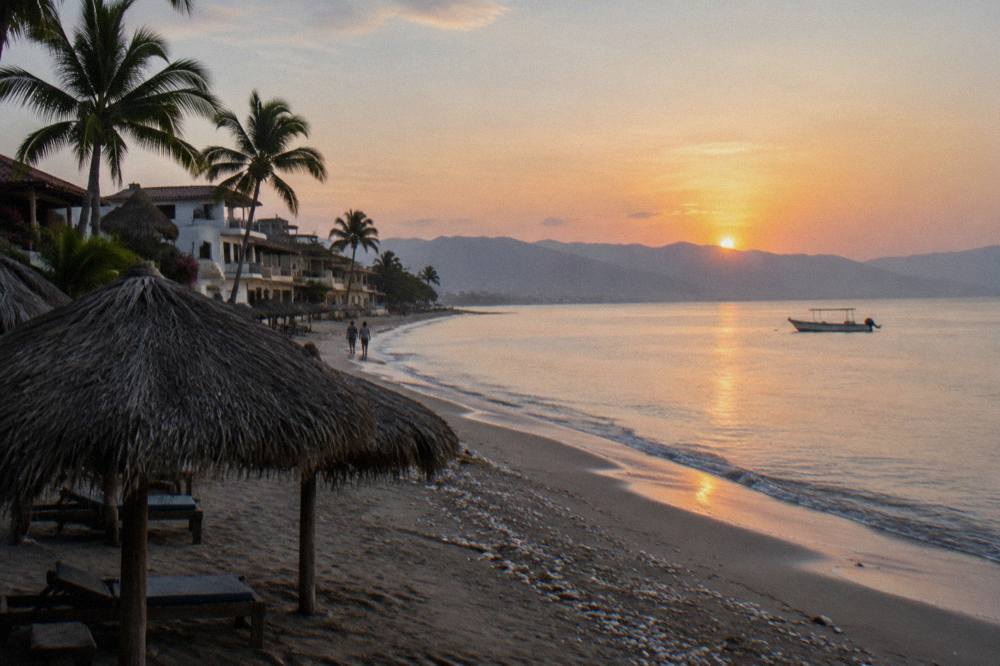
What the listings do vary is the slot itself. Across the shared boats on this site, departure points cluster at Marina Vallarta, the Puerto Magico terminal, Opequimar Marine Center, Nuevo Vallarta and, on the north end, Sayulita beach and La Cruz marina. Durations run from 3 hours to 5. The morning sailings leave roughly between 8 and 9 AM, the early-afternoon sailings around noon to 12:30, and that is the whole of the choice in front of you.
That is also why we compared the listings rather than anecdotes: the roster's best-reviewed shared boats, the biologist-led whale and dolphin tour at 4.9 from 702 reviews and the small-group half day at 5.0 from 353, sail their formats on both patterns across the week, and no listing text on file claims one slot outperforms the other for sightings.
If you already know you want a bigger, food-forward shared boat, these three cover the main formats and price points:
Do Whales Follow A Daily Rhythm In Banderas Bay?
Researchers in the bay describe humpbacks as active at all daylight hours, with surface behavior driven by season stage, social context and each animal rather than a fixed clock; no verified source for this bay separates morning from afternoon activity, so no tour should be booked on a claimed activity peak. What is documented is seasonal: about 500 individual humpbacks visit the bay each season per ECOBAC, the local research group, and operators and guides name mid-January to mid-March, with January and February called out, as the peak. None of those sources splits the day.
The seasonal picture matters more than the hourly one. The official record is precise: the SEMARNAT notice in the Diario Oficial, published 10 October 2025, set the 2025-26 whale-watching season for Banderas Bay at 8 December 2025 to 23 March 2026. Operators advertise the same 8 December opening for the coming season, and the federal notice for 2026-27 has not appeared yet, so treat that start as advertised rather than official. Hotel and operator guides report first humpbacks typically entering the bay in late November, before the official window. Within the season, a February morning and a February afternoon are both inside peak; a mid-December slot, morning or not, is early.
Behavior does shift across the season in ways a time-of-day article should flag honestly. Courting groups with escorts, mothers with newborn calves and singing males dominate different weeks, and the bay's research community, ECOBAC among them, tracks that through winter. A hydrophone-equipped boat, like the whale encounter listing that carries one, can listen for singers at any hour the engine drops to idle, which the federal norm permits specifically for hydrophone use. None of that favors a clock time. It favors picking a boat with a biologist and a hydrophone over a party-format boat if hearing the animals matters to you, a trade-off covered in depth in our guide to whale behavior in Banderas Bay.
The 30-minute rule in that last point quietly affects your slot choice more than most visitors realize: it caps how long any boat, morning or afternoon, can linger. If four boats are already on a sighting when your boat arrives, the group rotates out within minutes. A calmer weekday afternoon can sometimes mean fewer boats stacked on the same animal than a weekend morning, but that is a traffic observation, not a promise, and dock staff will tell you the week's pattern if you ask.
What Actually Differs Between The Morning And Afternoon Boats?
Four things change with the slot: light angle and glare, wind and chop building later in the day, air and sea warmth through the afternoon, and the meal and drink service the listing attaches to each route. Sightings do not appear on that list, because no source supports putting them there. Each of the four is worth a decision, and each can be checked against the listing before you book.
| Factor | Morning slots (about 8 to 9 AM) | Early-afternoon slots (about noon to 12:30 PM) |
|---|---|---|
| Light | Lower sun, softer glare off the water, shadow detail toward the shorelines | Higher sun, more surface glare, strong color in a clear sky |
| Wind and chop | Often the calmest water of the day, which matters on small boats | Breeze and chop commonly build by early afternoon |
| Warmth | Cooler air, jacket-level in January and February | Warmer air and warmer feel on deck |
| Meal service | Breakfast formats, for example the 8 AM continental breakfast route | Lunch formats, for example the 12:30 PM lunch route and open-bar boats |
| Photo trade-off | Softer light, more spray risk if chop rises later | Harsher light but steadier handheld shooting as the boat settles |
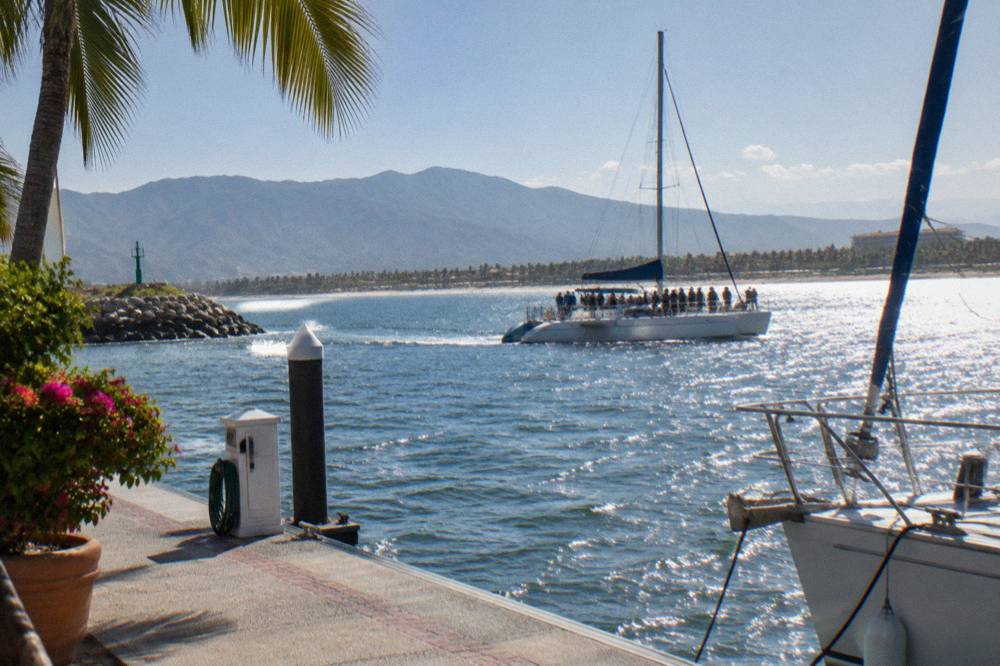
The light row deserves a plain explanation. Photographers on whale boats fight two things: glare and shutter speed. A low morning sun gives softer water and darker blues, but if the whale surfaces down-sun you shoot into sparkle. A high afternoon sun flattens color but lights both beam sides evenly as the boat maneuvers. Our longer write-up on photographing humpbacks from a boat works through settings for both cases, and the honest summary is that a calm morning beats a rough afternoon for sharp frames, while light itself is a preference.
The warmth row is not cosmetic. Verified monthly means put January air at 21.8 C and April at 23.3 C, and the sea runs 24.5 C in January, warming to 24.9 C by April. On the water, with wind, a January 8 AM departure feels like early spring on your hands; the same day at 1 PM can feel like the beach holiday you flew in for. Families with small children and anyone sensitive to cold spray usually notice this more than any other difference. Check the listing for the operator's age and health rules, since age limits and kid pricing are not on file here.
The meal row is where the roster does its real differentiating, and it is worth choosing on deliberately. The lunch-and-open-bar boat from Vallarta Adventures, from $89 per person, 4.6 from 64 reviews, includes lunch and an open bar on a 3-hour shared trip. The catamaran cruise from Mike's Fishing & Tours, from $99 per person, 4.8 from 413 reviews, pairs a continental breakfast with a buffet lunch and open bar across 4 hours. If you want the meal to be part of the outing rather than a snack, these two belong on your shortlist alongside the two-route encounter boat.
Wondering which slot to grab while you weigh it?
Free cancellation is listed on all three boats above, and most travelers can lock a slot now and shift it if the forecast or the family's mood changes.
Is Morning Really Calmer, And Does It Matter?
Weather data for Puerto Vallarta supports the folklore only loosely: the rainy-season months, June through September, drench the afternoons hardest, with 20 to 21 rain days a month in July through September, while in the December-to-March whale season rain is rare at any hour and sea conditions vary day to day rather than by clock. In season, a given morning is not guaranteed calmer than a given afternoon; you are rolling the day's dice either way.
The pattern that drives afternoon storms is a real one on this coast, but it belongs to summer, outside the whale window. In July, 362 mm of rain falls across 20 rain days; September, 429 mm across 20 days. Afternoon convection is the norm then. Come January, that collapses to 37 mm across 2 days, and February and March see about a single rain day each. Hurricane season itself runs 15 May to 30 November per NOAA, again overlapping nothing in the legal whale-watching window. The practical reading: inside the season, pick your slot for light, warmth and meal, not for storm-avoidance, and check the marine forecast the evening before either way.
What does matter for comfort is boat size against chop, and this is a real slot interaction. Small-group boats, like the 3.5-hour small-group half day from $110 per person, 5.0 from 353 reviews, feel every wave; a mega-yacht or catamaran barely notices the same sea. If your only workable day shows building afternoon wind, a bigger hull in the afternoon is usually a better experience than a small hull in the same slot, and a small boat's calm morning can beat both. Anyone prone to queasiness should read our piece on seasickness on whale-watching boats before choosing, because medication timing and slot choice interact.
The biologist-led format is the one group most likely to care about conditions rather than catering, and it runs long enough that the slot shapes the whole day:
That 4-hour trip, from $105 per person, 4.9 from 702 reviews, the most reviewed listing on this roster, includes a biologist guide plus a baguette sandwich lunch, bottled water, soda and granola-bar snacks, and it departs Opequimar Marine Center. A morning departure leaves your afternoon free for the Malecon or a beach club; an early-afternoon one lets you sleep off the flight. Neither choice touches the whales' odds.
How Do You Pick A Slot In Practice?
Work backwards from three constraints: your energy and sleep, your non-whale plans for the day, and the meal you want on the water; then book the boat whose format you prefer in the slot that survives those filters, with free cancellation held as your hedge against a bad forecast. Sightings sit outside the equation because nothing reliable puts them on either side of noon.
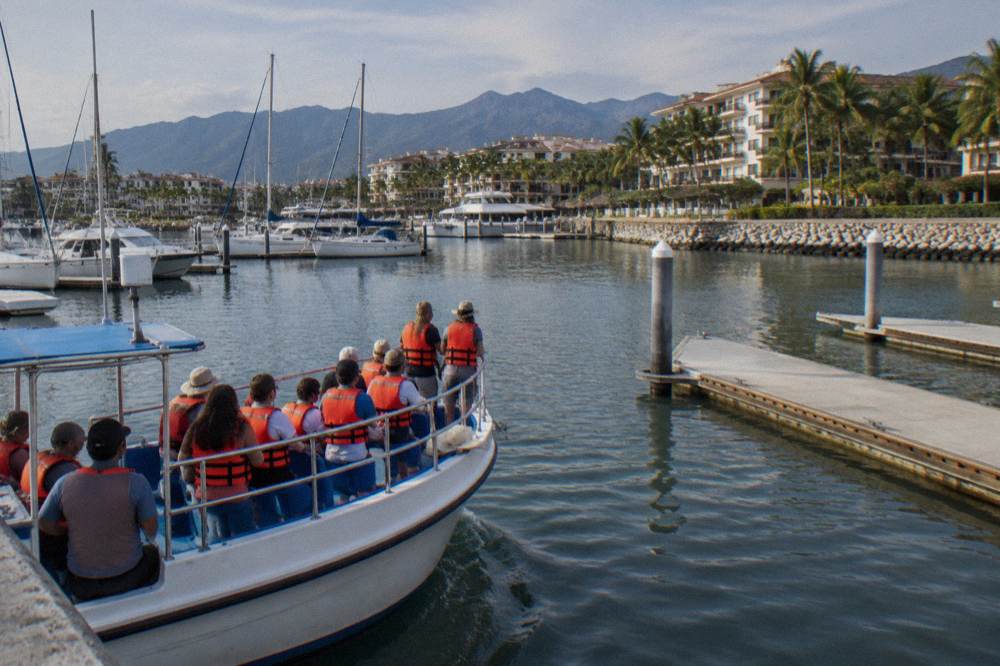
A few concrete patterns from the roster help. Travelers staying in Nuevo Vallarta or the marina zone can reach almost any morning departure easily; the catamaran cruise above departs either Puerto Magico or the Nuevo Vallarta marina, and operator transfer sites put the airport to Marina Vallarta at 15 to 22 minutes, so even a same-arrival-day boat is physically possible, though unwise. Staying in Sayulita, the north-end options change the math: the 3-hour small-group trips from Sayulita beach and the biologist-led Sayulita trips depart without a long transfer south, and the Marietas whale-and-snorkel combo, 4.9 from 56 reviews, from $85 per person, departs from a Sayulita dive center with pickup listed.
Budget travelers should know the honest floor: every whale boat on this roster is paid, the cheapest firm-priced listing is the whale and snorkel combo from $42 per person (rated 3.9 from 65 reviews), and the cheapest pure whale boat starts from $62. Both of those are afternoon-flexible shared formats rather than breakfast boats, which is typical: the cheap seats are rarely the 8 AM ones. Our cost comparison for Puerto Vallarta whale tours breaks the whole price ladder down.
If you want a small-group, photo-oriented morning instead, this is the other format worth weighing:
That photo-safari experience, from $79 per person, 4.7 from 190 reviews, runs 3 hours with hydrophones, a light snack and purified water. Hotel pickup and drop-off are not included; you make your own way to the Puerto Magico terminal. Note that snorkel gear is not stated on it, and none of these trips snorkel with whales, which is prohibited outright under the federal norm; the combos snorkel at reef stops away from any whale, as their listings state.
One last practical note on timing your booking rather than your slot: peak weeks, mid-January through February, fill first, and the breakfast routes on food-inclusive boats tend to sell out before the lunch ones, simply because more travelers are morning people on vacation than admit it. If your heart is set on a specific 8 AM departure in peak season, booking ahead matters more than the hour itself. The homepage comparison on Puerto Vallarta Whale Watching lets you filter the whole roster by format, price and departure point once you have your slot logic straight.
Whether you end up on a breakfast catamaran or a lunch open-bar boat, the same whales are in the same bay. To see how likely a sighting is at all, in any slot, read how likely you are to see a whale in Puerto Vallarta, which covers what operators may and may not promise.
These three cover the slot spectrum, one two-route boat and two meal-inclusive formats:
Common Questions About The Best Time Of Day To See Whales
What Time Of Day Is Best To See Whales: Morning Or Afternoon?
No verified source shows a sightings advantage for either slot in Banderas Bay. Choose on light, wind, warmth and the meal your listing serves, and on which departure time fits your day. The 8 AM and 12:30 PM routes on the whale encounter listing are the same boat with different meals.
What time of day is it most likely to see whales?
There is no documented most-likely hour. Humpbacks in the bay are described as active throughout daylight hours, and every licensed boat follows the same approach rules at any time. Book the boat and slot you want; your odds ride on season stage and the day, not the clock.
What time of day are whales most visible?
Visibility depends on light and sea state rather than whale behavior: lower morning sun cuts glare, calmer early water makes blows and flukes easier to spot, and building afternoon chop can hide distant surfaces. A calm afternoon beats a rough morning every time.
Are morning whale tours cheaper in Puerto Vallarta?
No. Across this roster the lowest firm prices sit on shared and combo formats, from $42 per person for a whale and snorkel combo and from $62 for a pure whale boat, and price tracks boat format and inclusions, not departure hour. Breakfast routes on food-inclusive boats do sell out earlier in peak weeks.
Do the federal whale rules change by time of day?
No. NOM-131-SEMARNAT-2010 applies at every hour: 60 m approach for small boats, 80 m for larger ones, a 240 m waiting distance, at most 4 boats per whale and at most 30 minutes with the same group. PROFEPA inspects through the season regardless of the hour.