Cabo Or Puerto Vallarta For Whale Watching?
A fair comparison of Cabo and Puerto Vallarta for whale watching, built on what is verified for Banderas Bay and official NOAA humpback facts, with no invented Cabo numbers.
Cabo Or Puerto Vallarta For Whale Watching?
The honest answer is that this comparison can only be made on verified ground: Banderas Bay has an official federal season window of 8 December to 23 March last season, a binding whale watching norm, and 26 bookable tours from $42 per person, while no comparable verified Cabo season dates, prices or species records exist to set against it. Anyone quoting hard Cabo figures next to Puerto Vallarta's is comparing a checked fact with a guess.
The question comes up constantly, and it deserves better than the usual answer. Travel forums fill with replies that give both towns a season, a price and a whale count, as if the two destinations were symmetric entries in a spreadsheet. They are not. On this site every figure about Puerto Vallarta and Banderas Bay traces back to a federal notice, an official park page, a NOAA species profile or a live tour listing. For Cabo, this research file holds nothing: no verified season dates, no verified prices, no species counts. Rather than invent a rival column, this article compares what can actually be checked, which turns out to be a lot. Once the comparison steers you toward Banderas Bay, the best whale watching tour in Puerto Vallarta for your travel style takes the next step, matching specific tours to families, first-timers and dedicated whale fans.
That approach is more useful than it sounds. A reader deciding between two bays is a late-stage traveler. You already know you want whales. What you need to know is what a booked day actually looks like in the bay with the verified record: when the federal window opens, which rules govern the boats, what the tours cost and include, and how the geography of a 987 km2 bay shapes the trip. All of that is documented for Banderas Bay.
The comparisons below lean on three products as anchors: the biologist-led whale and dolphin boat that carries 702 reviews, the small-group half-day with lunch, and the catamaran cruise with breakfast and buffet. If one of those formats already matches your travel style, the destination question answers itself.
What The Verified Record Says About Banderas Bay
Banderas Bay's whale watching runs on a published federal schedule: the SEMARNAT notice set last season at 8 December 2025 to 23 March 2026, restricted zones protect the Islas Marietas and the Punta Mita to Rio Ameca coast, and NOM-131-SEMARNAT-2010 governs every approach. Operators advertise the same 8 December opening this season, but the new federal notice has not appeared yet.
The season is not a marketing invention. It comes from an aviso published in the Diario Oficial de la Federación on 10 October 2025, which opened whale watching in Banderas Bay, on both the Jalisco and Nayarit sides, from 8 December 2025 to 23 March 2026. The same notice drew two no-go zones: a 1.5 km radius around the Islas Marietas and a 2 km wide coastal strip from Punta Mita to the mouth of the Rio Ameca, both areas where mother and calf humpbacks concentrate. For the coming season, no federal aviso is on record yet; operators such as Vallarta Adventures advertise an 8 December 2026 start, and that is exactly how it should be stated, as an operator's advertised date rather than an official one.
On the water, the rulebook is NOM-131-SEMARNAT-2010, in force since 2011. Boats hold 60 m from humpbacks if small and 80 m if medium or large, wait at 240 m, keep to four vessels around any one whale or group, spend at most 30 minutes with the same animals, and travel below 5 knots in observation areas, slowing to below 2 knots on entry. Swimming, diving, fishing and jet skis are prohibited around the whales, and a boat never positions itself between a mother and calf. Authorized vessels fly a numbered flag with the federal seal, and PROFEPA runs inspections through the season, boarding 17 vessels in one Nayarit operation. This is the level of documented oversight a whale watcher can verify before booking, and it is the strongest single fact in the destination comparison.
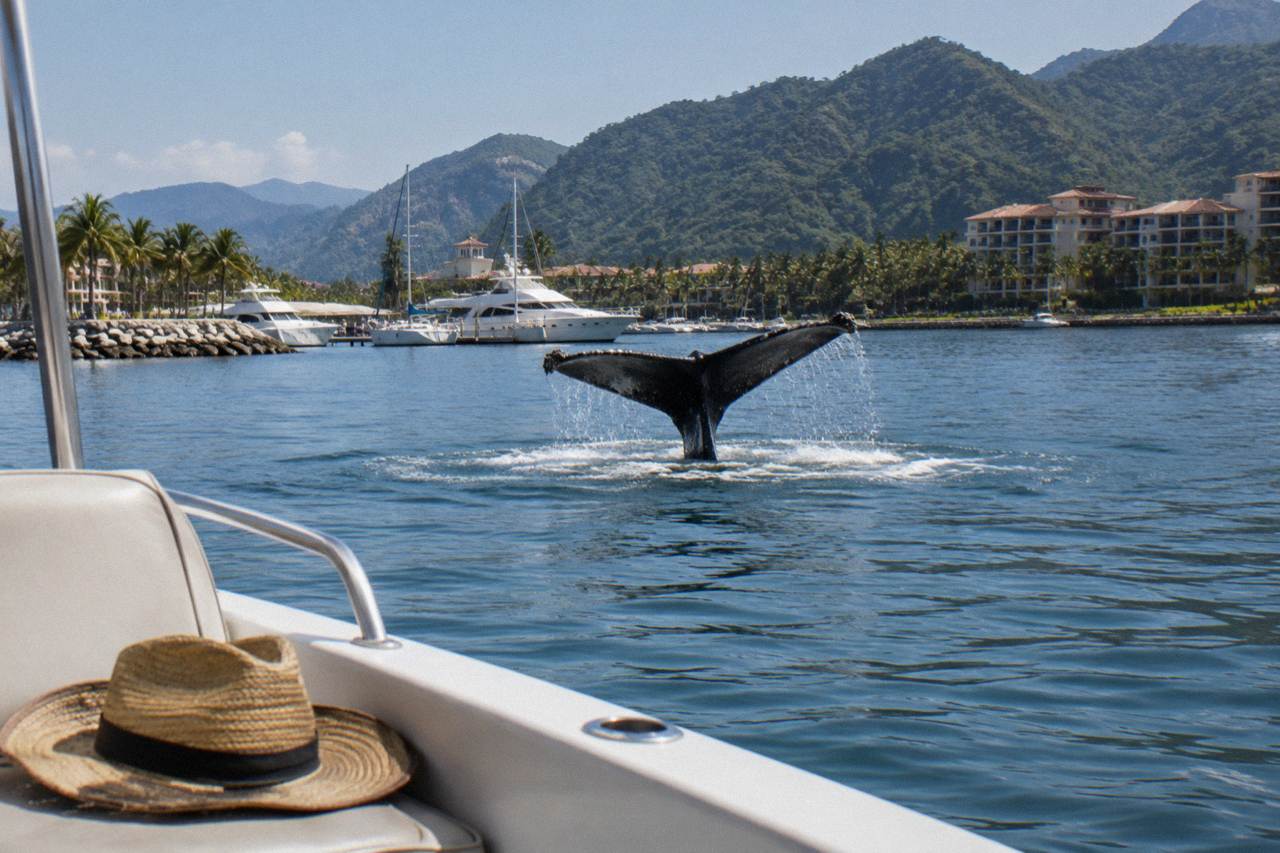
The whales themselves are well studied. About 500 individual humpbacks visit the bay per season according to ECOBAC, the local research group. NOAA describes the Mexico humpback population as breeding along the Pacific coast of Mexico and feeding from California to the Aleutians, and lists the population as Threatened under the US Endangered Species Act, a status worth reading on NOAA's humpback whale species page. Humpbacks reach about 60 ft and about 40 tons, and those are the animals breaching in Banderas Bay every winter.
Which Bay Fits Your Trip Style?
If you want a whale trip inside a documented regulatory framework, with tours from a $42 combo to a $760 private charter for up to 8, Banderas Bay is the choice you can book with facts in hand. Cabo may suit a traveler already committed to that coast, but this site cannot verify its season, prices or species, so any head-to-head verdict there would be invented.
What can be said honestly about Cabo is general. NOAA confirms humpbacks breed along Mexico's Pacific coast, a coastline that includes both the Baja tip and the mainland bays, so humpbacks are part of the wider regional picture rather than the property of one destination. Beyond that generality, the verified record runs out: no Cabo season window, no Cabo price baseline, no Cabo boat rules have been checked for this site, and printing them would break the first rule of this comparison.
What Banderas Bay offers instead is choice inside one geography. The bay stretches about 100 km of coastline between Punta Mita and Cabo Corrientes, reaches a maximum depth of 1,436 m in the trench off Quimixto and Yelapa, and holds a fleet that spans every format a traveler could want. The featured whale and dolphin watching tour with a biologist, 4.9 from 702 reviews, from $105 per person, runs four hours from Opequimar Marine Center and includes bottled water, soda, a baguette sandwich and granola-bar snacks. The small-group half-day with lunch, 5.0 from 353 reviews, from $110 per person, runs 3 hours 30 minutes from Marina Vallarta with a marine biologist guide, lunch and soft drinks. The catamaran cruise with breakfast and buffet, 4.8 from 413 reviews, from $99 per person, adds an open bar and live commentary over four hours. Three formats, three price points, all verified.
That spread is the practical answer to the destination question. A family weighing cost can start with the whale and snorkel combo from $42 per person, rated 3.9 from 65 reviews, or the pure whale boat from $62, rated 4.5 from 24 reviews, with drinks and a morning lunch included. A group that wants the boat to itself has the private charter from Vallarta Natours, 5.0 from 113 reviews, from $760 per group for up to 8, with lunch and a professional guide listed. The choice inside Banderas Bay is wide enough that most trip styles are covered before the Cabo question even needs answering. The tours compared guide breaks the full roster down side by side.
Price And Tour Formats In Banderas Bay
Shared whale boats in Banderas Bay run from $62 to $139 per person, private charters from $266 per group to $2,088 for a luxury yacht of up to 12, and the cheapest listing of all is a $42 whale and snorkel combo. Every one of those figures is a live roster price; no equivalent verified Cabo price list exists to put beside it.
Price is where fabricated comparisons do the most damage, because a made-up Cabo number next to a real Puerto Vallarta number looks equally authoritative on screen. So here is only the real column. The table below shows the price endpoints across the bay's tour families, exactly as the listings state them.
| Tour family | Cheapest verified listing | Top of the range | What varies |
|---|---|---|---|
| Shared and small-group whale boats | From $62 per person, 4.5 from 24 reviews | From $139 per person, 10 reviews, no star claim | Duration 3 to 4.5 hours, guide type, food and bar |
| Catamaran and sailing cruises | From $99 per person, 4.8 from 413 reviews | From $130 per person, 1 review, no star claim | Breakfast or lunch departure, open bar, vessel size |
| Private charters | From $266 per group | From $2,088 per group (up to 12), 1 review | Group cap 8 to 15, yacht level, meal inclusions |
| Whale and snorkel combos | From $42 per person, 3.9 from 65 reviews | From $85 per person, 4.9 from 56 reviews | Snorkel stop location, lunch, pickup |
Two notes on reading it. First, the $42 combo is the cheapest firm-priced listing on the roster and it is a combined whale and snorkel product, not a pure whale boat; the cheapest pure whale watching starts at $62. Second, several listings are new or thinly reviewed, and their prices print without a star rating because a handful of reviews supports no claim, which is the honest way to present them.
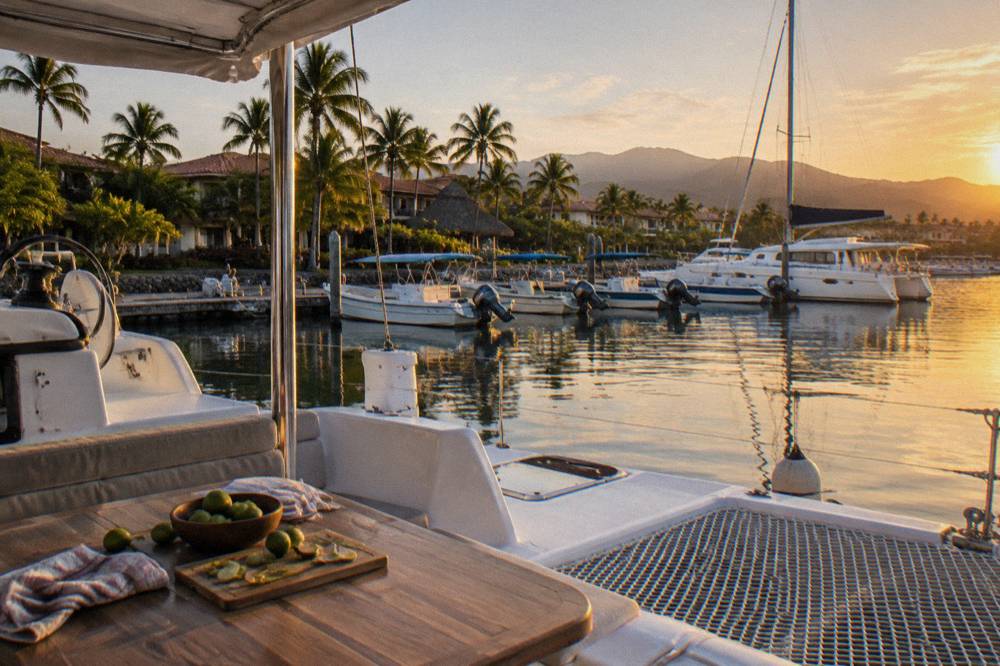
Inclusions drive the spread more than boat size does. The $105 biologist tour includes a baguette sandwich lunch, snacks, water and soda. The $110 small-group half-day includes lunch and soft drinks. The $78 all-inclusive cruise, 4.2 from 221 reviews, pours an open bar of rum, beer, tequila, brandy and soda, serves chips, fruit and a croissant or sandwich for lunch, and carries a hydrophone and a marine biologist across 4 hours 30 minutes; the dock tax is extra. Two listings state a 39 MXN port tax on top; one folds it in. Reading the inclusions line on the live listing, rather than the headline price, is what separates a $62 boat from a $120 one in real value. The tour cost guide unpacks this pricing in depth.
Flights, Departure Points And Logistics
Both towns are major airports, but only Banderas Bay's ground game is documented here: tours depart from Marina Vallarta, Puerto Magico, Opequimar, Nuevo Vallarta, Los Peines, La Cruz and Sayulita, with the airport 15 to 22 minutes from Marina Vallarta by transfer, so a morning whale boat fits any flight arrival the night before.
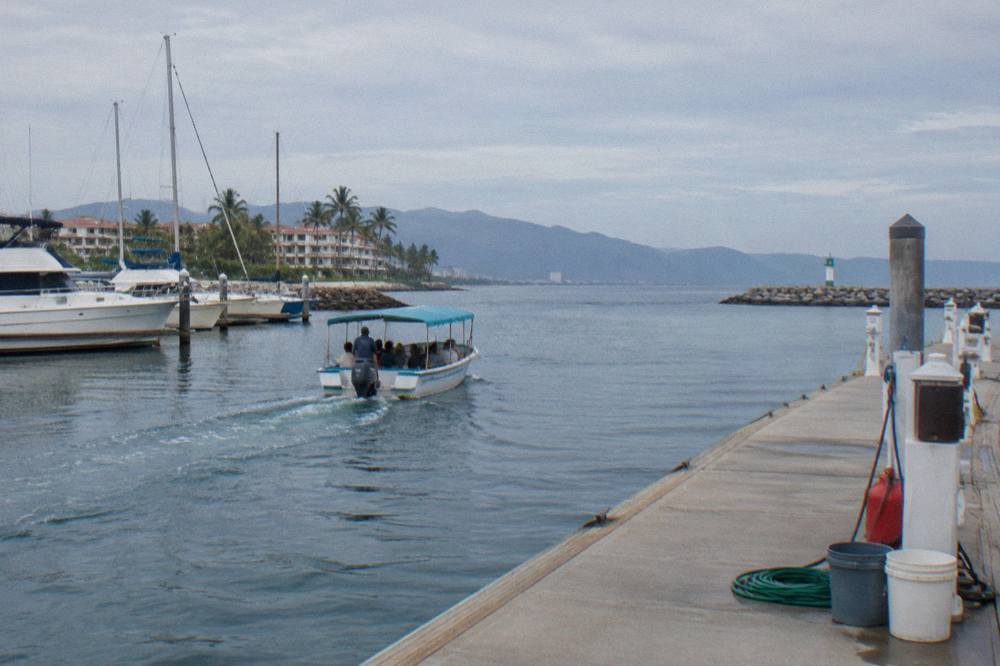
Logistics decide more trips than whales do. In Puerto Vallarta the departure points are verified listing by listing, and they cluster conveniently. Marina Vallarta serves the small-group half-day and several private charters. Puerto Magico terminal hosts the all-inclusive cruise, the Vallarta Adventures products and the catamaran option with three meeting points. Opequimar Marine Center is the dock for the featured biologist tour. North of the city, Nuevo Vallarta marina runs the catamaran cruise with breakfast and buffet, La Cruz marina launches the all-inclusive yacht adventure from Sayulita and Banderas Bay, and Sayulita beach itself has direct small-group departures. Whatever your hotel base, a dock is close.
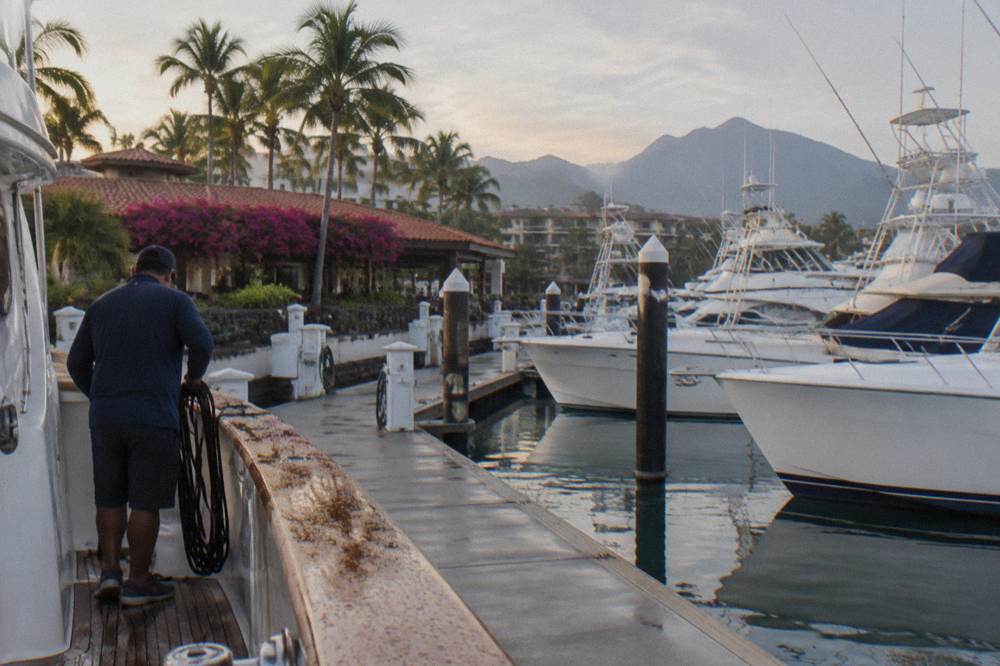
Transfer times, as published by operator transfer sites, put the airport at 15 to 22 minutes from Marina Vallarta, 22 to 30 from Zona Romantica, 20 to 30 from Nuevo Vallarta, 35 to 45 from La Cruz, 55 to 75 from Punta Mita and 55 to 65 from Sayulita. One local quirk worth knowing: ride-hail apps are not permitted to pick up at the airport arrivals curb, so arriving travelers cross the pedestrian bridge or use authorized taxis. None of this is exotic; it is simply documented, which is the theme of the whole comparison.
The season calendar matters for flight timing too. Since the official window ran 8 December to 23 March last season and operators advertise the same 8 December opening this year, a trip in January or February, the months operators and guides name as peak, lands in the heart of the season with the most departures on the water. The season dates guide covers the calendar question in full.
How To Decide Without Invented Numbers
Decide on the checkable things: whether a federal season notice and enforced boat rules matter to you, whether the tour formats and verified price range fit your budget, and whether your flights and hotels align with a documented dock network. On all three, Banderas Bay shows its work; on Cabo, this site can only say the whales are part of the same Mexico population NOAA describes.
A useful decision test is to ask what a promoter of either destination cannot show you. For Banderas Bay, the answer is very little: the season notice is in the Diario Oficial, the approach distances and speed limits are in NOM-131, the park fee at the Marietas is 125 MXN per person per day on the official CONANP page, and the tour prices above come from live listings with review counts attached. For Cabo, this file can show none of that, and a comparison article that pretends otherwise is selling confidence it never earned.
The federal season notice itself is one page, and reading it changes how you evaluate any whale tour operator in Mexico. If a company cannot tell you its season dates, its approach distances or its authorization, that tells you something regardless of which bay you choose. Operators here answer those questions in the listing, which is why this site, Puerto Vallarta Whale Watching, publishes the roster with every rating, price and review count exactly as verified.
There is also the question of what you want the day to be. The research-participation biologist boat, the lunch-included small-group half-day, the open-bar catamaran and the private charter are genuinely different products, not price tiers of one product. If you can name which of those you want, the bay question settles itself, because the roster lets you buy that exact day from $62 per person upward. If you want the small-group half-day with lunch, it exists at a verified price. The deciding reader, the one with flights half booked, needs exactly that.
Practical honesty cuts both ways, so one caveat belongs here. Nothing in this article proves Cabo is worse. It proves only that Cabo's case, as far as this research goes, is unverified, while Banderas Bay's is documented at every level from the federal notice to the sandwich on the boat. Travelers who have already chosen Cabo for other reasons, a wedding, a timeshare, a direct flight, can still ask their operator the same three questions this site asks of every listing: season dates, NOM-131 compliance and authorization, and the real inclusions behind the headline price. Those questions travel well.
The sunset mega yacht option, 4.8 from 517 reviews from $110 per person, and the whale and dolphin watching tour with a biologist, 4.9 from 702 reviews, between them carry more than 1,200 verified reviews, the deepest review pools on the roster. Whatever a rival destination claims, that volume of documented guest experience is hard to argue with.
Common Questions About Cabo Or Puerto Vallarta
Cabo Or Puerto Vallarta For Whale Watching?
Banderas Bay has the fully verified case: an official federal season window that ran 8 December to 23 March last season, enforced NOM-131 boat rules, and 26 bookable tours from $42 to $139 per person plus private charters from $266 per group. No verified Cabo season dates, prices or species data exist to set against that, so the comparison can only be made on Banderas Bay's documented record.
What is nicer, Cabo or Puerto Vallarta?
That depends on what "nicer" means for your trip, and this site can only judge one side of it with facts. Puerto Vallarta offers about 100 km of bay coastline, a documented whale season, tours from $62 per person for a pure whale boat, and departure docks from Sayulita to Marina Vallarta. For Cabo, no verified season, price or species record exists here, so any verdict would be invented rather than reported.
Is Puerto Vallarta better than Cabo?
For whale watching specifically, Puerto Vallarta, or rather Banderas Bay, is the destination this site can defend with evidence: a federal season notice, restricted protective zones around the Islas Marietas, NOM-131 approach rules, PROFEPA inspections, and a roster where the most reviewed boat carries 702 reviews at 4.9. Cabo may well deliver good whale trips, but nothing verified is on file to compare, and honest reporting stops there.
When does whale watching season start in Puerto Vallarta?
The official window ran 8 December to 23 March last season under the SEMARNAT notice published in the Diario Oficial. Operators advertise the same 8 December opening for the new season, but the federal notice for it has not appeared yet, so treat that start date as advertised rather than official. January and February are the months operators and guides name as peak.
How much does a whale tour in Puerto Vallarta cost?
Verified shared and small-group whale boats run from $62 to $139 per person, catamaran cruises from $99 to $130, private charters from $266 per group to $2,088 for a luxury yacht of up to 12, and a whale and snorkel combo starts at $42 per person. Every figure comes from a live listing; prices and inclusions are confirmed at booking.