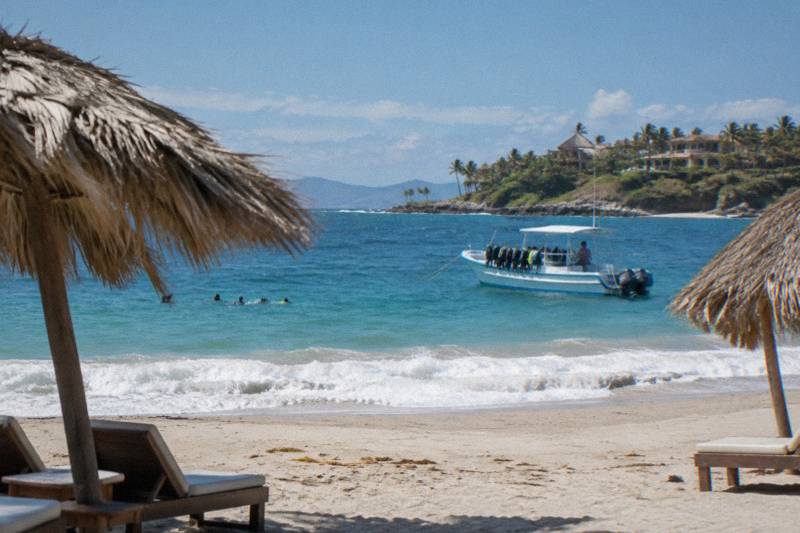
Can You Swim To Hidden Beach On The Marietas Islands?
Yes, you swim in through the tunnel, but only from a permitted tour boat, in a life jacket, with no independent access. Here is how the swim works and which tours run it.
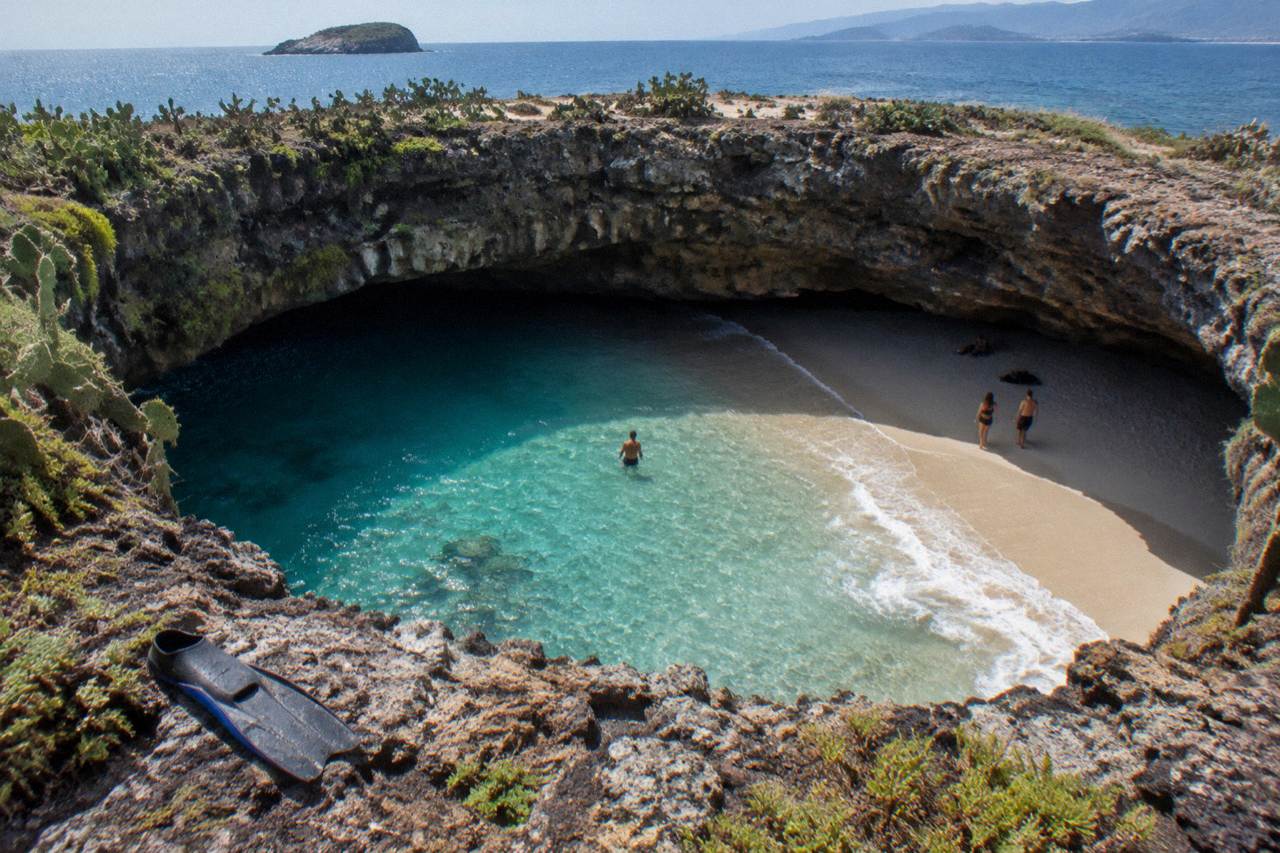
Yes, in one specific sense: the only way onto Hidden Beach, the sandy pocket inside the collapsed cave on the Marietas Islands, is a short swim through a rock tunnel from a permitted tour boat. You cannot walk in, paddle in on your own kayak, or arrive on any private vessel. Access is only with a CONANP-permitted operator, life jackets are mandatory in the water, and the rules and access conditions change, so the operator confirms what is possible on the day.
The question sounds simple and the answer has layers. The swim itself is short, but the framework around it, federal permits, park hours, a daily entry fee and the whale-watching restrictions that circle the islands, decides whether your trip happens at all. This page walks through the swim, the rules, and the tours that combine the crossing with whale watching and reef snorkeling in Banderas Bay.
Can You Swim To Hidden Beach On The Marietas Islands?
Yes, you swim in, and swimming is the only way in. The beach sits inside a collapsed cave, and the entry is a short tunnel from the water that connects to the boat anchorage outside. You swim it from a permitted tour boat, wearing a life jacket, which the national park requires for anyone in the water. Independent access by private vessel is not allowed, so the swim always begins from an authorized operator.
The tunnel is the defining feature of the visit. Operators describe a low, natural passageway through the rock that opens into the crater-like beach; the water in it moves with the swell, and that is exactly why conditions on the day matter so much. When the swell runs high, the passage can be unsafe, and the crew makes the call on the boat. No operator promises the beach in advance, and any listing that does should be read with suspicion. The honest phrasing, used across the permitted fleet, is that landing depends on sea conditions and the park's rules that day.
What trips many visitors up is the word "swim." This is not a long open-water crossing. The boat anchors nearby, you enter the water, and you pass through the tunnel to the beach with the guide. Most guests who can swim a short distance manage it, and the mandatory life jacket does a lot of the work. Diving in the area is prohibited, and the park lists the life jacket rule alongside its other water rules. If someone in your group does not swim, ask the operator before booking; each boat sets its own policy and the listings do not carry a single standard.
Access rules at Hidden Beach have changed before and will change again. Rules, caps and site conditions shift between seasons, and this site deliberately does not print a visitor cap, a reopening date or an open-or-closed status, because those figures are contested and stale the moment they are written. The reliable approach: treat the beach as a possibility contingent on conditions, book a permitted operator, and confirm the morning of the trip.
How Does The Swim Through The Tunnel Actually Work?
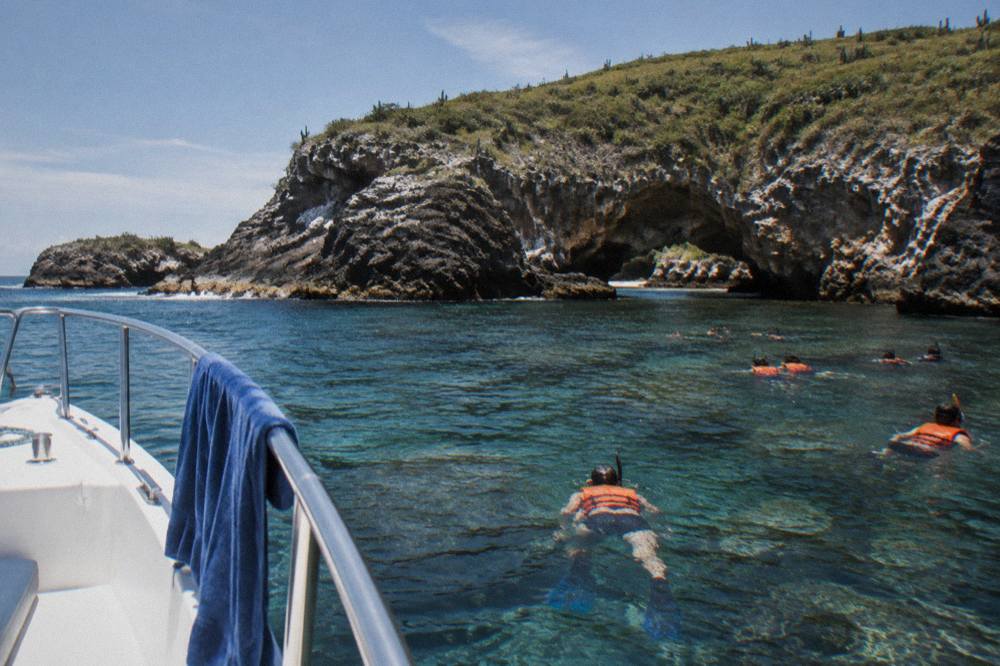
The boat anchors outside the island, guests enter the water in life jackets, and the group swims a short tunnel through the rock with the guide, arriving inside the crater onto the sand. The crossing takes moments, not minutes, and the crew decides whether sea conditions allow it at all that day. Inside, the stay is short and supervised before the group swims back out.
The sequence, as operators describe it, runs like this. The boat holds position in the anchorage area, the crew hands out life jackets, and the guide leads the swim to the tunnel mouth. The tunnel is low, so timing matters with the water movement. Inside, the beach is small and enclosed, ringed by the rock walls of the collapsed cave, with the open sky above. Photography is the main activity; there is no shade infrastructure, no facilities and nothing to do but stand in one of the more photographed spaces on Mexico's Pacific coast. Then the group swims back out the same way.
The deciding variable is swell, and nobody controls it. The bay's open Pacific side sends long-period swell at the islands, and the tunnel becomes unpassable when it runs. Operators build their itineraries with alternates, usually more reef snorkeling time, for exactly this reason. When you read a tour description, read the snorkel stop as a real part of the day, not filler, because on some trips it is the whole water portion.
Diving is prohibited in the Hidden Beach area, per the park's posted rules, and the life jacket requirement covers the swim. Snorkeling in the classic sense happens elsewhere around the islands, on the reef, which is a separate part of the itinerary and a genuinely good one. The reef adjoining the islands has been through a restoration effort, and scientists have tied its earlier decline to unregulated tourism, which is the background for why every rule on this page exists.
What Are The Park Rules For Hidden Beach Access?
Access runs only through CONANP-permitted operators, with a 125 MXN per person per day park entry fee, mandatory life jackets in the water, a ban on alcohol inside the park and a ban on diving at the beach site. The Playa del Amor site keeps hours of Wednesday to Sunday, 8:00 to 17:00, while the wider park runs Tuesday to Sunday, 8:00 to 18:00.
The Islas Marietas are a national park, and the official CONANP page carries the binding rules. Entry costs 125 MXN per person per day, collected as a rights fee, with exemptions for seniors, disabled visitors and children under 12. The park is closed Mondays. The Playa del Amor site, which is Hidden Beach's official name, is open Wednesday to Sunday, 8:00 to 17:00, which quietly shapes trip planning: a Monday or Tuesday itinerary will not include the beach site, whatever a third-party page implies.
| Park rule | What it means for your trip |
|---|---|
| Permitted operators only | You cannot take a private vessel or rental boat to the islands |
| 125 MXN per person per day | Entry fee, exempt for seniors, disabled visitors and under 12s |
| Life jackets mandatory in the water | Covers the tunnel swim and any reef snorkeling |
| No diving at the beach site | The tunnel crossing is a surface swim only |
| No alcohol inside the park | Save the open bar for the boat ride home |
| Playa del Amor hours, Wednesday to Sunday 8:00 to 17:00 | Avoid Monday and Tuesday trips if the beach is the goal |
The fee is usually handled one of two ways depending on the operator: it is either included in the ticket price or collected at check-in, and the listing states which. Two whale and snorkel listings on this site's roster show how differently inclusions run even within the same category, so read each one rather than assuming a standard.
One more federal rule sits on top of the park rules, and it matters for anyone booking a combined trip. The SEMARNAT season notice prohibits whale watching within 1.5 km of the Islas Marietas and inside a 2 km wide coastal strip from Punta Mita to the Rio Ameca mouth, because mother and calf humpbacks concentrate in those waters. So a Marietas combo tour does its whale watching outside those zones, in open water, before or after the island portion. The aviso in the Diario Oficial spells out both restricted zones for the season.
Which Tours Combine Whales And Snorkeling Near The Marietas Islands?
Two roster listings pair whale watching with a reef snorkel stop in the Marietas area: a 5-hour small-group trip from Sayulita at from $85 per person, rated 4.9 from 56 reviews, and a 3.5-hour shared trip from Los Peines marina at from $42 per person, rated 3.9 from 65 reviews. Neither listing states a Hidden Beach landing, so treat the beach as an operator-confirmed possibility, never a booked certainty.
The whale and snorkel combo guide on this site compares the category in full, but the short version runs like this. The Sayulita Entourage trip, the 5-hour Whale Watching and Snorkeling in Marietas Islands National Park listing, departs from a Sayulita dive center with pickup listed, includes snorkel gear, a certified guide, lunch and transport by taxi, at from $85 per person. Free cancellation is not stated on its line, so check the operator's booking page for the current terms before you commit. The Travel vallarta shared trip from Los Peines marina, at from $42 per person, is the cheapest firm-priced listing on the whole roster and includes a guide, life jackets and the 39 MXN port tax, with free cancellation listed.
| Listing | Format and departure | Duration | Price | Rating |
|---|---|---|---|---|
| Whale Watching and Snorkeling in Marietas Islands National Park (Sayulita Entourage) | Small group, Sayulita dive center, pickup listed | 5 hours | from $85 per person | 4.9 from 56 reviews |
| Puerto Vallarta: 3-Hour Whale Watching and Snorkeling (Travel vallarta) | Shared, Los Peines marina | 3.5 hours | from $42 per person | 3.9 from 65 reviews |
If you are starting from Sayulita rather than Puerto Vallarta, a third option fits the same day: the biologist-led 3-hour trips run by La Orca de Sayulita direct from Sayulita Beach, at from $90 per person, with a hydrophone, snacks, photos and life jackets included. It has 13 reviews, too few for a star claim on this site. The Sayulita whale watching guide covers the town's departures in detail, including the pier logistics.
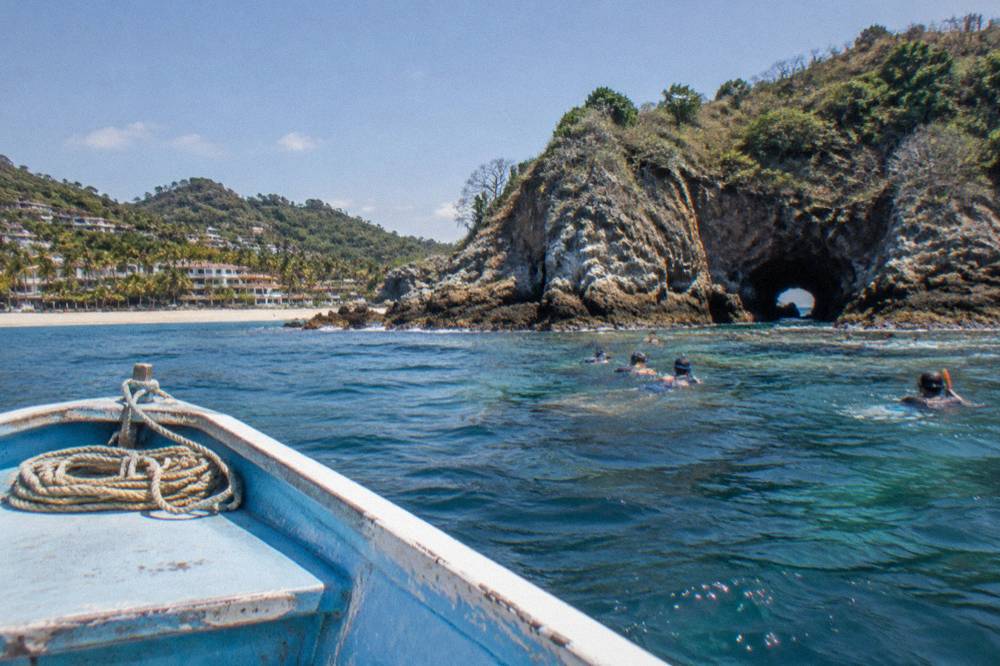
Be direct with yourself about what these trips are. Federal rules prohibit swimming with whales outright, so every combo on the roster snorkels at a reef or beach stop well away from any whales, and the whale portion happens from the boat under NOM-131 approach distances. Any wording that blurs the two, anywhere in your research, is a red flag. The swimming with whales post on this site covers the prohibition in full.
A catamaran format suits visitors who want the islands region with more boat comfort. The catamaran whale watching listing, from $130 per person for 4 hours with a biologist guide and hydrophone, runs a morning breakfast tour and a noon lunch tour with non-alcoholic drinks and restrooms on board. It has 1 review, so this site prints no rating for it; check the live listing for current departure details.
What Can You Not Do At Hidden Beach?
You cannot arrive independently, by private boat, kayak or personal watercraft, and you cannot dive at the site. You cannot enter without a life jacket, and you cannot bring alcohol into the national park. Whale watching inside the 1.5 km radius around the islands is prohibited, so boats watch whales outside the zone before or after the island stop.
The banned list is short and firm. Independent vessels are excluded entirely: the park requires visitors to contract operators holding CONANP permits, and unpermitted boats have no legal way to land passengers. Diving at the beach site is prohibited, which converts the tunnel into a surface-only swim. Alcohol inside the park is banned. And within the whale-watching rules, kayaks, canoes and jet skis are not permitted for whale observation at all, so the distinction between the reef stop and the whale portion is structural, not stylistic.
Federal inspection backs these rules with real presence. PROFEPA runs inspection operations through the season on the bay, and one Nayarit operation boarded 17 vessels to check permits and NOM-131 compliance, per the agency's own comunicado. For a visitor, the practical takeaway is simpler: authorized boats fly a numbered flag with the federal seal, and choosing a licensed operator protects both you and the roughly 500 individual humpbacks ECOBAC estimates visit the bay each season.
It also protects the reef. Scientists have concluded that unregulated tourism was the main driver of the reef's decline around the islands, and the current framework, permits, caps on activity, life jackets, no anchoring on coral, exists to let the ecosystem recover while still allowing visits. Guests who follow the guide's instructions inside the park are doing the single most useful thing a visitor can do there.
Not every Banderas Bay day needs to orbit the islands. The mega yacht sunset and whale watching trip run by Chica Locca Tours from Nuevo Vallarta, from $110 per person for 3 hours with an open bar and food, rated 4.8 from 517 reviews, is the most reviewed large-vessel option on this site's roster and pairs naturally with a separate islands day if you want both formats.
When Is The Best Time To Visit The Marietas Islands?
Visit between Wednesday and Sunday, inside the 8:00 to 17:00 window for the Playa del Amor site, and inside the official whale-watching season if you want the combo. Last season's federal window ran 8 December to 23 March, operators advertise the same 8 December opening this year, and the federal notice for the new season has not appeared yet.
Timing splits into two separate clocks. The park clock is weekly: the beach site is closed Monday and Tuesday, and the wider park is closed Monday, so midweek through Sunday trips are the only ones that can include it. The whale clock is seasonal: the SEMARNAT aviso sets the official whale-watching season for Banderas Bay, and last season's ran 8 December 2025 to 23 March 2026. Operators and guides name mid-January to mid-March, and January and February specifically, as peak months for whale density in the bay, and hotel and operator guides report the first humpbacks typically entering the bay in late November, before the official window opens.
Weather cooperates with that window. Rain in Puerto Vallarta collapses after October, from 125 mm across 9 rain days in October down to 37 mm across 2 days in January and 4 mm across 1 day in March, and sea temperatures run 24.5 C in January and 23.9 C in February and March. That is comfortable water for the tunnel swim in a life jacket and for reef snorkeling. The weather in whale season guide carries the full monthly breakdown.
Book early in the season window for the combo trips. The islands are the bay's single most in-demand destination and the permitted fleet is finite, so December and January dates on the small-group boats fill first, especially midweek days when the beach site is open. If your dates are fixed around a Monday or Tuesday arrival, plan the islands day later in the week and fill the earlier day with a pure whale tour from Marina Vallarta or Puerto Magico, which run every day of the season. The homepage trip picker on Puerto Vallarta Whale Watching sorts those options by format and departure point.
Common Questions About Swimming To Hidden Beach
Can I swim to the Hidden Beach on the Marietas Islands?
Yes, and swimming is the only way in. You swim a short rock tunnel from a permitted tour boat, wearing the life jacket the park requires. Independent access by private vessel, kayak or any unpermitted boat is not allowed, and whether the crossing runs at all depends on sea conditions that day, so the operator confirms on the morning of the trip.
Do you have to wear a life jacket at Hidden Beach?
Yes. The national park's posted rules make life jacket use mandatory in the water, which covers both the tunnel swim and any reef snorkeling around the islands. Diving at the beach site is prohibited, so the crossing is a surface swim.
Can you visit Hidden Beach without a tour?
No. The park requires visitors to contract tour operators holding CONANP permits, and private vessels have no independent access. Your options are the permitted tour fleet, and every whale and snorkel combo on this site's roster runs through licensed operators.
Is Hidden Beach open every day?
The Playa del Amor site keeps hours of Wednesday to Sunday, 8:00 to 17:00, and it is closed Monday and Tuesday along with the wider park's Monday closure. Access rules and site conditions change between seasons, so confirm with the operator when you book rather than relying on a status you read online.
Can you snorkel or swim with the whales near the Marietas Islands?
No. Swimming, diving and snorkeling with whales are prohibited under the federal whale-watching standard, and whale watching is barred within 1.5 km of the islands. Combo tours snorkel at a reef or beach stop away from the whales and watch the whales from the boat, at regulated approach distances.
How much does it cost to visit the Marietas Islands?
The park entry fee is 125 MXN per person per day, exempt for seniors, disabled visitors and children under 12. Tour prices sit on top of that or bundle it in: the two whale and snorkel combos on this site's roster run from $42 and from $85 per person, with each listing stating whether the fee is included.